India's C&I renewable capacity to triple to 100 GW by 2032, storage to surge tenfold: Report
Synopsis
A new IESA-Customised Energy Solutions report projects India's commercial and industrial renewable capacity will nearly triple to 100 GW by 2032, with energy storage installations surging more than tenfold to 31 GWh. State-level mandates — led by Maharashtra's requirement that every new renewable project above 100 kW include storage — are the decisive policy lever driving what the industry is calling a structural shift, not just incremental growth.
Key Takeaways
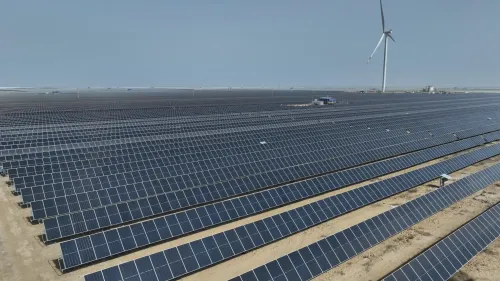
India's C&I renewable capacity is projected to grow from 32 GW in 2025 to 100 GW by 2032 , per an IESA and Customised Energy Solutions report.
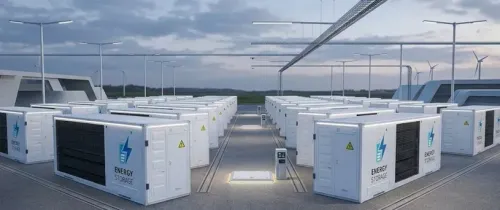
Energy storage system installations in the C&I segment are set to surge more than tenfold to approximately 31 GWh by 2032 .
Maharashtra now mandates storage for all new renewable projects above 100 kW and requires discoms to source 10% of power from storage by FY 2035–36 .
Gujarat , Karnataka , Tamil Nadu , and Rajasthan are enabling adoption through banking policies and transmission charge waivers.
Industrial facilities will account for over half of all ESS installations; data centres and critical infrastructure will see the fastest growth rate.
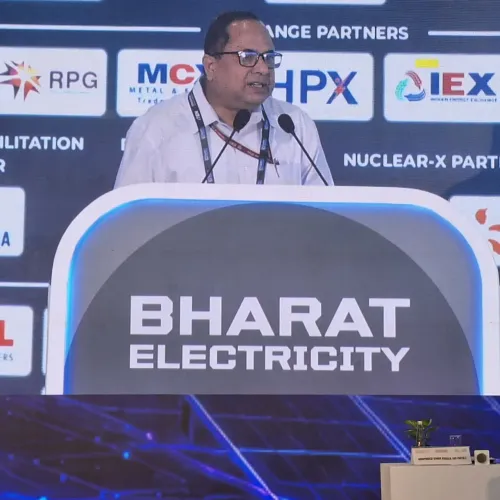
The report will be formally released at India Energy Storage Week (IESW) 2026 from 8–10 July at Yashobhoomi, New Delhi .
India's commercial and industrial (C&I) renewable energy capacity is projected to nearly triple — from 32 gigawatts (GW) in 2025 to as much as 100 GW by 2032 — while energy storage system (ESS) installations in the segment are set to leap more than tenfold to approximately 31 gigawatt-hours (GWh), according to a report released on Friday, 3 July 2025. The findings, published jointly by the India Energy Storage Alliance (IESA) and Customised Energy Solutions (CES), credit state-level regulatory innovation, corporate decarbonisation commitments, and surging grid tariffs as the primary drivers of the acceleration.
What Is Driving the Growth
The report identifies three converging forces behind the C&I clean energy surge. First, corporates across sectors are hardening net-zero and decarbonisation targets, pushing demand for on-site renewable generation and storage. Second, grid tariffs have risen sharply, making captive renewable power increasingly cost-competitive. Third, energy resilience — the ability to maintain operations during grid outages or supply disruptions — has become a boardroom priority, particularly for data centres, hospitals, and critical infrastructure.
State-level policy innovation is described as the decisive accelerant. Maharashtra's new renewable energy and storage policy now mandates energy storage for every new renewable project above 100 kilowatts (kW) in capacity. The same policy requires distribution companies to source 10 per cent of their electricity from storage by FY 2035–36. Gujarat, Karnataka, Tamil Nadu, and Rajasthan are also enabling faster adoption through cost-reflective banking, settlement policies, and transmission charge waivers.
Who Will Adopt Storage Fastest
Industrial facilities are expected to remain the single largest adopters of energy storage, accounting for more than half of all ESS installations by 2032. However, the fastest growth rate is projected in data centres and critical infrastructure — including hospitals, metro and railway stations, and airports — where uninterrupted power supply is operationally non-negotiable.
This is not merely incremental expansion; it represents a structural shift in how Indian industry views energy storage — from a backup measure to a strategic asset for both cost management and operational continuity.
What the Industry Said
Debmalya Sen, President of IESA, said the research signals a market inflection point. 'Our new research shows India's C&I energy storage market is not just growing; it's accelerating toward a new era. With forward-thinking state policies and rising corporate demand, storage is becoming a strategic tool for resilience and decarbonization, not just backup. The momentum we're seeing now will define the sector for the next decade,' Sen said.
Where the Report Will Be Unveiled
The full report is scheduled to be formally released at India Energy Storage Week (IESW) 2026, running from 8 to 10 July at Yashobhoomi (IICC) in New Delhi. The event is expected to draw more than 200 exhibitors and over 10,000 industry leaders. Senior officials from the ministries of Heavy Industries, Mines, Power, Electronics, and Environment are scheduled to participate alongside state representatives and regulatory bodies. Discussions will focus on policy bottlenecks, state-level reforms, and actionable pathways for accelerating India's clean energy transition.
As India pushes toward its broader renewable energy targets, the C&I segment's trajectory will be a critical — and closely watched — indicator of whether policy ambition translates into installed capacity on the ground.
Point of View
But the policy architecture underpinning it is more credible than previous clean energy targets because it is being built from the state level up, not handed down as a Centre mandate. Maharashtra's storage-linked procurement obligation is the kind of demand-side pull that past renewable pushes lacked. The real test, however, is whether states like Rajasthan and Karnataka follow through on transmission charge waivers consistently — those incentives have a history of being revised or withdrawn as fiscal pressures mount. If the C&I segment does reach 100 GW, it will also quietly reframe India's energy security story: corporate and industrial buyers, not just the government, will have become architects of the transition.
NationPress
2 Oct 2026
Frequently Asked Questions
What does the IESA-CES report say about India's C&I renewable energy capacity?
The report projects India's commercial and industrial renewable energy capacity will nearly triple from 32 GW in 2025 to 100 GW by 2032. Energy storage installations in the same segment are forecast to surge more than tenfold to around 31 GWh over the same period.
Why is India's C&I energy storage market growing so rapidly?
Three factors are driving growth: corporate decarbonisation goals, rising grid tariffs that make captive renewable power cost-competitive, and a growing need for energy resilience. State-level regulatory reforms — including storage mandates and transmission charge waivers — are accelerating adoption.
What is Maharashtra's new renewable energy and storage policy?
Maharashtra now requires energy storage for every new renewable project above 100 kW in capacity. It also mandates that distribution companies procure 10 per cent of their electricity from storage sources by FY 2035–36.
Which sectors will see the fastest growth in energy storage adoption?
Data centres and critical infrastructure — including hospitals, metro and railway stations, and airports — are projected to see the fastest growth rate. Industrial facilities will remain the largest overall adopters, accounting for more than half of all ESS installations.
What is India Energy Storage Week 2026 and when does it take place?
India Energy Storage Week (IESW) 2026 is a major clean energy industry event scheduled from 8 to 10 July at Yashobhoomi (IICC) in New Delhi. It will feature over 200 exhibitors, more than 10,000 industry leaders, and senior officials from key central ministries and state regulatory bodies.