India’s Data Centre Capacity Grows Over Four Times to 1,500 MW by 2025: Jitin Prasada
Synopsis
India's data centre capacity has skyrocketed to over 1,500 MW by 2025, up from 375 MW in 2020, showcasing the government's commitment to advancing digital infrastructure. Union Minister Jitin Prasada highlights efforts to democratize technology and enhance cybersecurity.
Key Takeaways
India's data centre capacity has increased to over 1,500 MW by 2025.
The growth from 375 MW in 2020 reflects a strong commitment to digital infrastructure .
Mumbai and Navi Mumbai hold the largest share of capacity at 790 MW .
The government is facilitating the establishment of data centres nationwide.
Submarine cable systems are under commissioning and planning to enhance connectivity.
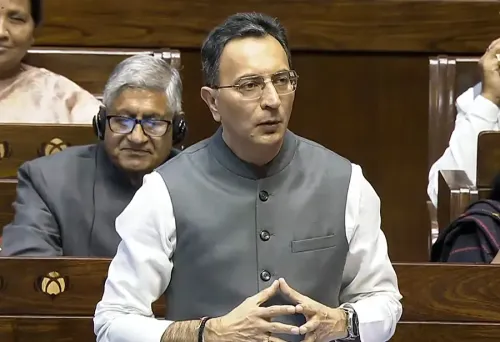
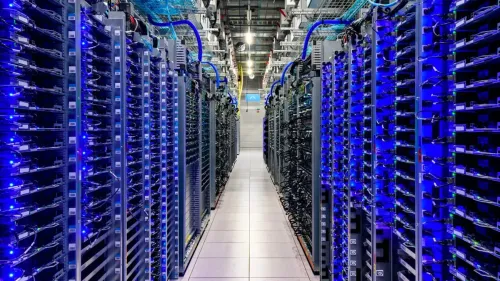
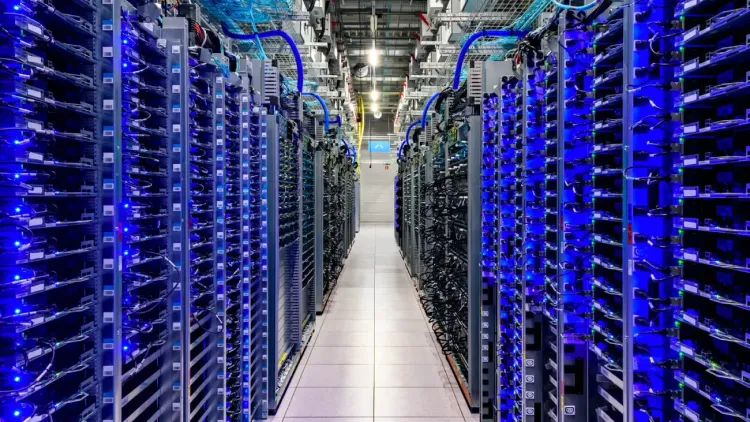
New Delhi, March 18 (NationPress) India’s data centre capacity has surged to over 1,500 MW in 2025, marking a more than fourfold increase from 375 MW in 2020, as reported by Union Minister of State for Electronics and Information Technology, Jitin Prasada, during a Parliament session on Wednesday.
In response to a query in the Lok Sabha, the minister highlighted that this growth signifies the government’s commitment to enhancing digital infrastructure and broadening access to technology.
“In alignment with Prime Minister Narendra Modi’s vision, the government is working to democratize the development and application of technology,” Prasada emphasized.
Additionally, he mentioned that initiatives are underway to support the establishment of data centres nationwide to enhance the delivery of digital services.
Data reveals that Mumbai and Navi Mumbai dominate operational data centre capacity with 790 MW, followed by Chennai with 305 MW, Bengaluru with 182 MW, Hyderabad with 152 MW, and Delhi-NCR/Noida with 76 MW. Other cities like Pune and Kolkata contribute a smaller portion.
Prasada also informed that four submarine cable systems are currently being commissioned at various cable landing stations by telecom service providers, including India Europe Xpress by Reliance Jio, SEA-ME-WE-6 and 2Africa by Bharti Airtel, and the Raman Cable by Sify Technologies, with most landing stations located in Mumbai and Chennai.
Moreover, three additional submarine cable systems are in the planning stages, with projects from Tata Communications, Reliance Jio, and Sify Technologies already submitted to the Department of Telecommunications.
The minister clarified that there are currently no plans to establish new sub-sea gateways.
He further noted that the Reserve Bank of India has mandated that all payment system data should be stored within India to promote a safer and more trustworthy digital ecosystem.
The government's policies aim to build sufficient data storage capacity domestically while enhancing cybersecurity measures.
Point of View
The significant increase in data centre capacity reflects India's strategic push towards becoming a digital leader. The government's focus on enhancing infrastructure and cybersecurity is commendable. However, the challenge remains to ensure these advancements are inclusive and accessible to all citizens.
NationPress
29 Sept 2026
Frequently Asked Questions
What is the current data centre capacity of India?
As of 2025, India's data centre capacity has reached over 1,500 MW, a substantial increase from 375 MW in 2020.
Which cities have the highest data centre capacity in India?
Mumbai and Navi Mumbai lead with 790 MW, followed by Chennai (305 MW), Bengaluru (182 MW), Hyderabad (152 MW), and Delhi-NCR/Noida (76 MW).
What initiatives are being taken to enhance digital infrastructure in India?
The government is facilitating the establishment of data centres across the country to improve digital service delivery and support technological advancement.
Are there any new submarine cable systems being planned?
Yes, three additional submarine cable systems are currently in the planning stages, with applications submitted to the Department of Telecommunications.
What cybersecurity measures has the Reserve Bank of India implemented?
The Reserve Bank of India has mandated that all payment system data must be stored within India to ensure a safe and trusted digital ecosystem.