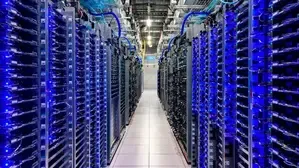
India data centre capacity to hit 7.5 GW by 2030, attracting ₹3 lakh crore investments
Synopsis
India's data centre sector is on course for its most dramatic expansion yet — a five-fold capacity surge to 7.5 GW by March 2030 backed by ₹3 lakh crore in fresh investment. With nearly half the upcoming capacity already locked in under long-term hyperscaler contracts and development costs one-fifth lower than Asia-Pacific peers, India is positioning itself as the region's most cost-competitive digital infrastructure hub. Execution and power connectivity are the make-or-break variables.
Key Takeaways
India's data centre capacity is projected to grow five-fold to 7.5 GW by March 2030 , per a Crisil Ratings report.
Investments of over ₹3 lakh crore are expected across four fiscal years .
Nearly half of upcoming capacity is already committed under long-term hyperscaler contracts.
Visakhapatnam , Mumbai , and Hyderabad will account for roughly three-fourths of the new 6 GW build-out.
Development costs are around one-fifth lower than competing Asia-Pacific markets; rentals are 30–35% cheaper.
Contract tenors have extended to 15–20 years from 10–12 years , strengthening cash flow visibility.
India's data centre installed capacity is set to surge five-fold to approximately 7.5 gigawatts (GW) by March 2030, drawing investments of over ₹3 lakh crore across four fiscal years, according to a report by Crisil Ratings released on Tuesday, 3 November 2026. The projected expansion positions India as one of the fastest-growing data centre markets globally, driven by a confluence of generative AI demand, enterprise digitalisation, and rising data consumption.
Key Growth Drivers
The primary catalyst behind the capacity build-out is generative artificial intelligence (GenAI)-led computing demand, which is pushing hyperscalers — large cloud infrastructure providers — to lock in long-term capacity contracts in India. Enterprise digitalisation across sectors and rapidly growing domestic data consumption are reinforcing this momentum. According to the Crisil report, nearly half of the upcoming capacity is already committed under long-term agreements, significantly limiting speculative development and reducing offtake risk.
India's Structural Cost Advantage
'India's structural cost advantages further strengthen its attractiveness as a data centre destination. Development costs are around one-fifth lower than in several competing Asia-Pacific markets owing to more competitive land, construction and labour costs,' said Anand Kulkarni, Director, Crisil Ratings. Combined with lower power tariffs, this translates into rentals that are 30–35 per cent lower than in peer markets. The ability to develop large, renewable-powered campuses also aligns with the sustainability goals of hyperscalers, reinforcing India's competitive positioning, Kulkarni added.
Where the Capacity Will Be Built
About three-fourths of the upcoming 6 GW of new capacity is expected to be concentrated in Visakhapatnam, Mumbai, and Hyderabad. By fiscal 2030, data centre capacity in these cities could equate to roughly 80 per cent, 60 per cent, and 20 per cent of their respective current peak power demand — a scale that underscores the criticality of timely grid connectivity and transmission infrastructure augmentation.
Revenue Quality and Execution Risk
'The quality of contracted revenues has also strengthened. Contract tenors have lengthened to 15–20 years from 10–12 years earlier, enhancing cash flow visibility. Furthermore, high migration costs and rising replacement capex should support customer retention, although a meaningful contract renewal track record is yet to be established,' said Nitin Bansal, Associate Director, Crisil Ratings. The Crisil report cautioned that despite strong revenue visibility, the pace of expansion and the credit quality of data centre developers will hinge on timely power connectivity, regulatory approvals, and disciplined project execution. This comes amid a broader infrastructure bottleneck challenge that has constrained past large-scale industrial build-outs in India.
What This Means for India's Digital Economy
The scale of investment — ₹3 lakh crore over four fiscals — rivals some of India's largest infrastructure programmes. Notably, the data centre sector has historically attracted less policy attention than manufacturing or renewables, making this surge a structural shift in how capital is flowing into India's digital backbone. With GenAI workloads growing exponentially and India's cloud penetration still rising, demand-side pressure on capacity is unlikely to ease before the decade ends. Timely execution remains the single largest variable determining whether these projections translate into operational capacity.
Point of View
But the real story is the concentration risk buried in the geography — three cities absorbing capacity that could equal 80%, 60%, and 20% of their peak power demand is an infrastructure stress test India has rarely faced at this speed. Power grid readiness, not capital, is the binding constraint. India has a strong record of attracting headline investment commitments in emerging sectors; converting them into operational capacity on schedule is where the track record thins. The GenAI tailwind is real and durable, but if regulatory approvals and transmission augmentation lag — as they have in renewables — the five-fold projection risks becoming a four-fiscal-year construction bottleneck story instead.
NationPress
3 Nov 2026
Frequently Asked Questions
What does the Crisil report say about India's data centre capacity by 2030?
The Crisil Ratings report projects India's data centre installed capacity will grow five-fold to approximately 7.5 GW by March 2030, with investments exceeding ₹3 lakh crore across four fiscal years. The growth is being driven primarily by GenAI-led computing demand, enterprise digitalisation, and rising data consumption.
Which cities will see the largest data centre expansion in India?
Visakhapatnam, Mumbai, and Hyderabad are expected to host roughly three-fourths of the upcoming 6 GW of new capacity. By 2030, data centre capacity in these cities could equate to about 80%, 60%, and 20% of their current peak power demand respectively.
Why is India considered a competitive data centre destination globally?
According to Crisil Ratings, India's development costs are around one-fifth lower than competing Asia-Pacific markets due to more competitive land, construction, and labour costs. Combined with lower power tariffs, this makes Indian data centre rentals 30–35% cheaper than peer markets, while the availability of large renewable-powered campuses appeals to hyperscalers' sustainability goals.
What are the key risks to India's data centre expansion plans?
The Crisil report identifies timely power connectivity, regulatory approvals, and disciplined project execution as the primary risks. Given that cities like Visakhapatnam and Mumbai will need to absorb capacity equivalent to a significant share of their peak grid demand, transmission infrastructure augmentation is a critical bottleneck.
How have data centre contracts changed in recent years?
Contract tenors have lengthened to 15–20 years from the earlier norm of 10–12 years, according to Crisil Ratings, which significantly enhances cash flow visibility for developers. However, the report notes that a meaningful contract renewal track record has not yet been established in the Indian market.