India-EU FTA could push India's exports to Germany past $50 billion by 2030
Synopsis
An ASSOCHAM report released in Berlin by Commerce Minister Piyush Goyal projects India's exports to Germany could cross $50 billion — and potentially $60 billion — by 2030, if the India-EU FTA is fully leveraged. Zero-duty EU access for textiles, pharma, electronics and engineering goods could reshape India's European trade story at a moment when the FTA talks are at a decisive stage.
Key Takeaways
India's exports to Germany could exceed $50 billion by 2030 under the India-EU FTA , per an ASSOCHAM report released on 23 October 2026 .
ASSOCHAM's SP Sharma projected an even higher target of $60 billion (€54 billion) if trade, investment and technology cooperation deepens.
Sectors set to benefit from zero-duty EU access include textiles, pharmaceuticals, engineering goods, electronics, gems and jewellery .
Emerging cooperation areas flagged include semiconductors, critical minerals, green hydrogen, electric mobility, and defence .
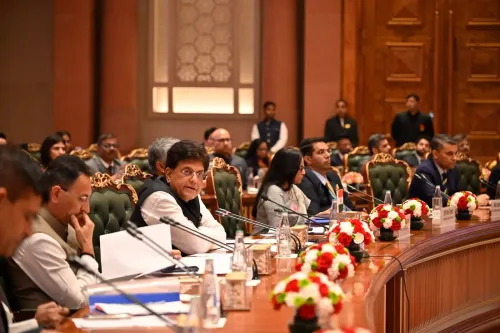
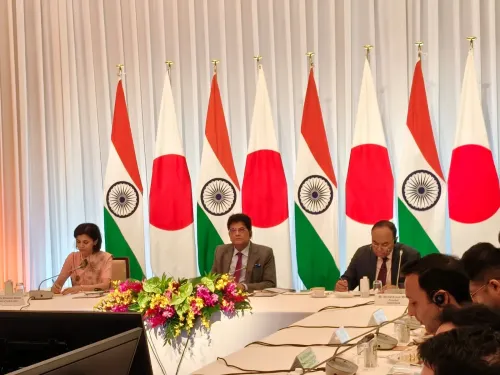
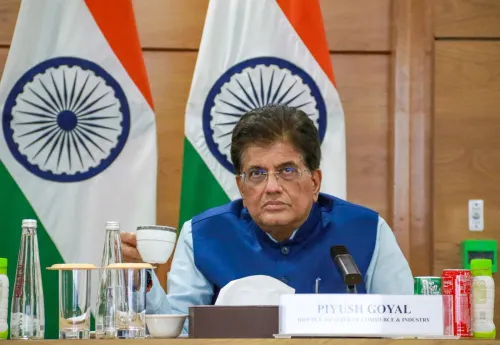
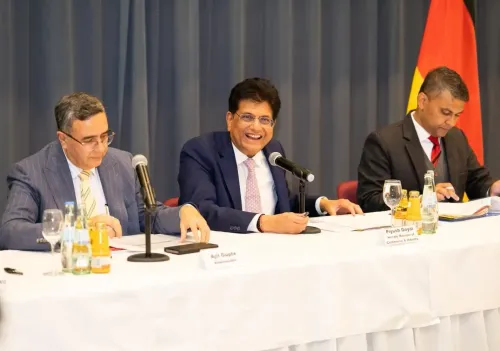
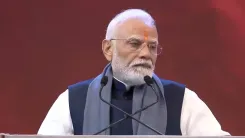
The report was released by Commerce Minister Piyush Goyal during his official visit to Berlin .
ASSOCHAM highlighted MSMEs as key beneficiaries of deeper India-Germany business engagement.
India's exports of goods and services to Germany could surpass $50 billion by 2030, driven by deeper utilisation of the India-EU Free Trade Agreement (FTA) and stronger bilateral economic cooperation, according to a report released by Commerce and Industry Minister Piyush Goyal in Berlin on 23 October 2026. The report, published by industry chamber ASSOCHAM, projects that the India-EU FTA will inject fresh momentum into bilateral trade, unlocking significant gains across multiple export sectors.
Sectors Set to Gain
The ASSOCHAM report highlights that the EU's anticipated offer of zero-duty access to a substantial share of Indian exports could directly benefit sectors including textiles, apparel, leather, footwear, gems and jewellery, marine products, engineering goods, pharmaceuticals, and electronics. These are among India's most competitive export categories, and preferential market access could materially alter their European trade trajectory.
Notably, SP Sharma of ASSOCHAM put forward a more ambitious projection, stating that exports could climb as high as $60 billion (approximately €54 billion) by 2030 if cooperation in trade, investment, and technology deepens as anticipated.
What Industry Leaders Said
ASSOCHAM President Nirmal K. Minda emphasised that India and Germany can leverage their complementary strengths — India's expanding manufacturing and services base alongside Germany's formidable industrial ecosystem — to unlock new growth avenues. 'Deeper industry engagement can create new opportunities for businesses, particularly MSMEs, and strengthen long-term economic ties,' Minda said.
ASSOCHAM Secretary General Saurabh Sanyal pointed to Germany's Green and Sustainable Development Partnership as a key enabler. 'Cooperation in renewable energy, green hydrogen, electric mobility and battery storage can support investment, technology exchange and sustainable industrial development,' Sanyal said.
Strategic Cooperation Beyond Trade
Beyond traditional export categories, the report identifies emerging areas of bilateral opportunity including advanced manufacturing, semiconductors, digital technology, critical minerals, and defence. These sectors align closely with both countries' long-term industrial strategies — India's push to become a global manufacturing hub and Germany's drive to diversify critical supply chains away from geopolitical risk.
Business-to-business engagement, sectoral interactions, and buyer-seller meetings were flagged as key mechanisms to convert strategic intent into tangible commercial outcomes, with a specific emphasis on expanding participation from Indian MSMEs.
ASSOCHAM's Roadmap
The industry chamber said it will continue to facilitate engagement and knowledge-sharing to help Indian businesses tap opportunities in Germany. The report was released during Minister Goyal's official visit to Berlin, signalling the Indian government's intent to use the ongoing India-EU FTA negotiations as a platform for sharpening bilateral economic ties. With the FTA talks at a critical juncture, the timing of the report is unlikely to be coincidental.
Point of View
Which has been a decade-long work in progress. The report's real value is less in the headline number and more in the sectoral specificity: zero-duty access for textiles, pharma and electronics addresses precisely the segments where India is globally competitive but currently disadvantaged by EU tariffs. What the report glosses over is the reciprocity risk — EU market access for Indian goods will come with equivalent pressure to open Indian markets to European manufacturers. For MSMEs, that could mean opportunity and exposure in the same stroke. Minister Goyal's decision to release the report in Berlin rather than New Delhi is itself a diplomatic signal, suggesting the government is using commercial optimism to keep FTA momentum alive.
NationPress
23 Oct 2026
Frequently Asked Questions
What does the ASSOCHAM report on India-Germany trade project?
The ASSOCHAM report projects that India's exports of goods and services to Germany could exceed $50 billion by 2030, rising to as much as $60 billion (approximately €54 billion), if the India-EU FTA is fully utilised and bilateral cooperation deepens. The report was released by Commerce Minister Piyush Goyal during his visit to Berlin on 23 October 2026.
Which Indian export sectors stand to benefit most from the India-EU FTA?
Sectors expected to gain from zero-duty EU market access include textiles, apparel, leather, footwear, gems and jewellery, marine products, engineering goods, pharmaceuticals, and electronics. These are among India's most competitive export categories in European markets.
What new areas of India-Germany cooperation does the report identify?
Beyond traditional trade, the report highlights advanced manufacturing, semiconductors, digital technology, critical minerals, and defence as emerging cooperation areas. Germany's Green and Sustainable Development Partnership also opens avenues for collaboration in renewable energy, green hydrogen, electric mobility, and battery storage.
Who released the ASSOCHAM report and where?
Commerce and Industry Minister Piyush Goyal released the ASSOCHAM report in Berlin during his official visit to Germany on 23 October 2026. The setting underscored the Indian government's intent to advance the India-EU FTA and strengthen bilateral economic ties.
How will the India-EU FTA affect Indian MSMEs?
ASSOCHAM President Nirmal K. Minda said deeper industry engagement could create new opportunities specifically for MSMEs, helping them access German and broader European markets. The chamber committed to facilitating business-to-business engagement, sectoral interactions, and buyer-seller meetings to translate the partnership into tangible outcomes for smaller businesses.