India targets $1 trillion bioeconomy by 2047, $300 billion by 2030
Synopsis
India's bioeconomy has already surged from $10 billion to $195 billion — and the government is now targeting $300 billion by 2030 and a full $1 trillion by 2047. With 11,000-plus biotech startups and BRIC topping national research rankings, the ambition is real. The question is whether commercialisation can keep pace with research output.
Key Takeaways
Jitendra Singh announced India's bioeconomy targets of $300 billion by 2030 and $1 trillion by 2047 at the BRIC AGM on 21 November 2026 .
India's bioeconomy has grown from approximately $10 billion to more than $195 billion in recent years.
BRIC ranked first in health sciences and second in biological sciences among government institutions in India for the second consecutive year, per the Nature Index India .
India's biotechnology startup ecosystem now has more than 11,000 startups .
The government's D.E.S.I.G.N. for BioE3 Challenge received over 6,000 proposals from school students and citizens.
Singh called for deeper academia-industry collaboration and faster translation of research into commercial products.
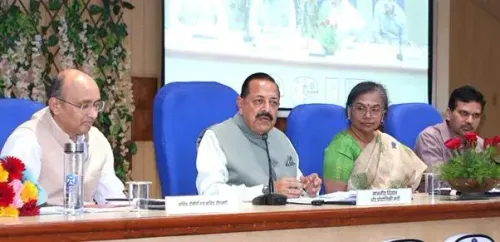
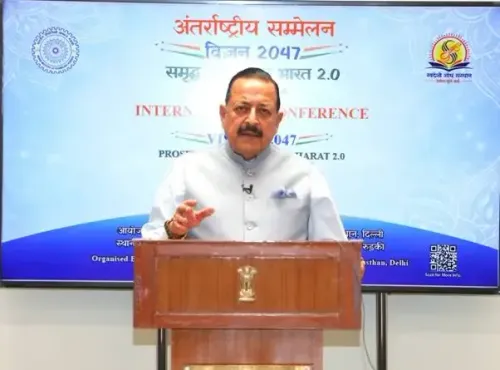
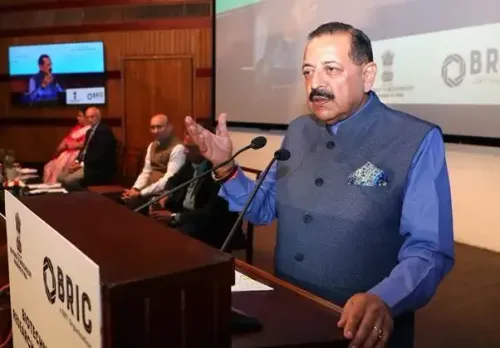
India has set an ambitious roadmap to grow its bioeconomy to $300 billion by 2030 and further to $1 trillion by 2047, Union Minister Dr. Jitendra Singh announced on Saturday, 21 November 2026, emphasising the need for sharper scientific innovation, faster commercialisation of research, and deeper industry participation to reach those milestones.
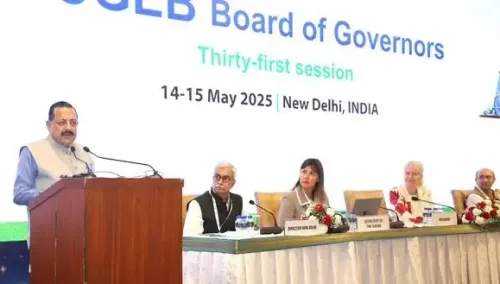
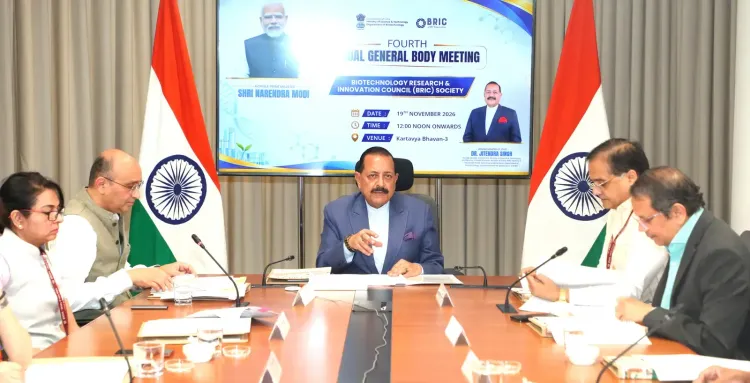
The minister was speaking at the 4th Annual General Meeting (AGM) of the Biotechnology Research and Innovation Council (BRIC) Society in New Delhi, where he outlined the scale of progress already achieved — and the distance still to travel.
From $10 Billion to $195 Billion: The Growth So Far
Singh underscored that India's bioeconomy has expanded from roughly $10 billion to more than $195 billion in recent years, a trajectory he described as evidence of science, technology, and innovation becoming increasingly central to the country's economic growth. The jump represents a near-twenty-fold increase and places India among the fastest-growing bioeconomies globally.
He called out the need to push this growth further, stressing that scientific achievements must move beyond publications and patents to deliver tangible technologies, products, and solutions for citizens.
What BRIC Represents and Why It Matters
Singh described BRIC's model — integrating multiple biotechnology research institutions under a shared-resources and collaborative-governance framework — as one of the first of its kind in India. He noted it has since inspired similar approaches in other organisations, calling it 'a new approach to scientific institution-building where institutions work collectively, share capabilities and pursue multidisciplinary research while retaining their individual strengths.'
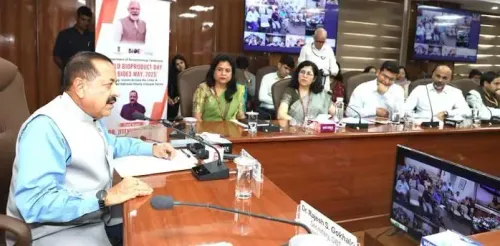
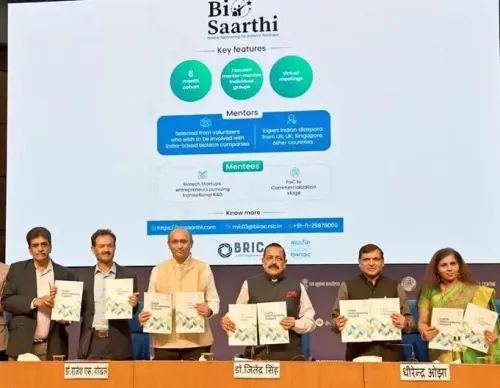
At the AGM, Department of Biotechnology Secretary and BRIC Director General Rajesh S. Gokhale presented an overview of the council's activities and achievements, covering governance reforms, research collaborations, and future priorities.
Notably, BRIC ranked first among government institutions in health sciences and second in biological sciences in India for the second consecutive year, according to the Nature Index India — a credible international benchmark for research output and quality.
Research Focus Areas and Key Sectors
The minister highlighted ongoing BRIC research across healthcare, agriculture, animal health, advanced materials, and biotechnology platforms. Specific areas of work cited include diagnostics, therapeutics, disease detection, climate-resilient agriculture, and sustainable biomaterials — sectors with direct civilian and economic impact.
Singh called for stronger academia-industry linkages, arguing that scientists, entrepreneurs, investors, and businesses must collaborate from the earliest stages of technology development to accelerate the path from laboratory to market.
Startups, Students, and the Innovation Pipeline
The minister pointed to India's biotechnology startup ecosystem, which now comprises more than 11,000 startups, as a sign of growing commercial momentum. He urged young scientists to focus on product development, technology translation, and enterprise creation rather than research output alone.
He also highlighted the government's D.E.S.I.G.N. for BioE3 Challenge, which has received more than 6,000 proposals from school students and citizens — a signal, he argued, of broad public interest in biotechnology innovation at the grassroots level.
With the 2047 centenary target now formally articulated alongside a nearer-term 2030 benchmark, the government appears to be framing biotechnology as a core pillar of its long-range economic strategy — one where execution and commercialisation will matter as much as research ambition.
Point of View
But the harder challenge lies ahead. Scaling from $195 billion to $300 billion by 2030 requires not just more research, but a functioning commercialisation pipeline that Indian science has historically struggled to build at speed. The 11,000-startup figure sounds robust, but startup count is a poor proxy for deep-tech scale; what matters is how many of those ventures are reaching revenue and clinical or regulatory validation. BRIC's research rankings are encouraging, but the minister's own admission — that achievements must move beyond publications and patents — signals an awareness that the gap between discovery and deployment remains wide. The 2047 target is visionary; the 2030 benchmark is the real test.
NationPress
21 Nov 2026
Frequently Asked Questions
What is India's bioeconomy target and when was it announced?
India aims to grow its bioeconomy to $300 billion by 2030 and $1 trillion by 2047, as announced by Union Minister Dr. Jitendra Singh at the 4th BRIC AGM in New Delhi on 21 November 2026.
How large is India's bioeconomy currently?
India's bioeconomy has grown from around $10 billion to more than $195 billion in recent years, according to figures cited by the minister at the BRIC AGM.
What is the Biotechnology Research and Innovation Council (BRIC)?
BRIC is a government body that integrates multiple biotechnology research institutions under a shared-resources and collaborative-governance model — described as one of the first such initiatives in India. It ranked first in health sciences and second in biological sciences among government institutions in the Nature Index India for two consecutive years.
How large is India's biotech startup ecosystem?
India's biotechnology startup landscape now comprises more than 11,000 startups, according to figures cited by Minister Dr. Jitendra Singh at the BRIC AGM.
What is the D.E.S.I.G.N. for BioE3 Challenge?
It is a government initiative to promote grassroots innovation in biotechnology. The challenge has received more than 6,000 proposals from school students and citizens, reflecting growing public interest in the sector.