Critical Communications India Conference: Experts push for secure, interoperable architecture

Synopsis
India's critical communications ecosystem is at a crossroads: experts and regulators at a landmark New Delhi conference are pushing for a technology-neutral, interoperable architecture — and a key unresolved question is whether the country needs a dedicated BB-PPDR network or can rely on commercial operators. The answer will define how first responders communicate in the next major disaster.
Key Takeaways
The Critical Communications India Conference concluded on 3 September in New Delhi , jointly organised by BIF and TCCA .
TRAI Secretary Harinder Kumar called for coordinated efforts to extend interoperable critical communications to every intended user.
Experts debated whether India needs a dedicated BB-PPDR network or should utilise existing commercial operator capacity.
A successful Proof of Concept was conducted by state police and public safety agencies with DCPW across 6 locations in varied terrains.
Kumar urged DoT , Ministry of Home Affairs , disaster agencies, and telecom providers to collaborate on hardened infrastructure in disaster-prone areas.
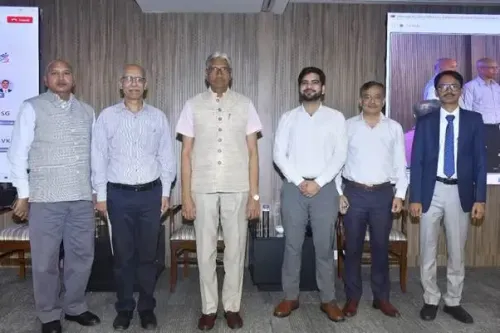
Government officials, industry leaders, and global experts at the Critical Communications India Conference in New Delhi on 3 September collectively called for a secure, interoperable, and technology-neutral critical communications architecture for India. The two-day conference, which concluded on Thursday, was jointly organised by the Broadband India Forum (BIF) and the Critical Communications Association (TCCA).
Key Developments at the Conference
Harinder Kumar, Secretary of the Telecom Regulatory Authority of India (TRAI), stressed the urgency of a coordinated national push to extend interoperable critical communications capabilities to every intended user. He noted that while India has made meaningful strides in strengthening public warning systems, the next phase must focus on ensuring those capabilities remain accessible and continue evolving alongside technology.
'Critical communications is a complex ecosystem and the requirements differ for different kinds of disasters. India has made significant progress in strengthening public warning systems but the focus must now shift towards ensuring that these capabilities reach every intended user and continue evolving with technology,' Kumar said.
Barriers to Captive Private Networks
Kumar also raised a pointed question about the limited scale-up of captive private networks in India, calling on stakeholders to identify and dismantle the barriers preventing their wider adoption. He urged the Department of Telecommunications (DoT), the Ministry of Home Affairs, disaster management agencies, and telecom service providers to work in concert to build hardened telecom infrastructure specifically in disaster-prone regions.
BB-PPDR Network Debate
A central theme of the conference was whether India should establish a dedicated Broadband Public Protection and Disaster Relief (BB-PPDR) network or leverage the existing capacity of commercial telecom operators. Participants underscored the critical importance of seamless interoperability, priority communications access for first responders, operational resilience, and rigorous field testing to ensure systems hold up under the most adverse conditions.
Notably, participants reviewed a successful Proof of Concept exercise conducted by state-level police and public safety agencies in coordination with the Directorate of Coordination Police Wireless (DCPW) across 6 different locations spanning varied geographies, terrains, and climatic conditions. An expert session drew out the operational learnings from these extensive user trials and highlighted the need for sustained stakeholder engagement ahead of future deployment.
Conference Scope and Participation
The conference brought together senior representatives from government bodies, regulators, public safety and disaster management agencies, standards organisations, and the global mission-critical communications industry. Discussions spanned proof-of-concept frameworks, network and device interoperability, next-generation device ecosystems, control centre operations, backward compatibility with legacy devices, and implementation pathways for future-ready critical communications networks.
What Comes Next
With the proof-of-concept phase now complete across multiple terrains, India's critical communications community faces a pivotal decision on network architecture — one that will shape how first responders and disaster agencies communicate during crises for years to come. The coming months are expected to see intensified inter-ministerial consultations and further stakeholder engagement to chart a deployment roadmap.
Point of View
But the conference signals it has reached an inflection point. The unresolved BB-PPDR question — dedicated network versus commercial overlay — is not merely technical; it is a governance and funding challenge that has stalled similar initiatives globally. TRAI's public nudge to DoT and the Ministry of Home Affairs is telling: without clearer inter-ministerial ownership, even a well-designed architecture risks implementation paralysis. The six-location proof-of-concept is a genuine step forward, but moving from controlled trials to nationwide deployment across India's diverse terrain is an entirely different order of complexity.
NationPress
3 Sept 2026
Frequently Asked Questions
What was the Critical Communications India Conference about?
The Critical Communications India Conference, held in New Delhi on 3 September, brought together government officials, regulators, industry leaders, and global experts to discuss building a secure, interoperable, and technology-neutral critical communications architecture for India. Key topics included network design choices, first-responder priority access, and lessons from field trials.
What is the BB-PPDR network debate?
BB-PPDR stands for Broadband Public Protection and Disaster Relief. Conference participants debated whether India should build a dedicated BB-PPDR network exclusively for public safety and disaster response, or whether existing commercial telecom operator networks could be adapted to serve the same purpose. No final decision was announced at the conference.
What did TRAI Secretary Harinder Kumar say at the conference?
Harinder Kumar urged a coordinated national push to ensure interoperable critical communications capabilities reach every intended user. He also called on DoT, the Ministry of Home Affairs, disaster management agencies, and telecom providers to jointly build hardened telecom infrastructure in disaster-prone areas, and flagged the need to understand why captive private networks have not yet scaled in India.
What was the Proof of Concept exercise mentioned at the conference?
State-level police and public safety agencies, in coordination with the Directorate of Coordination Police Wireless (DCPW), conducted a Proof of Concept exercise across 6 locations covering different geographies, terrains, and climatic conditions. The exercise generated operational learnings that experts said should inform future deployment planning.
Who organised the Critical Communications India Conference?
The conference was jointly organised by the Broadband India Forum (BIF) and the Critical Communications Association (TCCA), and brought together senior stakeholders from government, regulatory bodies, public safety agencies, standards organisations, and the global mission-critical communications industry.