MeitY showcases India's digital accessibility push to UN disability rights expert
Synopsis
India laid out its most comprehensive digital accessibility case to a UN disability rights expert during an official visit this week — from enforceable ICT standards and 73 certified ministries to a VR learning platform for persons with intellectual disabilities. The showcase positions India as a potential model for disability-inclusive e-governance in the developing world.
Key Takeaways
MeitY briefed UN Special Rapporteur Heba Hagrass on India's digital accessibility work during her 16–25 November 2026 visit.
GIGW 3.0 aligns Indian government websites with WCAG 2.1 Level AA ; IS 17802 became enforceable under amended RPwD Rules in 2023 .
73 ministries and departments have been accessibility-certified through STQC .
UX4G has supported over 400 government websites/apps ; its widget is live on more than 1,800 websites .
UMANG delivers citizen services in 23 languages ; Divyang Sarthi offers VR-based learning for persons with intellectual disabilities.
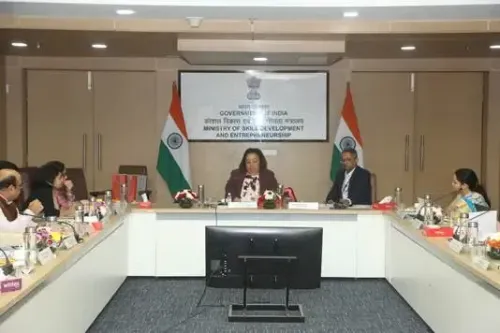
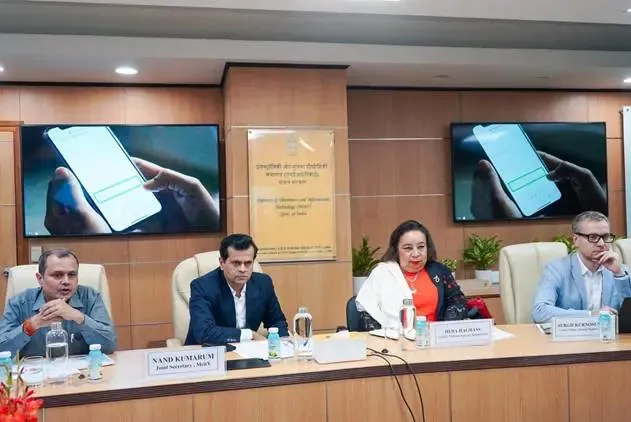
The Ministry of Electronics and Information Technology (MeitY) held a formal interaction on 20 November 2026 with Heba Hagrass, the United Nations Special Rapporteur on the Rights of Persons with Disabilities, presenting India's wide-ranging digital accessibility and inclusion programmes, according to an official statement. The meeting forms part of Hagrass's official visit to India from 16 to 25 November 2026.
Key Initiatives Presented
MeitY spotlighted the Guidelines for Indian Government Websites and Apps (GIGW) 3.0, aligned with the globally recognised Web Content Accessibility Guidelines (WCAG) 2.1 Level AA standard. The ministry also highlighted Indian Standard IS 17802, a benchmark for accessibility of ICT products and services that became enforceable following amendments to the Rights of Persons with Disabilities (RPwD) Rules in 2023.
On the certification front, MeitY noted that 73 ministries and departments have now been certified through the Standardisation Testing and Quality Certification (STQC) body, using digital testing tools including SugamyaWeb and SATYA.
UX, Multilingual and Assistive Tools
The ministry showcased UX4G, which has provided UX audit and design support to over 400 government websites and apps. Its accessibility widget is reportedly deployed across more than 1,800 websites. For multilingual access, MeitY highlighted Bhashini and the UMANG platform, which delivers citizen services in 23 languages, alongside the Namaste Bharat AI citizen guide featuring voice-based and multilingual capabilities.
Among dedicated assistive solutions, the ministry presented Divyang Sarthi — a platform that uses virtual reality-based learning content specifically designed for persons with intellectual disabilities.
Who Attended the Meeting
The interaction was attended by representatives from the Ministry of External Affairs, the National Informatics Centre (NIC), STQC, the Centre for Development of Advanced Computing (C-DAC), and the National e-Governance Division (NeGD). The multi-agency turnout signals the breadth of coordination underlying India's digital inclusion architecture.
What MeitY Committed To
MeitY reiterated its commitment to regularly updating accessibility guidelines in line with international standards, expanding certification and compliance programmes, building capacity among officials and developers, and sharing India's tools and best practices internationally. The ministry also indicated it would continue developing digital assistive solutions to deepen inclusion for persons with disabilities. The engagement comes amid growing global scrutiny on how governments translate disability rights commitments into digital service delivery — an area where India is increasingly positioning itself as a standard-setter in the Global South.
Point of View
There is an implicit accountability moment. Having 73 certified ministries sounds substantial, but it also means a large share of India's hundreds of central bodies remains outside the certified fold. The real measure of this framework is whether GIGW 3.0 compliance is audited independently and whether assistive tools like Divyang Sarthi scale beyond pilot cohorts. Showcasing tools to a UN expert is diplomacy; closing the last-mile gap for rural persons with disabilities using voice-based citizen services is governance.
NationPress
20 Nov 2026
Frequently Asked Questions
What digital accessibility initiatives did India showcase to the UN?
India presented GIGW 3.0 aligned with WCAG 2.1 Level AA, the enforceable IS 17802 ICT standard, accessibility certification for 73 ministries, tools like SugamyaWeb and SATYA, the UX4G framework, and Divyang Sarthi's VR-based learning platform for persons with intellectual disabilities.
Who is Heba Hagrass and why was she in India?
Heba Hagrass is the United Nations Special Rapporteur on the Rights of Persons with Disabilities. She was on an official visit to India from 16 to 25 November 2026 to review the country's compliance with disability rights commitments, including digital inclusion.
What is Divyang Sarthi?
Divyang Sarthi is a government-backed platform that provides virtual reality-based learning content designed specifically for persons with intellectual disabilities. It was among the assistive solutions MeitY highlighted during the UN interaction.
How many government websites use the UX4G accessibility widget?
More than 1,800 websites have deployed the UX4G accessibility widget, according to MeitY. The UX4G programme has also provided UX audit and design support to over 400 government websites and apps.
When did India's ICT accessibility standard become enforceable?
Indian Standard IS 17802, covering accessibility of ICT products and services, became enforceable following amendments to the Rights of Persons with Disabilities (RPwD) Rules in 2023.