India quick commerce market to hit $90 billion by FY31, users to cross 100 million

Synopsis
A joint Google-Redseer report projects India's quick commerce market will balloon from $13 billion in FY26 to $90 billion by FY31 — a nearly seven-fold jump — with monthly transacting users set to cross 100 million. This festive season alone could see quick commerce sales surge 110 per cent year-on-year, signalling the sector is shifting from a metro convenience play to a mainstream retail force.
Key Takeaways
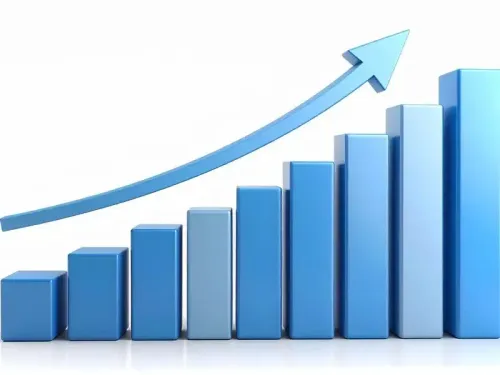
India's quick commerce market is projected to grow from $13 billion in FY26 to $90 billion by FY31 , per a Google-Redseer report.
Monthly transacting users are expected to exceed 100 million nationwide by FY31 .
Quick commerce sales are forecast to rise 110 per cent year-on-year this festive season, accounting for 18 per cent of online festive spending.
Metro cities are set to deliver about 60 per cent of incremental growth, with metro users nearly doubling from 28 million to 50 million .
No major retail category has yet crossed 15 per cent quick commerce penetration, indicating significant room for expansion.
Google India's Karan Dugal said winning brands will be those that understand 'micro-nuances' across metro and non-metro purchase behaviours.
India's quick commerce market is on course to surge from approximately $13 billion in FY26 to $90 billion by FY31, with monthly transacting users projected to exceed 100 million across the country, according to a report released on Wednesday, 7 October 2026. The findings, published jointly by Google and Redseer Strategy Consultants, chart one of the most dramatic growth arcs in Indian consumer technology.
Festive Season as a Near-Term Catalyst
The report flags strong short-term momentum, projecting quick commerce sales to rise 110 per cent year-on-year during the ongoing festive season. That would account for roughly 18 per cent of total online festive spending — a share that would have been unthinkable just two or three seasons ago. The numbers underscore how deeply embedded quick commerce has become in India's urban shopping calendar.
Metros to Drive 60 Per Cent of Incremental Growth
Metropolitan cities are expected to contribute about 60 per cent of incremental growth through FY31, as quick commerce's share of metro retail spend is forecast to climb from nearly 6 per cent today to 20–23 per cent over the same period. Metro user counts are set to nearly double, rising from 28 million to close to 50 million. Notably, no major retail category has yet crossed 15 per cent penetration in quick commerce, signalling considerable headroom for expansion.
From Top-Up Orders to Full Pantry Replenishment
The report identifies the grocery segment as the next critical frontier. Platforms and brands, it argues, must transition consumers from occasional top-up purchases to full monthly household pantry replenishment cycles. To achieve this, the report recommends leveraging stock recency, supply chain transparency, bulk-pack availability, and value-oriented pricing — alongside targeted replenishment marketing and re-order nudge mechanisms to build habitual restocking behaviour.
What Industry Leaders Are Saying
Karan Dugal, Head of Industry for Quick Commerce and FoodTech at Google India, said the sector had evolved well past a single-playbook model, with purchase behaviours shifting sharply across metros and non-metros, and spanning everyday essentials to high-ticket electronics. 'As the industry marches toward the milestone of 100 million monthly transacting users, winning will belong to brands that understand these micro-nuances,' Dugal said. He added that Google is focused on 'building deep trust with first-time shoppers, driving precise re-engagement with past buyers, and fostering enduring brand loyalty.'
A Broader Phase of Expansion
According to the report, quick commerce in India has moved beyond its early urban-centric, high-frequency grocery model and is now entering a broader phase of category and geographic expansion. The sector's evolution mirrors patterns seen in China's on-demand retail market, though India's scale and diversity of consumer behaviour present unique execution challenges. How effectively platforms manage the shift from convenience-led impulse purchases to planned, high-volume replenishment orders will largely determine which players emerge dominant by FY31.
Point of View
But the harder question is structural: quick commerce's growth so far has been powered by high-frequency, low-basket grocery top-ups in a handful of metros. Scaling to $90 billion requires cracking monthly pantry replenishment and non-metro adoption — two habits that have proved stubborn to shift. The festive season surge is real, but festive cycles are not everyday behaviour. Platforms chasing 100 million users will face margin pressure as they move into smaller cities with thinner density and higher delivery costs; the unit economics that work in Bengaluru may not translate to Bhopal without significant subsidy. Investors and analysts watching this space should track basket size and order frequency trends, not just user counts.
NationPress
7 Oct 2026
Frequently Asked Questions
How big is India's quick commerce market expected to become by FY31?
India's quick commerce market is projected to reach $90 billion by FY31, up from approximately $13 billion in FY26, according to a joint report by Google and Redseer Strategy Consultants. Monthly transacting users are expected to exceed 100 million over the same period.
What is driving quick commerce growth in India's festive season?
Quick commerce sales are forecast to rise 110 per cent year-on-year during the festive season, accounting for about 18 per cent of all online festive spending. Deeper metro wallet share and rapid user acquisition are cited as the primary near-term drivers.
Which cities will lead quick commerce growth through FY31?
Metro cities are projected to deliver around 60 per cent of incremental quick commerce growth through FY31. Quick commerce's share of metro retail spend is expected to climb from nearly 6 per cent today to 20–23 per cent, with metro user counts almost doubling from 28 million to nearly 50 million.
What must brands do to capture the next phase of quick commerce growth?
According to the report, brands must move consumers beyond occasional top-up orders toward full monthly household pantry replenishment. This requires leveraging bulk-pack availability, value pricing, supply chain transparency, and targeted re-order nudge marketing to build recurring restocking habits.
What did Google India say about competing in the quick commerce space?
Karan Dugal, Head of Industry for Quick Commerce and FoodTech at Google India, said purchase behaviours have shifted dramatically across metros and non-metros. He stated that 'winning will belong to brands that understand these micro-nuances,' with Google focused on building trust with first-time shoppers and driving re-engagement with past buyers.