Nobel Chemistry 2026: Kagan and Soai crack century-old homochirality puzzle
Synopsis
Two scientists — a 96-year-old Frenchman and a 76-year-old Japanese chemist — have jointly won the 2026 Nobel in Chemistry for cracking a mystery older than quantum mechanics itself: how life ended up using only one mirror-image form of its molecules. Their discoveries, spanning 1986 to 2003, are now reshaping how the pharmaceutical industry builds life-saving drugs.
Key Takeaways
The Nobel Prize in Chemistry 2026 was awarded on 7 October 2026 to Henri B.
Kagan (France) and Kenso Soai (Japan).
They were honoured for discovering non-linear effects and autocatalysis in asymmetric organic synthesis .
Their work explains how homochirality — the one-sided molecular preference found in all living organisms — can emerge spontaneously.
Kagan made his pivotal breakthrough in 1986 ; Soai achieved a fully homochiral reaction in 2003 .
The two laureates share a cash prize of 12 million Swedish kronor .
The discoveries have major implications for pharmaceutical manufacturing , where chirally correct molecules are critical for drug safety and efficacy.
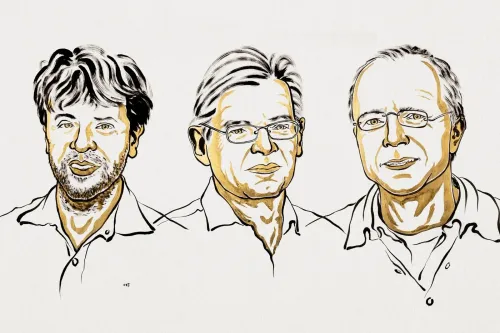
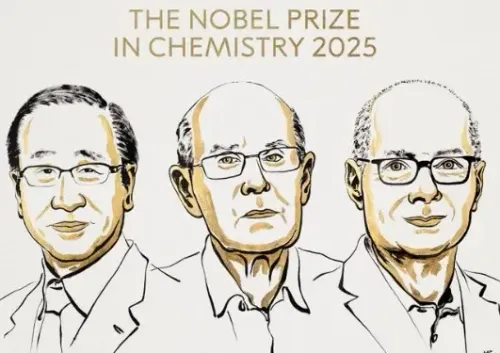
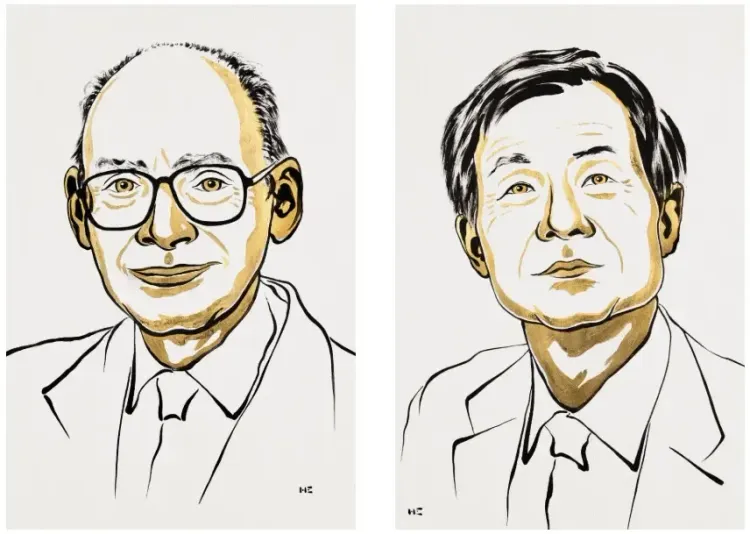
The Royal Swedish Academy of Sciences on 7 October 2026 awarded the Nobel Prize in Chemistry 2026 jointly to French chemist Henri B. Kagan and Japanese chemist Kenso Soai for their landmark discoveries of non-linear effects and autocatalysis in asymmetric organic synthesis. The two scientists are credited with resolving a question that had confounded chemists for more than a century: how molecular asymmetry, or homochirality, emerges spontaneously in nature.
The Century-Old Mystery They Solved
Many molecules — including the amino acids that form the building blocks of life — exist in two mirror-image forms. Although these variants are chemically similar, living organisms overwhelmingly use only one. For decades, scientists could not explain how such stark selectivity arose naturally.
According to the Nobel Committee for Chemistry, chemists had traditionally obtained equal amounts of both mirror-image molecules during laboratory synthesis, making it impossible to replicate the one-sided preference seen in biological systems.
Kagan's 1986 Breakthrough and Soai's 1995 Landmark
Kagan, born in 1930 in Boulogne-Billancourt, France, made the first decisive advance in 1986 by developing a new method to steer chemical reactions, enabling the production of a far higher excess of one molecular mirror image than had previously been considered achievable. He earned his PhD from the Collège de France in 1960 and is currently Professor Emeritus at the former Université Paris-Sud.
Building on that foundation, Soai — born in 1950 in Hiroshima, Japan, and a PhD graduate of the University of Tokyo (1979) — demonstrated in 1995 a groundbreaking chemical reaction with the potential to become fully homochiral. In 2003, he achieved a defining milestone by presenting a reaction that produced only one of the two possible mirror-image forms, a feat previously observed exclusively in biological systems. Soai is Professor Emeritus at Tokyo University of Science.
What the Nobel Committee Said
Heiner Linke, Chair of the Nobel Committee for Chemistry, described the discoveries in precise terms: 'Henri Kagan and Kenso Soai have provided a solution to a chemical mystery that is over a century old: how homochirality can emerge spontaneously. The chemical reactions they have developed are spectacular.'
The Academy noted that the laureates' work has had a profound impact on modern chemistry, particularly in the design and manufacture of pharmaceuticals, where producing the correct molecular mirror image is often critical for therapeutic effectiveness.
Prize Money and What Comes Next
The two laureates will share a cash prize of 12 million Swedish kronor, split equally between them. The formal prize ceremony is traditionally held in Stockholm on 10 December, the anniversary of Alfred Nobel's death.
The recognition of Kagan and Soai is expected to accelerate interest in autocatalytic chemistry and its applications in drug development, where chirally pure compounds can be the difference between a life-saving medicine and an ineffective or harmful one.
Point of View
In one sense, overdue — their core findings date to 1986 and 2003, and autocatalytic homochirality has been a cornerstone of synthetic chemistry pedagogy for two decades. What the Committee is really signalling, however, is the field's applied moment: chirally pure drug synthesis is no longer a laboratory curiosity but a manufacturing imperative, with regulatory agencies worldwide now routinely demanding single-enantiomer drugs. The prize also quietly underscores a generational truth — Kagan is 96 — that foundational chemistry is a long game. The pharmaceutical industry's pivot toward chiral APIs in the past decade has made this work commercially indispensable, and that timing almost certainly factored into the Nobel Committee's calculus.
NationPress
7 Oct 2026
Frequently Asked Questions
Who won the Nobel Prize in Chemistry 2026?
French chemist Henri B. Kagan and Japanese chemist Kenso Soai were jointly awarded the Nobel Prize in Chemistry 2026 by the Royal Swedish Academy of Sciences on 7 October 2026. They were honoured for their discoveries of non-linear effects and autocatalysis in asymmetric organic synthesis.
What is homochirality and why does it matter?
Homochirality refers to the phenomenon where living organisms use predominantly one mirror-image form of molecules such as amino acids, even though both forms are chemically similar. Understanding how this selectivity emerges naturally is critical for biology and for the pharmaceutical industry, where producing the wrong mirror image of a drug can render it ineffective or harmful.
What specific discoveries did Kagan and Soai make?
Henri Kagan developed a method in 1986 to steer chemical reactions toward producing a much higher excess of one molecular mirror image than previously possible. Kenso Soai built on this in 1995 and by 2003 had demonstrated a reaction that produced exclusively one mirror-image form — a result previously seen only in biological systems.
How much prize money do Kagan and Soai receive?
The two laureates share a cash prize of 12 million Swedish kronor, split equally between them. The formal award ceremony is traditionally held in Stockholm on 10 December each year.
Why do the discoveries matter for pharmaceuticals?
Many drugs are chiral molecules, meaning they exist in two mirror-image forms with potentially very different effects in the body. The methods pioneered by Kagan and Soai allow chemists to synthesise the correct mirror-image form reliably and at scale, improving both therapeutic effectiveness and drug safety.