Anurag Thakur fires back at Rahul Gandhi over India's economy
Synopsis
BJP MP Anurag Thakur challenged Rahul Gandhi over India's economic record, contrasting UPA's 'Fragile Five' stigma with India's rise to the world's fifth-largest economy under the Modi government, in a pointed post on 21 November 2026.
Key Takeaways
Anurag Thakur directly addressed Rahul Gandhi , framing Congress's economic criticism as the 'pain' of a party that presided over India's 'Fragile Five' era.
During UPA's second term (2009–2014) , India faced slowing growth, high inflation, a record current-account deficit, and a sharply depreciating rupee.
The 'Fragile Five' label was coined in 2013 for five emerging-market currencies, including the Indian rupee, vulnerable to capital outflows.
India overtook the United Kingdom to become the world's fifth-largest economy by nominal GDP , confirmed by IMF data in 2022 .
The BJP-Congress contest over economic legacy is a recurring feature of Indian political discourse, intensifying around elections and quarterly GDP releases.
Multilateral institutions project India could enter the top-three global economies within the next decade at current growth trajectories.
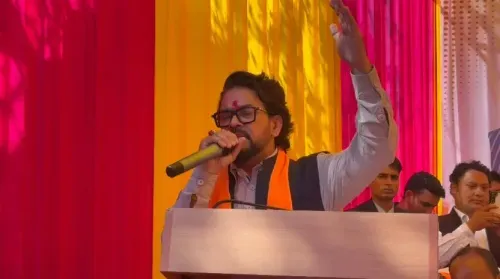
From the 'Fragile Five' to the world's fifth-largest economy — BJP MP Anurag Thakur deployed that arc in a single pointed post on Saturday, 21 November 2026, directing it squarely at Congress leader Rahul Gandhi in what is fast becoming one of Indian politics' most rehearsed but high-stakes arguments: who built the economy, and who broke it?
The jab and what it actually says
Thakur's post, written in Hindi, translates to: 'Rahul Gandhi ji, during your UPA government's time, India was one of the world's five staggering, crumbling economies. Today, thanks to the Modi government's effective economic policies, India is counted among the world's top-5 economies. Could this be the source of your pain?' The rhetorical sting is deliberate — framing Gandhi's critique of the current government not as legitimate opposition but as the grief of a party that presided over economic turbulence.
The 'Fragile Five' tag and how India earned it
The reference to India being among five 'staggering' economies points to a real and bruising episode. In 2013, a global investment bank coined the term 'Fragile Five' for emerging-market currencies — including India's rupee — that had become dangerously dependent on foreign capital to fund their deficits. The label landed during UPA's second term (2009–2014), a period marked by slowing GDP growth, stubbornly high inflation, a current-account deficit that ballooned to historic levels, and what critics and even some economists described as policy paralysis at the centre. The rupee fell sharply, touching record lows against the dollar in mid-2013.
India's climb to fifth-largest economy
The counter-narrative Thakur invokes is equally grounded in data. India overtook the United Kingdom to become the world's fifth-largest economy by nominal GDP — a milestone confirmed by IMF figures in 2022. The journey from outside the top ten to the top five unfolded across successive quarters of growth, driven by a combination of structural reforms, digital infrastructure investment, and a manufacturing push under the Make in India initiative. India is now widely projected by multilateral institutions to be a top-three economy within the next decade.
A familiar battle, sharper stakes
The BJP-Congress exchange over economic legacy is not new — it has been a fixture of parliamentary debates, election rallies, and social media for over a decade. What keeps it alive is that both sides have genuine data points to lean on: the UPA years also saw India sustain 8–9% GDP growth in its first term (2004–2009), a fact Congress regularly invokes. The BJP's counter is the second-term collapse and the 'Fragile Five' stigma. Thakur's post, with its sharp closing question, is a volley in that ongoing exchange — timed, as such posts often are, to respond to a Gandhi statement or interview that criticised the current government's economic record.
The next GDP quarterly release or Economic Survey will give both sides fresh ammunition. The ranking argument, however, has already moved from debating-point to diplomatic talking-point — and that is unlikely to change any time soon.
Point of View
Then pivot to a verifiable milestone — the fifth-largest economy ranking — to claim the moral high ground. The strategy is effective precisely because both the 'Fragile Five' stigma and the IMF ranking are real, giving the attack a factual spine that is hard to dismiss. For Congress, the challenge is that defending UPA's second-term record while attacking the current government's economic management requires threading a needle that few opposition communicators have managed cleanly. The exchange also signals that economic governance will remain a central battleground in the next electoral cycle, with GDP rankings, inflation data, and global perceptions all serving as contested terrain.
NationPress
21 Nov 2026
Frequently Asked Questions
What is the 'Fragile Five' that Anurag Thakur referenced?
The 'Fragile Five' was a term coined in 2013 for five emerging-market economies — including India — whose currencies were seen as highly vulnerable due to large current-account deficits and dependence on foreign capital. India's inclusion came during the UPA government's second term, when the rupee hit record lows.
When did India become the world's fifth-largest economy?
India overtook the United Kingdom to become the world's fifth-largest economy by nominal GDP, a milestone confirmed by IMF data in 2022. This is the ranking Thakur cited in his post to contrast with the UPA-era 'Fragile Five' label.
What was India's economy like during the UPA government?
UPA's first term (2004–2009) saw strong 8–9% GDP growth, but the second term (2009–2014) was marked by slowing growth, high inflation, a widening current-account deficit, and a depreciating rupee — conditions that earned India the 'Fragile Five' tag.
Why did Anurag Thakur target Rahul Gandhi on the economy?
Thakur's post appears to be a direct rebuttal to criticism by Rahul Gandhi of the current government's economic management. The BJP MP used the contrast between UPA-era economic stress and India's current top-5 GDP ranking to challenge the credibility of Gandhi's critique.
Is India projected to grow further in global GDP rankings?
Yes. Multiple multilateral institutions, including the IMF and World Bank, have projected that India could become one of the world's top-three economies within the next decade, based on current growth trajectories and demographic trends.