Shekhawat Meets Tajik Culture Minister at SCO Forum in Delhi
Synopsis
Union Culture Minister Gajendra Singh Shekhawat met Tajikistan's Culture Minister at the 1st SCO Civilisation Dialogue Forum in New Delhi, discussing manuscript digitisation, literary heritage, artist exchanges, and academic collaboration to deepen the two countries' civilisational ties.
Key Takeaways
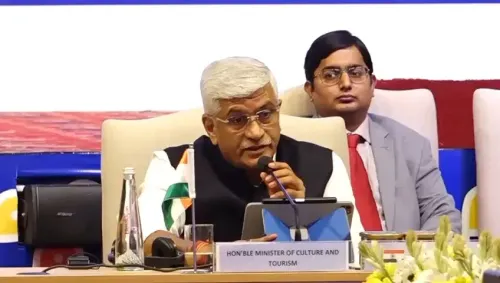
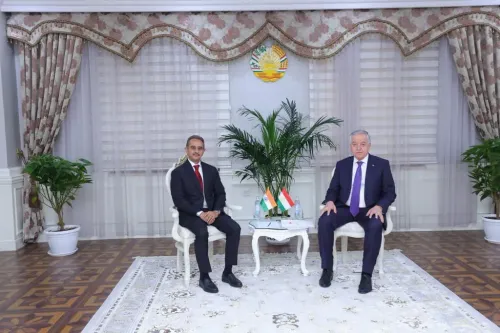
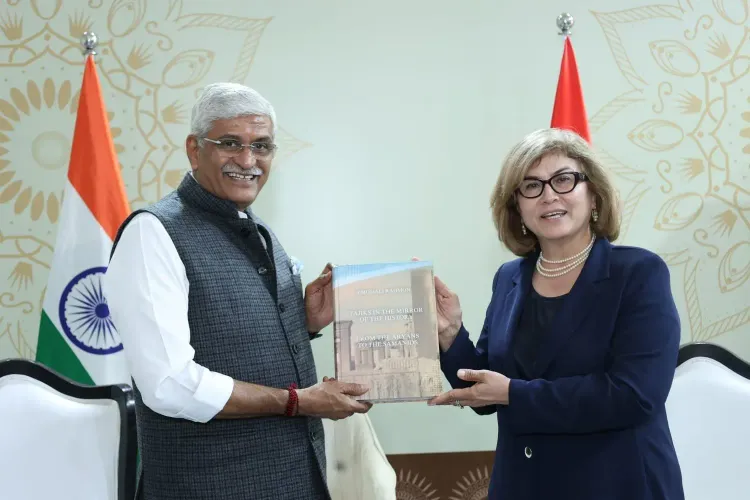
Gajendra Singh Shekhawat held a bilateral meeting with Tajikistan's Culture Minister Sattoriyon Matlubakhon Amonzoda in New Delhi on 21 November 2026 .
The meeting took place on the sidelines of the 1st SCO Civilisation Dialogue Forum , hosted in New Delhi.
Both sides discussed preservation and digitisation of shared manuscripts , literary heritage promotion, and artist and institutional exchanges.
Greater academic collaboration between India and Tajikistan was also agreed upon as a priority area.
Shekhawat highlighted Tajikistan's Sumanak tradition recently inscribed on UNESCO's Representative List of Intangible Cultural Heritage as a shared regional milestone.
India has been a full SCO member since 2017 , using its cultural mechanisms to deepen Central Asia engagement.
Centuries of shared manuscripts, poetry, and Persianate language — and now a formal push to preserve them together. Union Culture and Tourism Minister Gajendra Singh Shekhawat held a bilateral meeting with Tajikistan's Minister of Culture, H.E. Ms. Sattoriyon Matlubakhon Amonzoda, on the sidelines of the 1st SCO Civilisation Dialogue Forum in New Delhi on 21 November 2026, signalling a concrete step in India's cultural diplomacy with Central Asia.
What the two ministers put on the table
The talks were substantive. Shekhawat described the exchange as 'warm and meaningful,' with both sides agreeing to explore the preservation and digitisation of shared manuscripts, promotion of literary heritage, and structured exchanges between artists and cultural institutions. Greater academic collaboration was also on the agenda — a recognition that the India-Tajikistan civilisational thread runs deep through literature and language, not just diplomatic protocol.
Shekhawat noted the recent inscription of Tajikistan's Sumanak tradition on UNESCO's Representative List of Intangible Cultural Heritage as a shared regional celebration — a pointed reminder that the cultural bonds being discussed are alive, not archival.
Why the SCO forum is the right room for this conversation
India joined the Shanghai Cooperation Organisation as a full member in 2017, and the SCO's cultural mechanisms have since become one of New Delhi's primary channels for structured people-to-people engagement with Central Asian states. The 1st SCO Civilisation Dialogue Forum, hosted in New Delhi, is precisely the kind of multilateral architecture India has sought to leverage — bringing together member states on shared heritage rather than security or trade alone.
Tajikistan occupies a particularly resonant place in that framework. The two countries share roots in Persianate literary culture, with classical poets and texts forming a common inheritance that predates modern borders by centuries. Manuscript digitisation — one of the specific proposals on the table — would make that inheritance accessible and protect it from physical degradation.
India's Central Asia soft-power play, one meeting at a time
This bilateral sits within a broader pattern: India has consistently used cultural diplomacy through SCO platforms to complement its strategic Central Asia outreach. The emphasis on intangible heritage, academic links, and artist exchanges reflects a deliberate soft-power toolkit — one that builds durable influence without the friction of economic or security negotiations.
The Ministry of Culture, the Ministry of External Affairs, and the Prime Minister's Office were all tagged in Shekhawat's post, underlining that this is not a standalone ministerial courtesy call. It is being positioned as part of a coordinated diplomatic signal.
The next test will be whether the manuscript digitisation proposal and the artist-exchange framework produce concrete agreements — at a follow-up SCO cultural meeting, a bilateral summit, or a joint UNESCO session. The conversation has been opened with unusual specificity. Whether it closes with a signed programme is the question to watch.
Point of View
Artist exchanges, academic links) suggests New Delhi is moving beyond symbolic gestures toward institutionalised soft power. Tajikistan, with its deep Persianate literary heritage, is a high-value partner in that effort. The coordination across the Culture Ministry, MEA, and PMO signals this is strategic, not ceremonial.
NationPress
21 Nov 2026
Frequently Asked Questions
What is the SCO Civilisation Dialogue Forum?
The SCO Civilisation Dialogue Forum is a multilateral platform for cultural exchange among Shanghai Cooperation Organisation member states. The first edition was hosted in New Delhi in November 2026, bringing together culture ministers and officials to discuss shared heritage and people-to-people ties.
What did India and Tajikistan agree to discuss at the SCO forum?
India and Tajikistan discussed preserving and digitising shared manuscripts, promoting literary heritage, facilitating exchanges between artists and cultural institutions, and deepening academic collaboration between the two countries.
What is the Sumanak tradition and why was it mentioned?
Sumanak is a traditional Tajik cultural practice that was recently inscribed on UNESCO's Representative List of Intangible Cultural Heritage. Culture Minister Shekhawat cited it as an example of the rich shared cultural traditions connecting the India-Central Asia region.
When did India join the Shanghai Cooperation Organisation?
India became a full member of the Shanghai Cooperation Organisation (SCO) in 2017, which opened structured avenues for cultural and people-to-people cooperation with Central Asian states including Tajikistan.
Who is Gajendra Singh Shekhawat?
Gajendra Singh Shekhawat is India's Union Minister of Culture and Tourism, a senior BJP leader, and a Lok Sabha MP from Jodhpur, Rajasthan. He represents India in international cultural diplomacy engagements including SCO forums.