India-Rwanda nuclear energy and AI cooperation talks held in New Delhi
Synopsis
India and Rwanda have opened a new chapter in bilateral ties, with Minister Dr. Jitendra Singh agreeing to virtually address the Nuclear Energy Innovation Summit for Africa (NEISA 2026) in Kigali this May. The talks signal India's deepening push into Africa's nuclear and AI landscape through its Global South partnership framework.
Key Takeaways
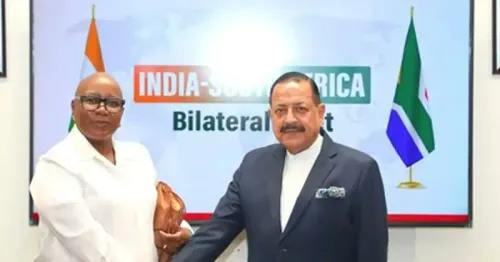
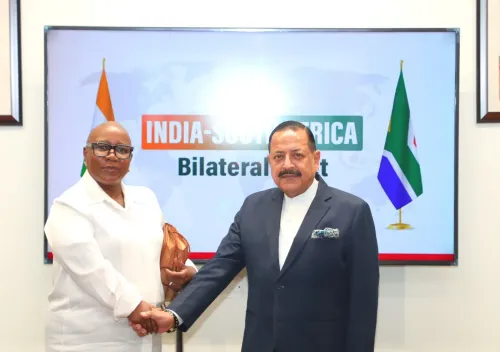
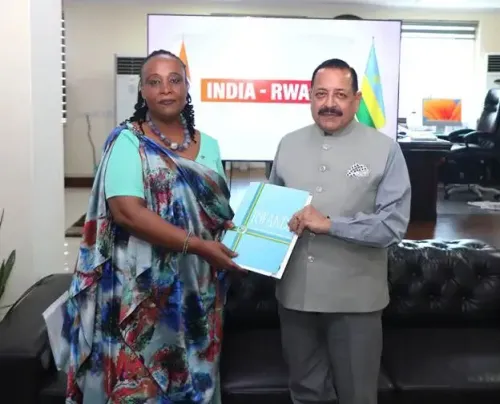
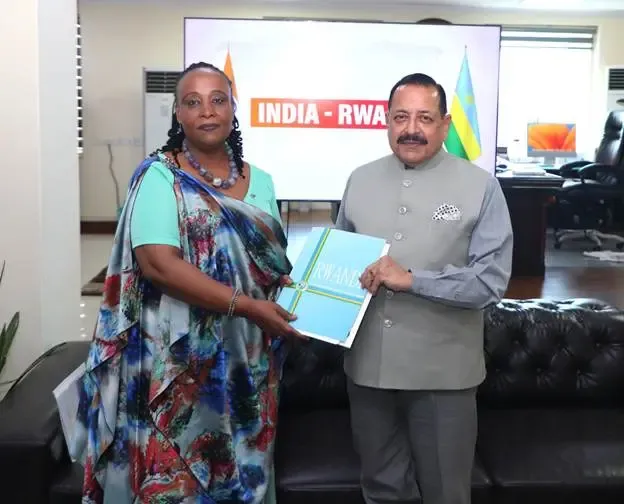
Jitendra Singh , Minister of State for Science and Technology, met Rwanda's High Commissioner Jacqueline Mukangira in New Delhi on 9 May 2025 .
Singh to the Nuclear Energy Innovation Summit for Africa (NEISA 2026) in Kigali, 18–21 May 2026 ; he will participate virtually .
Both sides discussed cooperation in nuclear energy , AI , space technology , biotechnology , and digital governance .
NEISA 2026 is co-organised with IAEA , UNECA , the Nuclear Energy Agency , and the World Nuclear Association .
The engagement reflects India's broader Global South outreach strategy, accelerated since the G20 New Delhi Summit 2023 .
India attaches high importance to international cooperation in emerging and transformative technologies and remains committed to strengthening partnerships with countries of the Global South, Minister of State (Independent Charge) for Science and Technology Dr. Jitendra Singh said on Saturday, 9 May, during a meeting with Rwanda's top diplomat in New Delhi.
Rwanda Extends Summit Invitation
High Commissioner of Rwanda to India, Jacqueline Mukangira, called on Dr. Singh to invite him to the Nuclear Energy Innovation Summit for Africa (NEISA 2026), scheduled to be held at the Kigali Convention Centre in Rwanda from 18–21 May 2026. The summit is being organised in collaboration with leading international bodies including the International Atomic Energy Agency (IAEA), the United Nations Economic Commission for Africa (UNECA), the Nuclear Energy Agency, and the World Nuclear Association.
Dr. Singh regretted his inability to attend in person but confirmed he would participate virtually and address a designated session during the summit, according to the Department of Atomic Energy.
Key Areas of Bilateral Discussion
During the interaction, both sides explored avenues for deepening India-Rwanda cooperation across science and technology, innovation, atomic energy applications, digital capacity building, and emerging technologies. Dr. Singh highlighted India's growing global engagement in frontier sectors including nuclear energy, space technology, biotechnology, artificial intelligence (AI), and digital governance — areas he described as being driven by the vision of Prime Minister Narendra Modi for technology-led inclusive development.
The Rwandan delegation conveyed strong interest in India's expanding scientific and technological capabilities and expressed keenness to deepen institutional partnerships with Indian ministries, scientific organisations, and innovation platforms.
NEISA 2026: What the Summit Covers
The proposed session for Dr. Singh at NEISA 2026 is expected to focus on nuclear energy deployment, AI integration, and manufacturing partnerships. The summit is designed to bring together ministers, policymakers, scientists, innovators, industry leaders, and strategic stakeholders to deliberate on nuclear energy innovation, AI integration, manufacturing ecosystems, and future-ready energy partnerships for Africa.
Discussions also covered opportunities for collaboration in research, education, innovation ecosystems, and capacity-building initiatives between the two countries — signalling a broadening of the bilateral relationship beyond traditional diplomatic ties.
Broader Context
This engagement comes amid India's accelerating outreach to African nations under its Global South partnership framework, which has gained momentum since the G20 New Delhi Summit of 2023. India's nuclear and space agencies have increasingly been positioned as soft-power assets in South-South cooperation. Notably, this is one of the first high-level bilateral interactions between India and Rwanda specifically centred on nuclear energy and AI — sectors that are rapidly shaping Africa's development agenda.
With NEISA 2026 just weeks away, the outcome of Dr. Singh's virtual address could set the tone for a more structured institutional partnership between the two nations.
Point of View
But as a template for its Global South diplomacy. By positioning its scientific agencies as partners rather than donors, India is carving out a distinct role in Africa's energy transition, one that rivals China's infrastructure-heavy approach. However, the real test lies in follow-through: past India-Africa science partnerships have often stalled at the MoU stage. Whether NEISA 2026 translates into concrete institutional linkages — joint research, technology transfer, or training programmes — will determine if this is a diplomatic photo opportunity or the start of something durable.
NationPress
24 Sept 2026
Frequently Asked Questions
What is NEISA 2026 and why is India involved?
NEISA 2026 (Nuclear Energy Innovation Summit for Africa) is an international summit scheduled from 18–21 May 2026 at the Kigali Convention Centre in Rwanda. India is involved because Minister Dr. Jitendra Singh has been invited to address a session on nuclear energy deployment, AI, and manufacturing partnerships, reflecting India's growing engagement with African nations on frontier technologies.
Will Dr. Jitendra Singh attend NEISA 2026 in person?
No. Dr. Singh regretted his inability to visit Rwanda personally but confirmed he will participate virtually and address a designated session during the summit, according to the Department of Atomic Energy.
What areas of cooperation did India and Rwanda discuss?
Both sides discussed cooperation in science and technology, atomic energy applications, artificial intelligence, digital capacity building, space technology, biotechnology, digital governance, research, education, and innovation ecosystems.
Which international organisations are co-organising NEISA 2026?
NEISA 2026 is being organised in collaboration with the International Atomic Energy Agency (IAEA), the United Nations Economic Commission for Africa (UNECA), the Nuclear Energy Agency, the World Nuclear Association, and regional financial institutions.
How does this meeting fit into India's broader foreign policy?
The meeting is part of India's accelerating Global South outreach, which gained momentum after the G20 New Delhi Summit in 2023. India has been positioning its nuclear and space agencies as assets in South-South cooperation, seeking to deepen institutional ties with African nations in emerging technology sectors.