India and Rwanda Strengthen Bilateral Relations: Key Areas Discussed
Synopsis
India and Rwanda engage in a pivotal Joint Commission Meeting, focusing on enhancing bilateral ties in key sectors such as defence, agriculture, and trade. The meeting marks a significant step towards deepening cooperation and cultural exchange between the two nations.
Key Takeaways
Joint Commission Meeting held to strengthen bilateral ties.
Focus on key sectors: defence , agriculture , trade , health , and education .
A Cultural Exchange Programme for 2026-30 was agreed upon.
Rwanda is attracting more Indian investors, particularly from Gujarat.
India is Rwanda's second-largest foreign investor and trading partner.
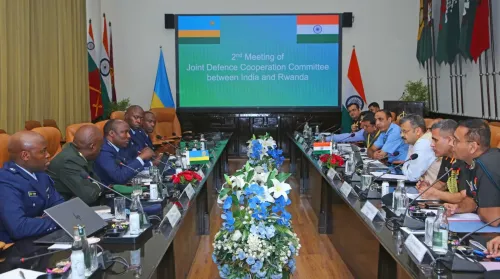
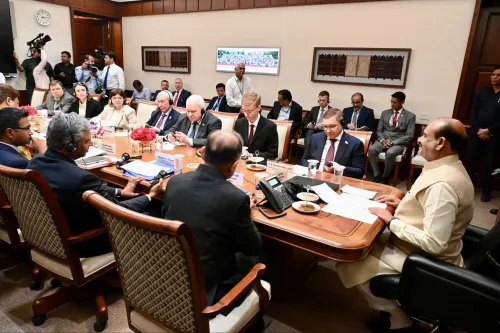
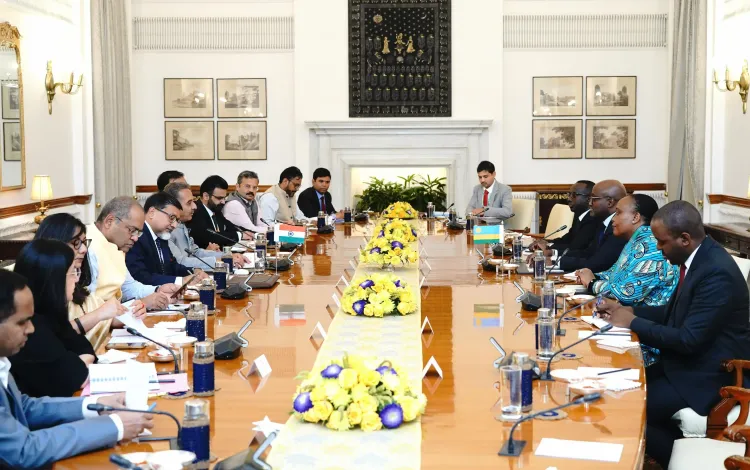
On March 3rd in New Delhi, India and Rwanda convened for their Joint Commission Meeting, where they evaluated a wide range of bilateral relations. This included crucial sectors such as defence, agriculture, trade and investment, health, education, science and technology, digital platforms, culture, and people-to-people interactions.
The meeting was co-chaired by Union Minister of State for External Affairs Kirti Vardhan Singh and Rwanda's Minister of Foreign Affairs and International Cooperation Olivier J P Nduhungirehe. The gathering also saw the participation of Sudhakar Dalela, Secretary (Economic Relations) in the Ministry of External Affairs (MEA), along with several officials.
Kirti Vardhan Singh shared on X, "I am delighted to co-chair the second India-Rwanda Joint Commission Meeting alongside Amb. Olivier J.P. Nduhungirehe, Hon'ble Minister of Foreign Affairs & International Cooperation, Government of Rwanda. We thoroughly reviewed our bilateral relations, covering defence, agriculture, trade & investment, health, education, S&T, digital platforms, culture, and people-to-people interactions. Additionally, both nations exchanged opinions on regional and global matters of shared interest. A Cultural Exchange Programme (CEP) for the years 2026-30 was finalized."
Nduhungirehe arrived in India on Monday, participating in the 11th Raisina Dialogue as well as the 2nd India-Rwanda Joint Commission Meeting.
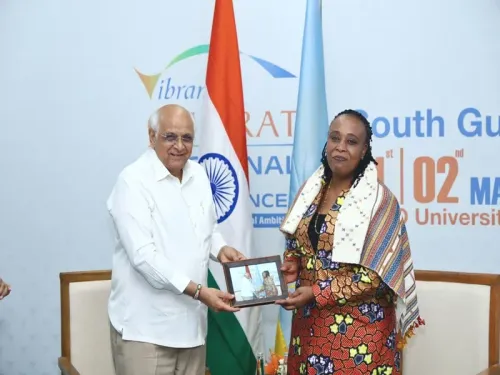
Earlier in January, Rwanda’s Ambassador to India, Jacqueline Mukangira, noted an increasing number of Gujaratis venturing into Rwanda due to the favorable investment climate which offers both fiscal and non-fiscal incentives to local and foreign investors, and a strict stance on corruption.
During a conversation with IANS at the Vibrant Gujarat Regional Conference, the East African envoy remarked, "Rwanda and India share excellent bilateral relations, with numerous Indians, especially from Gujarat, establishing businesses in Rwanda. India stands as Rwanda's second-largest foreign investor and its second-largest trading partner."
She further elaborated that Rwanda imports pharmaceuticals, ICT machinery and equipment, as well as products like rice, textiles, and sugar—most of which can be sourced from Gujarat.
The MEA highlighted that the relationship between India and Rwanda has been amicable and has developed steadily over the years. Rwanda inaugurated its Mission in New Delhi in 1999, appointing its first resident Ambassador in 2001. India commenced its resident Mission in Kigali with the arrival of the High Commissioner on August 15, 2018.
Point of View
Which could lead to broader regional stability and development.
NationPress
3 Oct 2026
Frequently Asked Questions
What was discussed at the India-Rwanda Joint Commission Meeting?
The meeting covered various sectors including defence, agriculture, trade and investment, health, education, science and technology, digital platforms, culture, and people-to-people contacts.
Who co-chaired the meeting?
The meeting was co-chaired by Union Minister of State for External Affairs Kirti Vardhan Singh and Rwanda's Minister of Foreign Affairs Olivier J P Nduhungirehe.
What cultural initiative was signed during the meeting?
A Cultural Exchange Programme for the years 2026-30 was signed between the two nations.
Why are more Gujaratis investing in Rwanda?
Gujaratis are attracted to Rwanda due to its conducive investment environment, which includes fiscal and non-fiscal incentives and a strict anti-corruption policy.
What is the status of India-Rwanda relations?
India and Rwanda enjoy cordial bilateral relations that have grown steadily over the years, with India being the second-largest foreign investor in Rwanda.