India's space sector: 440 startups registered, 18 get IN-SPACe authorisations
Synopsis
India's space liberalisation is moving from policy to launchpad: 440 startups are now registered, 18 have IN-SPACe authorisations, and more than eight private rocket launches are expected in the next two years. The names on the authorised list — from Agnikul Cosmos to Skyroot — signal that India's commercial space race is no longer a future promise but an active, government-backed reality.
Key Takeaways
Around 440 space technology startups are registered on the DPIIT Start-up India portal as of 13 August .
IN-SPACe has issued 113 authorisations to 52 Non-Government Entities for various space activities.
18 of the authorised entities are startups, including Agnikul Cosmos , Skyroot Aerospace , Dhruva Space , and Bellatrix Aerospace .
Two private commercial rocket launches are planned for 2026-27 ; more than six are expected in 2027-28 .
Access to ISRO infrastructure at Sriharikota is available to private players via a standard operating procedure reviewed by an expert committee.
India's private space sector crossed a significant milestone, with around 440 space technology startups now registered on the Department for Promotion of Industry and Internal Trade (DPIIT)'s Start-up India portal, the government informed Parliament on Thursday, 13 August. Private Indian space companies are also expected to conduct more than eight commercial rocket launches over the next two financial years.
IN-SPACe Authorisations at a Glance
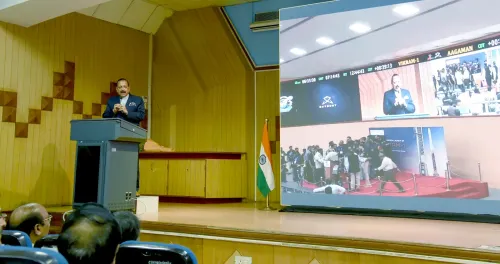
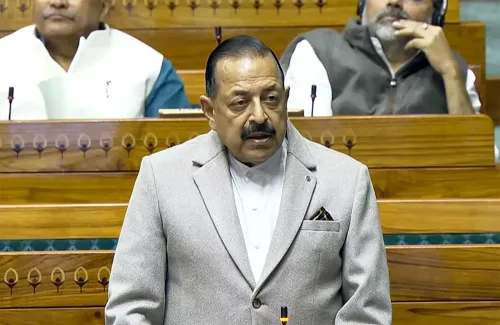
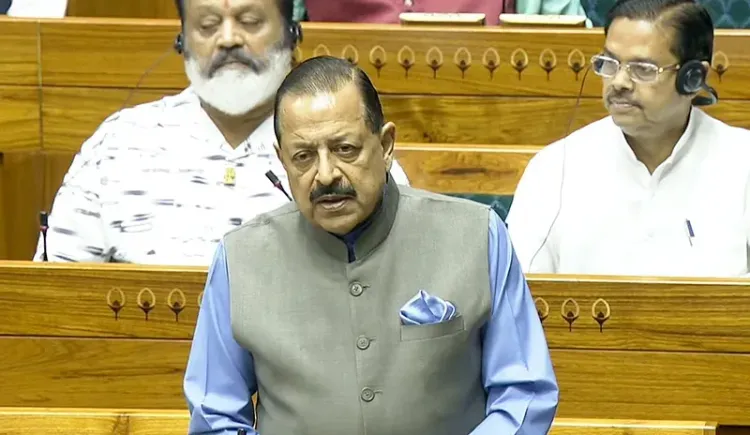
The Indian National Space Promotion and Authorisation Centre (IN-SPACe) has granted 113 authorisations to 52 Non-Government Entities (NGEs) to undertake various space activities, according to a written reply submitted to the Rajya Sabha by Union Minister of State Jitendra Singh. Of these, 18 authorisations have gone to startups, marking a concrete step in the sector's liberalisation.
Authorised startups include Agnikul Cosmos, Bellatrix Aerospace, Dhruva Space, Digantara Research and Technologies, GalaxEye Space Solutions, Manastu Space Technologies, PixxelSpace India, Skyroot Aerospace, and Space Kidz India. The full list also covers Akshath Aerospace, Azista BST, Cosmoserv Space India, HEX20Labs India, Inorbit Space Telecommunications, NSpace Tech India, OrbitAID Aerospace, PierSight Space, and TakeMe2Space Technologies.
Commercial Launch Manifest
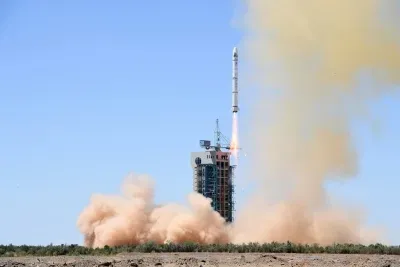
On the launch front, two commercial rocket launches by private companies are proposed during financial year 2026-27. For 2027-28, the launch manifest is yet to receive IN-SPACe approval, but more than six launches by Indian private entities are anticipated — bringing the two-year total to over eight.
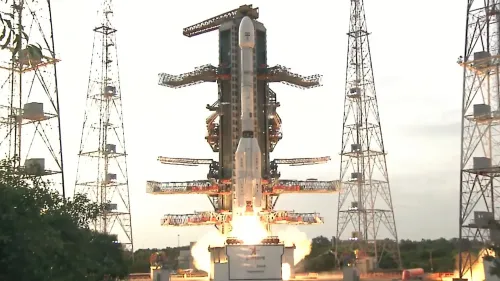
Access to Indian Space Research Organisation (ISRO) infrastructure, including launch pads at the Satish Dhawan Space Centre in Sriharikota, is processed through a standard operating procedure. Applications submitted via IN-SPACe's digital platform are reviewed for technical readiness by an expert committee before clearance.
Why This Matters
India's decision to open its space sector to private participation — formalised through the IN-SPACe framework — is reshaping the country's role in the global space economy. Notably, the surge to 440 registered startups reflects growing entrepreneurial confidence in a domain that was, until recently, the exclusive preserve of government agencies.
This comes amid a broader global race for commercial space dominance, with countries including the United States, Japan, and members of the European Union aggressively backing private launch and satellite ventures. India's sub-orbital and orbital launch capabilities, combined with cost-competitive engineering, give its startups a structural advantage — one that the government appears committed to nurturing through infrastructure access and regulatory authorisations.
What Comes Next
Industry observers will watch whether IN-SPACe approves the expanded 2027-28 launch manifest on schedule, and whether the pipeline of 440 startups translates into a proportionate rise in operational missions. The government's continued push to streamline applications through a digital platform signals intent, but execution timelines for individual launches will be the real test of the framework's effectiveness.
Point of View
But the more consequential number is 18 — the startups that have actually cleared IN-SPACe's authorisation process. The gap between registration and authorisation reveals how steep the compliance and readiness bar remains. With only two launches confirmed for 2026-27 and the 2027-28 manifest still unapproved, India's private space ambitions are real but not yet at velocity. The true stress test will come when multiple startups compete for the same Sriharikota launch window — and whether IN-SPACe's expert committee can scale its review capacity to match the pipeline.
NationPress
27 Sept 2026
Frequently Asked Questions
How many space startups are registered in India?
Around 440 space technology startups are registered on the DPIIT's Start-up India portal, according to a government statement made to Parliament on 13 August. This figure reflects the rapid growth of India's private space ecosystem following the sector's liberalisation.
What is IN-SPACe and what authorisations has it granted?
The Indian National Space Promotion and Authorisation Centre (IN-SPACe) is the regulatory body overseeing private participation in India's space sector. It has granted 113 authorisations to 52 Non-Government Entities, of which 18 are startups cleared to undertake specific space activities.
Which startups have received IN-SPACe authorisations?
Authorised startups include Agnikul Cosmos, Skyroot Aerospace, Bellatrix Aerospace, Dhruva Space, Digantara Research and Technologies, GalaxEye Space Solutions, Manastu Space Technologies, PixxelSpace India, Space Kidz India, and several others including PierSight Space and TakeMe2Space Technologies.
How many private rocket launches are planned in the next two years?
Two commercial rocket launches by private companies are proposed for financial year 2026-27. More than six additional launches are expected in 2027-28, though the manifest for that year is yet to be approved by IN-SPACe, bringing the projected two-year total to over eight.
Can private companies access ISRO's launch infrastructure at Sriharikota?
Yes. Private companies can apply for access to ISRO facilities, including launch pads at the Satish Dhawan Space Centre in Sriharikota, through a standard operating procedure. Applications submitted via IN-SPACe's digital platform are reviewed by an expert committee for technical readiness before approval.