India textile industry could reach $350 billion by FY31: Report

Synopsis
India's textile and apparel industry could reach $350 billion by FY31, a BCG-CII report says. But its $100 billion export ambition would require growth of more than 20% a year after roughly a decade of exports remaining near $37 billion.
Key Takeaways
BCG and CII project that India's textile and apparel industry could reach $350 billion by FY31 , subject to improvements in scale and productivity.
The report estimates the industry is currently worth $190 billion-$200 billion and employs more than 45 million people .
Exports have remained around $37 billion over the past decade; reaching $100 billion by FY31 would require annual growth above 20% .
India's domestic textiles and apparel market is estimated at nearly $157 billion and is forecast to grow 9%-10% annually through FY31 .
The report says fibre production must rise from 14 million-15 million metric tonnes to 22 million-26 million metric tonnes over the next eight years .
India's textile and apparel industry could grow from an estimated $190 billion-$200 billion to $350 billion by FY31, including $100 billion in exports, according to a report by Boston Consulting Group (BCG) and the Confederation of Indian Industry (CII). The projection depends on manufacturers increasing their scale, productivity and global competitiveness.
The report, released on Monday, 23 November, describes an industry supported by a large domestic market, an established manufacturing base and a substantial workforce. It also identifies stagnant exports and limited participation in synthetic-led categories as areas where growth would need to accelerate.
Domestic demand anchors industry
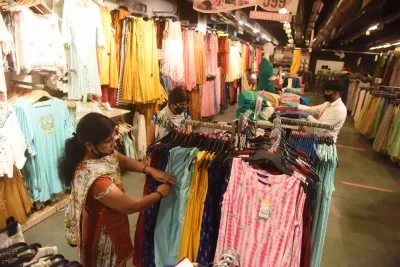
The report estimates India's domestic textiles and apparel market at nearly $157 billion, or close to 80% of the overall industry. It forecasts annual domestic-market growth of 9%-10% through FY31.
The industry employs more than 45 million people, with women accounting for around half the workforce, according to the report. It also contributes 13% of India's industrial output, around 11% of manufacturing gross value added and 12% of total exports.
Those figures show the breadth of the industry's role, spanning production, employment and overseas trade. The $350 billion figure is a conditional growth projection rather than a measure of its current size.
Export target requires faster growth
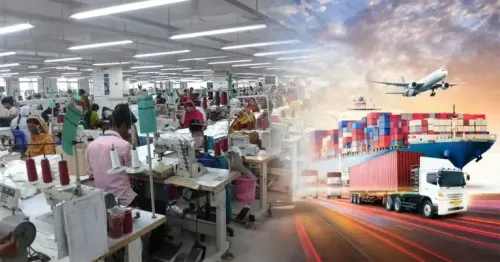
Exports have remained largely stagnant at around $37 billion over the past decade, the report said. Reaching $100 billion by FY31 would require annual export growth of more than 20%, substantially faster than the pattern described in the report.
Nishant Shekhar, Managing Director and Partner and India Head of Consumer Practice at BCG, said India accounts for more than 6% of global textile exports but only 3% of global garment exports. He identified manufacturing scale, productivity and product diversification as factors in capturing further opportunities.
Shekhar also pointed to the possibility of building integrated clusters covering activities from spinning to garmenting. He said such clusters currently account for 5%-6% of manufacturing and identified scope to increase their share.
Synthetic-led categories offer scope
The report highlights a gap between the importance of synthetic fibres in global trade and India's share of two product categories. Synthetic fibres account for 74% of the fibre mix in global outerwear trade and 72% in sportswear trade; India's respective shares of those categories are 0.1% and 0.4%.
Shekhar identified knitwear, outerwear and sportswear as synthetic-led categories in which India could seek a larger share. The report calls for stronger capabilities in synthetic fibres, fabric processing and garmenting, alongside investment in technology and modern manufacturing.
Fibre capacity and the road to FY31
India's fibre production needs to rise from its current 14 million-15 million metric tonnes to 22 million-26 million metric tonnes over the next eight years, the report said. That increase would be part of the broader manufacturing expansion it identifies.
For workers and manufacturers, the projections place attention on both the domestic market and the export opportunities in finished garments. The report's FY31 outcome will depend on whether the industry can translate those opportunities into greater production capacity, productivity and exports.
Point of View
But it should not obscure the industry's small shares of global outerwear and sportswear trade. Progress should be judged against measurable gains in productivity, fibre capacity and exports, not the headline forecast alone.
NationPress
23 Nov 2026
Frequently Asked Questions
How large could India's textile industry become by FY31?
India's textile and apparel industry could reach $350 billion by FY31, according to a BCG-CII report. The forecast depends on improvements in manufacturing scale, productivity and global competitiveness.
What is India's textile export target in the report?
The report identifies an ambition of $100 billion in textile and apparel exports by FY31. Exports have remained largely stagnant at around $37 billion over the past decade, and the report says reaching that figure would require annual growth above 20%.
How many people work in India's textile and apparel industry?
The industry employs more than 45 million people, according to the report. Women account for around half of its workforce.
Why does the report highlight synthetic fibres?
Synthetic fibres dominate the fibre mix in global outerwear and sportswear trade, but India's share of those categories remains small. The report calls for stronger synthetic-fibre, fabric-processing and garmenting capabilities.
What needs to change for India's textile industry to reach the forecast?
The report identifies greater manufacturing scale, productivity and global competitiveness as conditions for reaching the forecast. It also says fibre production must increase to 22 million-26 million metric tonnes over the next eight years.