Did Sensex and Nifty Decline After a Turbulent Session?
Synopsis
Indian equity markets faced a downturn on January 5, with Sensex and Nifty closing lower after a turbulent trading session. Amid profit booking and sector-specific declines, analysts highlight critical resistance levels as market sentiment remains cautiously optimistic ahead of upcoming Q3 earnings.
Key Takeaways
Indian equity markets closed lower after a volatile session.
Key resistance levels for Nifty are between 26,300 and 26,350.
Profit booking was evident across major stocks.
Real estate and FMCG sectors demonstrated resilience.
Q3 earnings will be significant in guiding market trends.
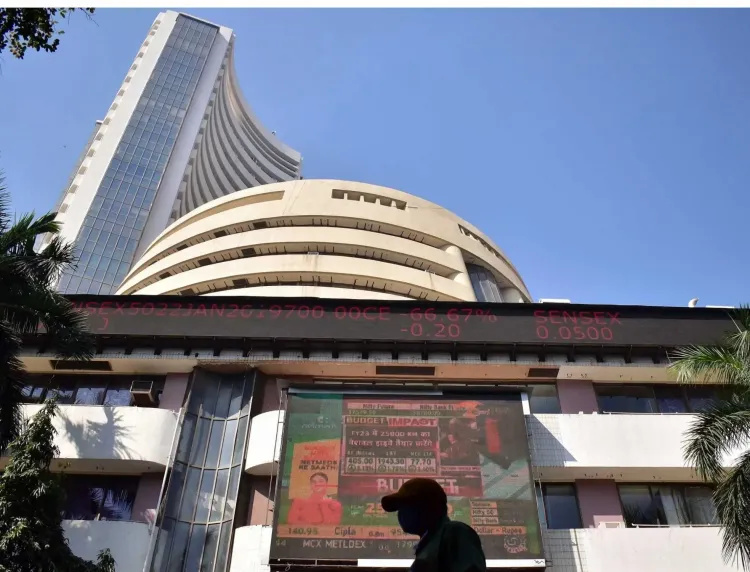
Mumbai, January 5 (NationPress) The Indian equity markets concluded the day lower on Monday following a volatile trading session, as selling pressure in the information technology and oil and gas sectors negatively impacted overall market sentiment.
Investor caution prevailed amid mixed global signals after a US military action in Venezuela that led to the arrest of President Nicolas Maduro.
At market close, the Nifty settled at 26,250.30, dropping 78.25 points or 0.3 percent.
“The 26,300–26,350 range is now a critical resistance level; a decisive and sustained breakout above this could reignite bullish momentum and pave the way towards 26,500 in the near future,” stated an analyst.
“Conversely, a clear breach below 26,200 may trigger a corrective move towards 26,050–26,000,” the analyst added.
Similarly, the Sensex closed in the negative territory at 85,439.62, down 322.39 points or 0.38 percent.
Earlier in the session, markets had shown a positive trend, with the Nifty reaching a new record high of 26,373.20.
However, these gains proved fleeting as investors opted to book profits at elevated levels, resulting in a pullback during the latter part of the trading day.
Major stocks such as HDFC Bank, Infosys, HCLTech, Bajaj Finance, and TCS emerged as the top losers, dragging the benchmark indices lower.
On a positive note, shares of Bharat Electronics, Hindustan Unilever, Tata Steel, UltraTech Cement, and Axis Bank provided some support and closed as top gainers.
The broader market displayed mixed results, with the Nifty Midcap index finishing slightly lower by 0.16 percent, while the Nifty Smallcap index dropped by 0.53 percent.
Sector-wise, technology and oil and gas stocks faced the most pressure, with the Nifty IT and Nifty Oil and Gas indices declining by approximately 1 percent each.
In contrast, real estate stocks outperformed the market, as the Nifty Realty index surged by over 2 percent.
FMCG and consumer durable sectors also saw gains, indicating persistent buying interest in defensive and consumption-oriented stocks.
Looking forward, Q3 earnings will take center stage, guiding short-term market trends, as sentiment remains moderately optimistic, analysts noted.
Point of View
It is essential to recognize that the fluctuations in the Indian equity markets reflect broader economic sentiments. While the recent downturn raises concerns, it also opens opportunities for strategic investments as market dynamics evolve. The focus now shifts to upcoming earnings reports, which may shape investor confidence moving forward.
NationPress
1 Oct 2026
Frequently Asked Questions
Why did the Indian equity markets decline?
The decline was primarily due to selling pressure in the information technology and oil and gas sectors, coupled with profit booking by investors.
What are the key resistance levels for Nifty?
The key resistance levels for Nifty are identified between 26,300 and 26,350, with a potential breakout above this range likely to revive bullish momentum.
Which sectors performed well despite the market decline?
Despite the overall decline, sectors such as real estate and FMCG showed resilience, with notable gains in their respective indices.
What should investors focus on moving forward?
Investors should closely monitor upcoming Q3 earnings, as these will be crucial in determining market trends and sentiment in the near term.
How did the Sensex perform during the session?
The Sensex finished at 85,439.62, down 322.39 points, reflecting a decline of 0.38 percent.