Have Indian Markets Rebounded This Week Due to the India-US Trade Deal and RBI MPC Decisions?
Synopsis
This week, the Indian stock markets showcased a remarkable recovery, largely influenced by the India-US trade deal announcement and pivotal RBI decisions. Dive into the detailed analysis of market movements and sector performances as investors remain optimistic amidst global cues.
Key Takeaways
Indian stock markets ended the week with healthy gains.
India-US trade deal announcement played a crucial role in the recovery.
RBI's decision to maintain rates and positive GDP growth projections boosted sentiment.
Realty, energy, and auto sectors showed strong performance.
Investors are advised to monitor upcoming inflation data.
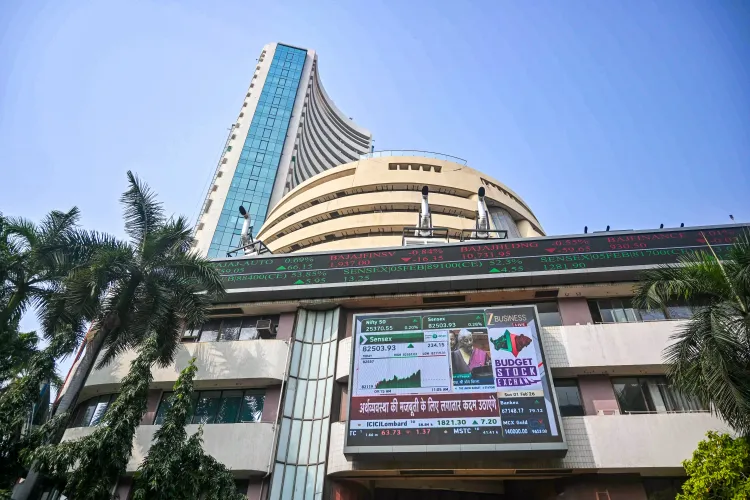
New Delhi, Feb 7 (NationPress) The Indian stock markets experienced fluctuations throughout the week but ultimately concluded with significant gains. This upturn followed the announcement of the India-US trade deal, which ignited a robust recovery, allowing domestic indices to counterbalance the initial downturn triggered by the increase in the securities transaction tax (STT) on derivatives in Budget 2026–27, analysts reported on Saturday.
Bullish momentum gained traction towards the week's conclusion, as favorable global and domestic factors outweighed early Budget-related apprehensions.
Investor sentiment improved further after the RBI opted to keep policy rates steady and raised its GDP growth forecasts. Consequently, the benchmark indices — Nifty and Sensex — finished at 25,693.70 and 83,580.40, respectively. Broader indices also advanced, reflecting a heightened risk appetite, noted Ajit Mishra – SVP, Research, Religare Broking Ltd.
The market cues were predominantly positive on both domestic and international fronts.
Equities saw a sharp rebound following the US's announcement of a reduction in tariffs on Indian goods to 18 percent after high-level discussions.
In other news, India–China trade data revealed that bilateral trade reached a record $155 billion in 2025.
On the monetary policy side, the RBI maintained its current stance, keeping the repo rate unchanged at 5.25 percent, while projecting FY26 inflation at 2.1 percent, reflecting a positive outlook for both inflation and growth, according to Mishra.
Macro indicators remained supportive throughout the week. January GST collections increased by 6.2 percent year-on-year to over Rs 1.93 lakh crore, signaling consistent consumption and import activity.
Sectoral performance favored domestic cyclicals and rate-sensitive segments. Realty, energy, and auto sectors emerged as top gainers, bolstered by expectations of continued domestic demand, enhanced macro visibility, and risk-on sentiment following tariff relief.
Conversely, IT stood out as the only significant laggard, with the index experiencing a sharp decline on a weekly basis, underperforming the broader market.
Market observers predict that Nifty is likely to consolidate with a positive bias as long as it remains above the 25,400 mark.
“A breakdown below this level could lead to a gap-fill move toward the 25,100 zone. Conversely, a decisive breakout above 26,000 may initiate the next leg of the rally towards the record high area around 26,400,” they noted.
Investors are now awaiting the release of January consumer price inflation data, which will utilize a revised base year of 2024.
Point of View
It's evident that the recent developments in the Indian stock markets reflect a resilient economic landscape. The trade deal with the US and RBI's proactive measures indicate a constructive trajectory for growth and inflation. Our commitment remains to provide comprehensive coverage that keeps our audience informed and engaged.
NationPress
24 Sept 2026
Frequently Asked Questions
What caused the Indian stock markets to rebound?
The rebound was primarily driven by the announcement of the India-US trade deal and the RBI's decision to maintain policy rates.
What are the closing figures for Nifty and Sensex?
The benchmark indices closed at 25,693.70 for Nifty and 83,580.40 for Sensex.
Which sectors performed well during the week?
Realty, energy, and auto sectors emerged as the top gainers, supported by positive domestic demand and macroeconomic visibility.
What are macro indicators indicating about the economy?
Macro indicators like January GST collections rose by 6.2% year-on-year, suggesting steady consumption and import activity.
What should investors watch for next?
Investors should keep an eye on the upcoming January consumer price inflation data.