GeM turns 11: 1.37 lakh govt buyers, 25 lakh sellers, ₹20 lakh crore in cumulative orders

Synopsis
GeM has quietly become one of India's most consequential digital reforms — not just for scale (₹20 lakh crore in cumulative orders) but for who is selling: startups grew 36%, SC/ST suppliers 28%, and over 2.1 lakh women-led MSEs have now transacted on the platform. As it enters year 11 with AI integration and 50 new Suvidha Kendras on the way, the real question is whether the platform can turn geographic and digital inclusion into durable economic outcomes.
Key Takeaways
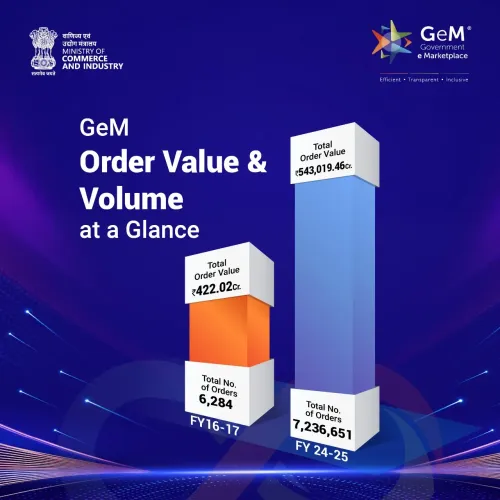
GeM completes 10 years on 9 August 2025 , having facilitated cumulative procurement worth over ₹20 lakh crore .
The platform now connects more than 1.37 lakh government buyer organisations with nearly 25 lakh sellers across 10,660+ product and 350 service categories .
Over 11 lakh MSEs executed more than 51 lakh orders worth over ₹2.36 lakh crore ; 2.1 lakh women-led MSEs secured over ₹28,000 crore in orders.
Startup procurement crossed ₹19,000 crore with over 36% annual growth ; SC/ST enterprise procurement exceeded ₹6,000 crore with nearly 28% annual growth .
GeM partnered with CSC-SPV in June 2026 to pilot 50 GeM Suvidha Kendras across select states and Union Territories.
AI integration is the next stated priority, aimed at strengthening transparency and procurement efficiency.
The Government e-Marketplace (GeM), India's flagship public procurement platform, enters its 11th year on 9 August 2025 having connected more than 1.37 lakh government buyer organisations with nearly 25 lakh sellers and service providers, with cumulative procurement crossing ₹20 lakh crore. Launched on 9 August 2016, GeM has grown from a niche digital storefront into the backbone of India's public procurement infrastructure.
Scale and Scope of the Platform
GeM now hosts more than 10,660 product categories and 350 service categories, spanning medical equipment, furniture, computers, fire safety equipment, and handicrafts, alongside services such as transport, catering, vehicle hiring, and human resource management. Multiple procurement modes, integrated payment systems, and online contract generation underpin what officials describe as an end-to-end digital procurement pipeline.
According to an official factsheet released to mark the anniversary, the platform's next phase will lean heavily on artificial intelligence to sharpen transparency and operational efficiency. 'Artificial intelligence and wider participation will further strengthen transparency, efficiency and governance,' the factsheet stated, adding that GeM 'continues supporting India's journey towards a digitally empowered and self-reliant economy.'
Inclusion at the Core: MSEs, Women, SC/ST, and Startups
One of GeM's most significant — and underreported — achievements is its role in democratising government procurement for historically marginalised supplier groups. Over 11 lakh registered Micro and Small Enterprises (MSEs) executed more than 51 lakh orders worth over ₹2.36 lakh crore, according to the factsheet.
More than 2.1 lakh women-led MSEs secured procurement worth over ₹28,000 crore. Among SC/ST enterprises, procurement exceeded ₹6,000 crore, registering nearly 28 per cent annual growth. Startups fared even better, with procurement crossing ₹19,000 crore and recording over 36 per cent annual growth — the highest growth rate across all seller categories.
Dedicated initiatives driving this inclusion include SWAYATT, Startup Runway 2.0, Womaniya, and the SARAS Collection, each targeting a specific underserved community — from artisans and Self Help Groups (SHGs) to women entrepreneurs and first-generation founders.
New Partnerships and Outreach Infrastructure
In June 2026, GeM partnered with Common Service Centre e-Governance Services India Limited (CSC-SPV) to establish 50 GeM Suvidha Kendras on a pilot basis across select states and Union Territories. The Kendras are designed to bring hands-on procurement assistance to sellers who may lack the digital literacy or infrastructure to navigate the platform independently — a direct response to criticism that GeM's benefits have been unevenly distributed geographically.
This comes amid a broader government push to align public procurement with the 'Vocal for Local' and 'Make in India' mandates, using GeM as a demand-side lever to channel government spending toward domestic producers.
What the Next Year Looks Like
With AI integration on the roadmap and the CSC-SPV Suvidha Kendra pilot underway, GeM's 11th year is positioned as a transition from scale to sophistication. The platform's ability to sustain inclusion gains while absorbing AI-driven process changes will be the defining challenge — and opportunity — of its next chapter.
Point of View
But the more telling numbers are the 36% startup growth and 28% SC/ST supplier growth — proof that demand-side policy can shift procurement patterns when the platform is designed for inclusion, not just efficiency. The risk, as the Suvidha Kendra pilot acknowledges, is that digital marketplaces replicate offline inequalities unless access infrastructure catches up. AI integration could sharpen the platform further, but only if it reduces friction for small and first-time sellers rather than optimising for the buyers already comfortable on the system. The next decade's test is not scale — GeM has already won that argument — it is whether the gains compound for the most marginalised suppliers or plateau as the low-hanging fruit is exhausted.
NationPress
9 Aug 2026
Frequently Asked Questions
What is the Government e-Marketplace (GeM)?
GeM is India's official digital public procurement platform, launched on 9 August 2016, that enables government departments and agencies to purchase goods and services directly from registered sellers. It now hosts over 10,660 product categories and 350 service categories, with cumulative procurement exceeding ₹20 lakh crore.
How many sellers and buyers are on GeM as of its 11th year?
As of its 11th anniversary, GeM connects more than 1.37 lakh government buyer organisations with nearly 25 lakh registered sellers and service providers across India.
How has GeM supported MSMEs, women entrepreneurs, and startups?
Over 11 lakh MSEs executed more than 51 lakh orders worth ₹2.36 lakh crore on GeM. More than 2.1 lakh women-led MSEs secured over ₹28,000 crore in procurement. Startup procurement crossed ₹19,000 crore with over 36% annual growth, while SC/ST enterprise procurement exceeded ₹6,000 crore with nearly 28% annual growth.
What are GeM Suvidha Kendras?
GeM Suvidha Kendras are physical assistance centres being set up under a partnership between GeM and Common Service Centre e-Governance Services India Limited (CSC-SPV), announced in June 2026. Fifty such centres will be established on a pilot basis across select states and Union Territories to help sellers navigate the platform.
What is next for GeM in its 11th year?
GeM plans to integrate artificial intelligence to improve transparency, efficiency, and governance in public procurement. The CSC-SPV Suvidha Kendra pilot and a continued focus on inclusion initiatives such as SWAYATT, Womaniya, and Startup Runway 2.0 are also priorities for the platform's next phase.