MAHA Water Mission: Govt launches ₹200 crore push to fund water-tech startups
Synopsis
India has committed ₹200 crore to a dedicated water-technology mission — one of the country's largest such pushes — that will fund startups and research consortia with grants of up to ₹20 crore each. With ISRO now partnered on water data and a citizen-tracking app launched alongside, the MAHA Water Mission is shaping up as more than a funding scheme: it is an attempt to build an end-to-end innovation pipeline for India's most critical resource challenge.
Key Takeaways
ANRF and Ministry of Jal Shakti launched the MAHA Water Mission on 1 June with a ₹200 crore outlay.
Selected consortia can receive grants of up to ₹20 crore each for water-technology development and deployment.
Eligible applicants include startups , MSMEs , universities , national laboratories , and industry partners .
The mission covers five themes: water resource management, drinking water, water quality, water use efficiency, and climate resilience.
An MoU between the Department of Water Resources and ISRO was signed at the launch event.
India's startup ecosystem has grown to over two lakh startups , generating 20–24 lakh jobs , according to government figures.
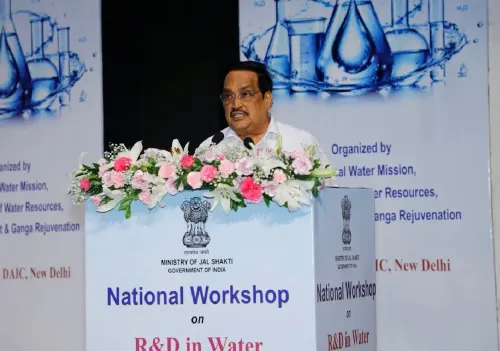
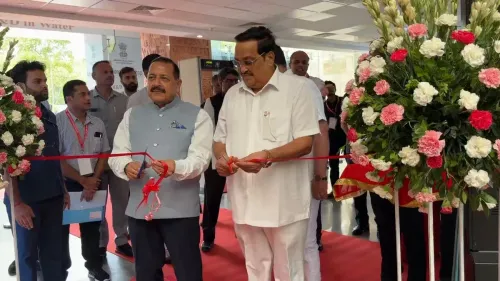
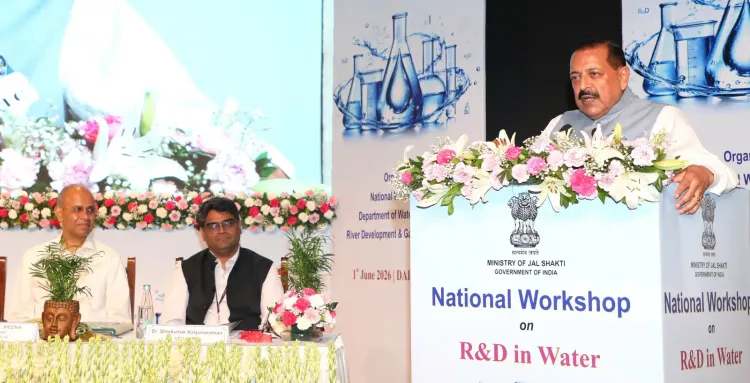
The Anusandhan National Research Foundation (ANRF) and the Ministry of Jal Shakti on Monday, 1 June jointly launched the MAHA Water Mission, a ₹200 crore national programme designed to accelerate innovation in India's water sector by supporting startups, MSMEs, universities, and research institutions. The mission marks one of the largest dedicated public funding pushes for water-technology entrepreneurship in India.
What the Mission Offers
Selected multidisciplinary consortia will be eligible for grants of up to ₹20 crore each. The funds can be deployed across technology development, field assessment, validation, and deployment of high-impact water solutions. Eligible consortia may include universities, national laboratories, research organisations, startups, MSMEs, and industry partners — a structure designed to bridge the gap between laboratory research and real-world deployment.
Five Priority Themes
The mission will channel resources into five focus areas: water resource assessment and sustainable management; drinking water; water quality and ecological health; water use efficiency and circular economy; and climate resilience and adaptation. The breadth of these themes reflects a recognition that India's water challenges are interconnected — spanning scarcity, contamination, and the compounding effects of climate change.
What the Government Said
Dr Jitendra Singh, Union Minister of State for Science and Technology and Earth Sciences, launched the mission and released its inaugural flyer, followed by an open call for startups and MSMEs to submit product and prototype development proposals. Singh said that ANRF is 'democratising research funding' by expanding access beyond a limited set of legacy institutions, enabling innovators from across the country to contribute to national priorities.
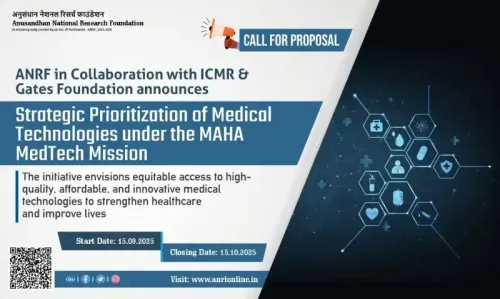
Singh noted that ANRF has already launched MAHA missions in strategic sectors including electric vehicles, drones, medical technologies, 6G communications, and now water — each creating an integrated pathway from fundamental research to deployment.
Key Agreements Signed
The launch event also saw the signing of a Memorandum of Understanding (MoU) between the Department of Water Resources and the Department of Space/ISRO, signalling a push to leverage satellite-based data for water management. Alongside, the Jal Sanchay Jan Bhagidari Citizen Tracking and Reporting (JSJB-CTR) Portal and App was formally unveiled, aimed at enabling citizen-level participation in water conservation monitoring.
Startup Ecosystem Context
India's startup ecosystem has expanded dramatically — from roughly 350–400 firms a decade ago to over two lakh startups today, generating an estimated 20–24 lakh jobs, according to government data. The MAHA Water Mission is positioned as a vehicle to channel a share of that entrepreneurial energy toward solving one of the country's most pressing resource challenges. This comes amid growing concerns over groundwater depletion and erratic monsoon patterns affecting agricultural and urban water supply alike.
Point of View
But the architecture of the scheme will determine whether it produces deployable solutions or well-funded pilots that never scale. India's water crisis is not a research deficit — it is a last-mile execution deficit. Tying grants to field validation and deployment milestones, as the mission structure proposes, is the right instinct. The ISRO partnership adds a credible data layer that past water schemes lacked. The real test will be whether the open call genuinely reaches innovators outside the metro startup belt, or defaults to the same institutional networks that have historically captured public R&D funding.
NationPress
16 Oct 2026
Frequently Asked Questions
What is the MAHA Water Mission?
The MAHA Water Mission is a ₹200 crore national programme jointly run by the Anusandhan National Research Foundation and the Ministry of Jal Shakti, launched on 1 June, to fund startups, MSMEs, and research consortia working on water-technology solutions. Selected consortia can receive grants of up to ₹20 crore each.
Who can apply for funding under the MAHA Water Mission?
Multidisciplinary consortia comprising universities, national laboratories, research organisations, startups, MSMEs, and industry partners are eligible to apply. An open call for startups and MSMEs for product and prototype development proposals was issued at the launch.
What are the five priority themes of the mission?
The mission focuses on water resource assessment and sustainable management; drinking water; water quality and ecological health; water use efficiency and circular economy; and climate resilience and adaptation.
What other announcements were made at the launch event?
An MoU was signed between the Department of Water Resources and the Department of Space/ISRO to leverage satellite data for water management. The Jal Sanchay Jan Bhagidari Citizen Tracking and Reporting (JSJB-CTR) Portal and App was also launched to enable citizen participation in water conservation monitoring.
How does the MAHA Water Mission fit into ANRF's broader mandate?
ANRF has launched MAHA missions across several strategic sectors including electric vehicles, drones, medical technologies, and 6G communications, in addition to water. The missions are designed to create an integrated pathway from fundamental research to technology deployment, connecting academia, industry, startups, and government institutions.