Jal Shakti Minister Paatil Launches Water R&D Workshop in Delhi
Synopsis
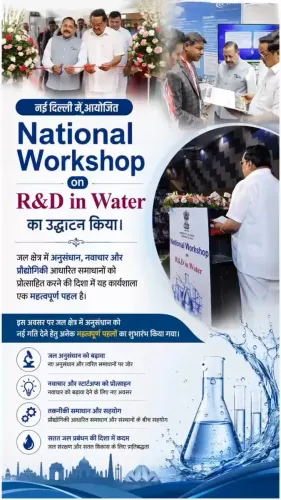
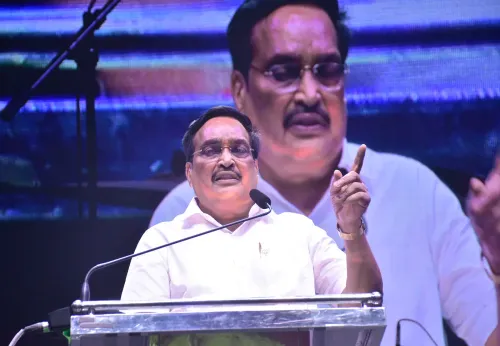
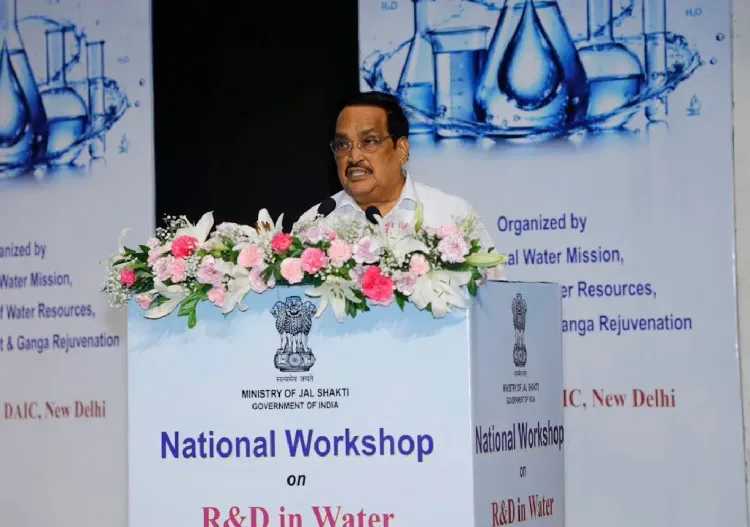
Union Jal Shakti Minister C. R. Paatil on 1 June 2026 inaugurated the National Workshop on R&D in Water in New Delhi, launching the MAHA on Water Initiative, the BHARAT-WIN Portal for startups and MSMEs, and a satellite-based water management collaboration with ISRO.
Key Takeaways
Union Jal Shakti Minister C.
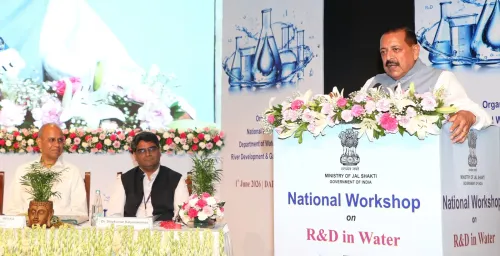
Paatil inaugurated the National Workshop on R&D in Water in New Delhi on 1 June 2026 .
The MAHA on Water Initiative and an open call for startups and MSMEs under the BHARAT-WIN Portal were launched at the event.
A collaboration with ISRO was announced to deploy satellite-based applications for scientific water resource management.
Minister of State Dr.
Jitendra Singh and Minister of State for Jal Shakti Dr.
Raj Bhushan Choudhary were present, highlighting cross-ministry coordination.
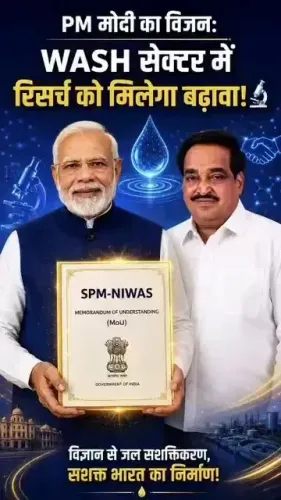
The initiative is framed around PM Modi 's 'Whole of Government, Whole of Society' vision for long-term water security.
Startups, MSMEs, research institutions, and community partners are identified as key stakeholders in the water innovation ecosystem.
Union Jal Shakti Minister C. R. Paatil inaugurated the 'National Workshop on R&D in Water' in New Delhi on 1 June 2026, launching several new initiatives aimed at accelerating research, innovation, and technology-driven solutions in India's water sector. The event brought together government agencies, industry, academic institutions, startups, and community partners under a unified water innovation agenda.
Context
Addressing the workshop, Minister Paatil announced the launch of the MAHA on Water Initiative and an open call for startups and MSMEs under the BHARAT-WIN Portal. In his post, he described the event as 'jal kshetra mein anusandhan ko nayi gati dene hetu' [aimed at giving fresh momentum to research in the water sector]. The minister said these efforts would play a 'significant role in building a robust water innovation ecosystem in the country.'
Also present at the workshop were Minister of State (Independent Charge) Dr. Jitendra Singh, who oversees Science and Technology and Earth Sciences, and Minister of State for Jal Shakti Dr. Raj Bhushan Choudhary. Their joint presence underscored the cross-ministry coordination that the event was designed to showcase.
Policy Backdrop
The workshop aligns with a broader push by the central government to embed technology and scientific research into water governance. India's National Water Policy 2012 had already emphasised research, data management, and technology adoption, while the Jal Jeevan Mission, launched in 2019, set the ambition of providing functional household tap connections across rural India. The Atal Bhujal Yojana, also launched in 2019, introduced community participation and data tools for groundwater management.
The current initiative extends that lineage by explicitly targeting startups and MSMEs, signalling an intent to draw private-sector innovation into what has traditionally been a state-driven domain. The minister framed the effort as consistent with Prime Minister Narendra Modi's vision of a 'Whole of Government, Whole of Society' approach to long-term water security.
ISRO Collaboration and Satellite Applications
A notable announcement at the workshop was a collaboration with ISRO to deploy advanced satellite-based applications for scientific and forward-looking management of water resources. ISRO's remote-sensing and earth-observation capabilities have previously been used in programmes such as the National Hydrology Project, and their integration into the water sector's R&D framework marks a deepening of that relationship.
Minister Paatil stated that satellite technology would make water resource management 'more scientific, effective, and future-oriented.' The Jal Shakti Ministry's partnership with a space agency reflects the government's wider pattern of linking sectoral missions with space-technology assets developed by ISRO.
Stakeholders and Impact
The open call for startups and MSMEs under the BHARAT-WIN Portal is designed to channel private innovation into water management challenges, potentially opening a new funding and mentorship pipeline for early-stage companies working on water technology. Research institutions and academic bodies were also identified as key partners in the ecosystem being assembled.
Community partners feature explicitly in the minister's framing, suggesting that last-mile implementation and local water-security outcomes remain a stated priority alongside high-technology solutions. The convergence of these stakeholders under a single national platform could reduce fragmentation that has historically limited the translation of water research into field outcomes.
What's Next
Attention will now turn to the operationalisation of the MAHA on Water Initiative and the BHARAT-WIN Portal, including the timelines and selection criteria for the startup and MSME open call. Progress on the ISRO collaboration — particularly the deployment of satellite-based monitoring tools — will serve as an early indicator of whether the workshop's ambitions translate into measurable outcomes. Water R&D allocations in the upcoming Union Budget and parliamentary committee reviews are likely to reflect the priority signalled by this event.
Point of View
Not merely an infrastructure one — a shift with significant implications for how future budgets and schemes are designed. By bringing ISRO into the water sector's R&D framework, the government is deepening the cross-ministry convergence that has become a hallmark of the current administration's approach to large-scale public goods. The open call for startups and MSMEs via the BHARAT-WIN Portal is politically significant too: it signals an intent to credit the private sector with solving a problem that has long been seen as the state's exclusive responsibility. Whether these institutional signals translate into measurable improvements in water availability or quality will determine how this workshop is eventually assessed.
NationPress
16 Oct 2026
Frequently Asked Questions
What is the National Workshop on R&D in Water?
It is a national-level event inaugurated by Union Jal Shakti Minister C. R. Paatil in New Delhi on 1 June 2026 to promote research, innovation, and technology-based solutions in India's water sector.
What is the BHARAT-WIN Portal?
The BHARAT-WIN Portal is a new platform launched at the workshop that includes an open call for startups and MSMEs to contribute innovations to water management in India.
How is ISRO involved in water management in India?
ISRO is partnering with the Jal Shakti Ministry to use advanced satellite-based applications for scientific and forward-looking management of water resources across India.
What is the MAHA on Water Initiative?
The MAHA on Water Initiative was launched at the 1 June 2026 workshop as part of a broader effort to build a robust water innovation ecosystem in India, though full operational details are yet to be publicly released.
Who attended the National Workshop on R&D in Water?
The workshop was attended by Union Jal Shakti Minister C. R. Paatil, Minister of State (Independent Charge) Dr. Jitendra Singh, and Minister of State for Jal Shakti Dr. Raj Bhushan Choudhary, along with experts, researchers, and partner institutions.