Jal Shakti Minister Paatil Inaugurates Water R&D Workshop in Delhi
Synopsis
Union Jal Shakti Minister C. R. Paatil inaugurated the National Workshop on R&D in Water in New Delhi on 2 June 2026, signalling the ministry's continued push to link academic research with field-level water schemes under missions such as Jal Jeevan Mission and the National Water Mission.
Key Takeaways
Paatil , Union Minister of Jal Shakti, inaugurated the National Workshop on R&D in Water in New Delhi on 2 June 2026 .
The Ministry of Jal Shakti was formed in 2019 by merging water resources and drinking water and sanitation functions under a single ministry.
The Jal Jeevan Mission , launched in 2019 , includes R&D components for water quality and sustainability in rural areas.
India's National Water Policy was last revised in 2012 , emphasising integrated water resources management.
Such workshops are part of a broader pattern of linking research institutions with state water departments and field-level schemes.
Follow-up funding announcements or state-level workshop initiatives aligned with the National Water Mission may be forthcoming.
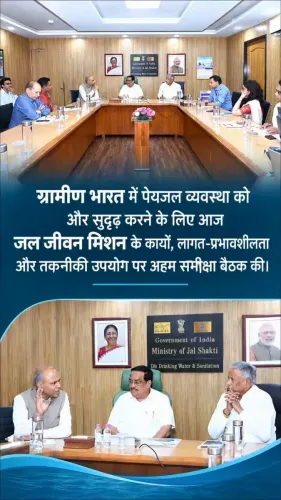
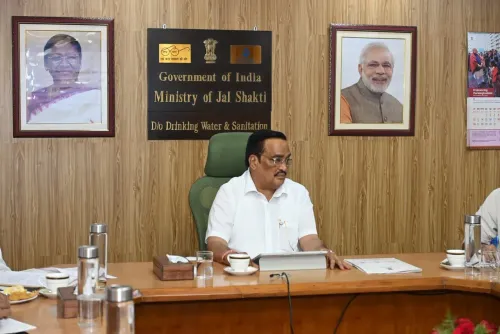
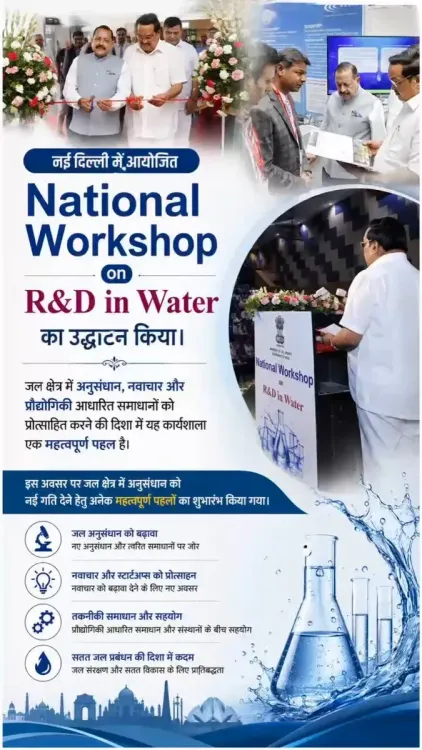
Union Jal Shakti Minister C. R. Paatil inaugurated the National Workshop on R&D in Water in New Delhi, sharing a glimpse of the event on 2 June 2026. The workshop brought together researchers and policymakers to advance technology-driven solutions for India's water sector.
Context
Paatil posted on X with the caption 'नई दिल्ली में आयोजित "National Workshop on R&D in Water" का उद्घाटन किया उस समय की एक झलक' — translated as: 'A glimpse from the inauguration of the National Workshop on R&D in Water held in New Delhi.' The post was accompanied by a video from the event, offering a visual record of the inauguration proceedings.
The Ministry of Jal Shakti, formed in 2019 by merging the water resources and drinking water and sanitation portfolios, has periodically organised such workshops to bridge academic research and on-ground water management. This workshop continues that tradition by focusing specifically on research and development in the water sector.
Policy Backdrop
India's water governance framework rests on several pillars, including the National Water Policy (last revised 2012), the National Water Mission under the National Action Plan on Climate Change, and the flagship Jal Jeevan Mission launched in 2019. The Jal Jeevan Mission, which targets functional household tap connections in rural areas, carries explicit R&D components addressing water quality and long-term sustainability.
Successive governments have channelled funding toward water R&D institutions through these missions, recognising that climate pressures and rising demand require technology-backed solutions. A dedicated national workshop signals a push to consolidate research outputs and align them with field-level implementation priorities.
Stakeholders and Impact
The primary beneficiaries of advances emerging from such workshops are rural households dependent on government-supplied water infrastructure, state water departments tasked with implementing central schemes, and the broader community of water researchers seeking policy uptake for their work. Closer coordination between research institutions and the Ministry can accelerate the deployment of innovations in groundwater management, river rejuvenation, and water quality monitoring.
For the Ministry of Jal Shakti, events of this nature also serve as platforms to signal institutional commitment to evidence-based policymaking — an important message as India faces mounting water stress driven by erratic monsoons, over-extraction of groundwater, and rapid urbanisation.
What's Next
Workshops of this kind frequently precede follow-up announcements on funding allocations or institutional partnerships for water R&D. Observers will watch for any directives issued to state governments or research bodies arising from the National Workshop on R&D in Water. Alignment with National Water Mission objectives and potential state-level replication of the workshop format are also possibilities worth tracking.
As India moves deeper into a period of climate-induced hydrological uncertainty, the institutionalisation of water R&D — backed by ministerial-level attention — will remain a key indicator of the government's seriousness about long-term water security.
Point of View
A Gujarat-based BJP heavyweight now holding a key infrastructure portfolio, such events also serve to project ministerial activism ahead of budget cycles. The timing, coming years after the Jal Jeevan Mission's launch, suggests the ministry is shifting focus from connection targets toward sustainability and quality — a more technically complex challenge. Whether this workshop translates into concrete funding or institutional mandates will determine its real policy weight.
NationPress
20 Oct 2026
Frequently Asked Questions
What is the National Workshop on R&D in Water?
It is a national-level workshop organised by the Ministry of Jal Shakti to bring together water researchers and policymakers, focused on advancing research and development for India's water sector. The June 2026 edition was inaugurated by Union Minister C. R. Paatil in New Delhi.
Who is C. R. Paatil?
C. R. Paatil is the Union Minister of Jal Shakti in the Government of India. He is a senior BJP leader and former president of the BJP Gujarat state unit.
What is the Ministry of Jal Shakti?
The Ministry of Jal Shakti is a central government ministry formed in May 2019 by merging the Ministry of Water Resources and the Ministry of Drinking Water and Sanitation to create a unified authority for water governance.
What is the Jal Jeevan Mission and how does it relate to water R&D?
Jal Jeevan Mission is a flagship central scheme launched in 2019 to provide functional household tap connections in rural India. It includes R&D components specifically targeting water quality testing, monitoring, and long-term sustainability of water supply infrastructure.
What could follow from the National Workshop on R&D in Water?
Such workshops have historically preceded announcements on funding for water R&D institutions, new partnerships with state water departments, or directives under the National Water Mission. Observers will watch for any follow-up policy or budgetary decisions from the Ministry of Jal Shakti.