Coal gasification projects worth ₹65,000 crore underway across India
Synopsis
India's coal gasification push has crossed a critical threshold — ₹65,000 crore in projects are now physically under execution, not just on paper. With eight schemes already drawing from a ₹8,500-crore incentive pool and a far larger ₹37,500-crore programme in the pipeline, the government is betting that domestic coal can displace costly fertiliser and fuel imports at scale by 2030.
Key Takeaways
Coal gasification projects worth more than ₹65,000 crore are currently under execution in India .
Eight projects are under implementation under the ₹8,500-crore incentive scheme approved in January 2024 , receiving ₹6,233 crore in incentive support.
Output sectors include coal-to-SNG, ethanol, hydrogen, acetic acid, ammonium nitrate, DRI-based steel, and sustainable aviation fuel.
A larger ₹37,500-crore incentive programme is being finalised, with the draft RFP already in public consultation.
Maharashtra leads with five projects under development, backed by Western Coalfields Ltd supply and state policy support.
The government targets total investments of ₹2.5–3 lakh crore across 25 projects and aims to gasify 100 million tonnes of coal by 2030 .
Coal gasification projects valued at more than ₹65,000 crore are currently under execution across India, marking a decisive shift in the government's strategy to convert coal into chemicals, fuels, and industrial feedstock — from policy blueprint to on-ground reality, according to a senior official. The scale of activity signals that India's coal gasification ambitions are gaining commercial traction ahead of a 2030 target to gasify 100 million tonnes of coal.
Key Developments
Coal Secretary Vikram Dev Dutt, speaking at a recently organised industry event, said the sector has witnessed an encouraging response from industry. He noted that eight projects are already under implementation under the ₹8,500-crore incentive scheme approved in January 2024. These projects have collectively received incentive support of ₹6,233 crore and span a wide range of output categories, including coal-to-synthetic natural gas (SNG), ethanol, hydrogen, acetic acid, ammonium nitrate, DRI-based steel, and sustainable aviation fuel.
Larger Incentive Programme in the Pipeline
The government is also finalising the request for proposal (RFP) under a larger ₹37,500-crore incentive programme, after placing a draft document in the public domain for stakeholder consultations. Together, the two schemes represent a substantial public commitment to de-risking private investment in what has historically been a capital-intensive and technically complex sector.
Maharashtra Emerges as a Hub
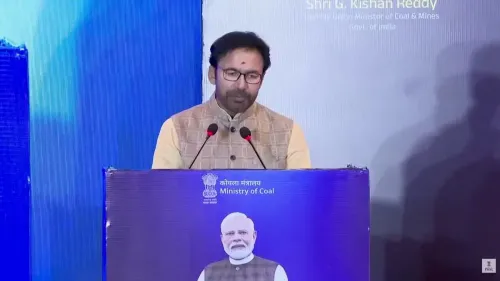
Union Coal Minister G. Kishan Reddy said Maharashtra has emerged as a key centre for coal gasification, with five projects already under development in the state. He attributed this to coal availability through Western Coalfields Ltd, along with strong industrial infrastructure and enabling policy support. Maharashtra Chief Minister Devendra Fadnavis said the state is committed to building an investment-friendly ecosystem for the sector and highlighted Mumbai's historical association with coal gasification technology.
Investment and Strategic Goals
The government expects the coal gasification initiative to catalyse total investments of approximately ₹2.5–3 lakh crore across nearly 25 projects. The programme is a core component of India's broader strategy to reduce import dependence in fertilisers, chemicals, and fuels, while simultaneously strengthening domestic industrial capacity and energy security. This comes amid sustained pressure on India's import bill from petrochemical and fertiliser feedstock, areas where domestic coal-based alternatives could provide structural relief.
What Comes Next
With the RFP for the larger incentive window nearing finalisation, industry bodies are expected to submit bids that could significantly expand the project pipeline beyond the current eight. Analysts note that the 2030 gasification target of 100 million tonnes will require a sharp acceleration in project approvals and commissioning timelines. The coming months will test whether the policy momentum translates into bankable, operational capacity at scale.
Point of View
000 crore execution figure is notable, but the real test is commissioning — India has a long history of energy projects that are 'under implementation' for years without producing a unit of output. The ₹8,500-crore incentive scheme is relatively modest against the stated ₹2.5–3 lakh crore investment ambition, meaning private risk appetite will ultimately determine whether the 2030 gasification target is met. Maharashtra's emergence as a hub is strategically logical given Western Coalfields access, but five projects in one state also raises concentration risk. The import-substitution case for coal gasification — particularly in fertilisers and petrochemicals — is structurally sound; the execution credibility is what the government still needs to prove.
NationPress
18 Sept 2026
Frequently Asked Questions
What is India's coal gasification programme?
India's coal gasification programme is a government initiative to convert domestic coal into industrial chemicals, fuels, and feedstock such as synthetic natural gas, ethanol, hydrogen, and sustainable aviation fuel. It aims to gasify 100 million tonnes of coal by 2030, reducing the country's dependence on imported fertilisers and petrochemicals.
How much has been invested in coal gasification projects in India so far?
Coal gasification projects worth more than ₹65,000 crore are currently under execution in India. Of these, eight projects are backed by a ₹8,500-crore government incentive scheme approved in January 2024, with ₹6,233 crore in incentive support already allocated.
What is the larger ₹37,500-crore coal gasification incentive scheme?
The ₹37,500-crore scheme is a larger government incentive programme currently being finalised. A draft request for proposal (RFP) has been placed in the public domain for stakeholder consultations, and the final RFP is expected to be issued soon, opening the next wave of project bids.
Why has Maharashtra become a coal gasification hub?
Maharashtra has five coal gasification projects under development, making it the leading state in this sector. Union Coal Minister G. Kishan Reddy attributed this to coal availability through Western Coalfields Ltd, strong industrial infrastructure, and supportive state policy. Chief Minister Devendra Fadnavis also cited Mumbai's historical association with coal gasification technology.
How does coal gasification support India's energy security?
Coal gasification allows India to produce fertilisers, chemicals, and fuels domestically from its abundant coal reserves, reducing costly imports. The programme is part of a broader strategy to strengthen domestic industrial capacity and lower India's import bill in sectors such as fertilisers and petrochemicals.