Coal gasification scheme: ₹37,500 crore push to cut India's import bill
Synopsis
India has committed ₹37,500 crore to gasify 100 MT of coal by 2030 — a bet that domestic coal and lignite can substitute costly LNG, urea, and methanol imports. With ₹2.5–3 lakh crore in investment expected and 50,000 jobs on the line, this is the most ambitious expansion of the National Coal Gasification Mission since its 2021 launch.
Key Takeaways
The Scheme for Promotion of Surface Coal and Lignite Gasification Projects carries a financial outlay of ₹37,500 crore .
National target: gasify 100 MT of coal by 2030 to reduce imports of LNG, urea, ammonia, and methanol .
Expected investment mobilisation of ₹2.5–3 lakh crore across nearly 25 projects in coal-bearing regions.
Scheme projected to create approximately 50,000 direct and indirect jobs .
Utilisation of 75 MT of coal and lignite to generate nearly ₹6,300 crore annually in revenue.
Builds on the 2021 National Coal Gasification Mission and the ₹8,500 crore scheme approved in January 2024 , under which eight projects worth ₹6,233 crore are already under way.
India's Coal Ministry on Wednesday, 28 May 2025 detailed the Scheme for Promotion of Surface Coal and Lignite Gasification Projects, backed by a financial outlay of ₹37,500 crore, as a cornerstone effort to gasify 100 million tonnes (MT) of coal by 2030 and reduce the country's dependence on imports of LNG, urea, ammonia, and methanol. The scheme is part of a broader strategy to strengthen India's energy security by converting domestic coal and lignite reserves into high-value industrial feedstock.
Key Developments
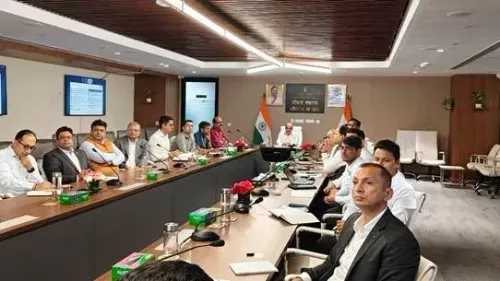
The ministry is organising a roadshow on Thursday, 29 May 2025 to promote coal gasification as a cleaner, value-added pathway for utilising India's vast coal and lignite resources. The event will bring together policymakers, state officials, industry leaders, investors, technology providers, and financial institutions to deliberate on emerging opportunities and the future roadmap for coal gasification.
The scheme is expected to mobilise investment of approximately ₹2.5–3 lakh crore and generate around 50,000 direct and indirect employment opportunities across nearly 25 projects in coal-bearing regions of the country.
Revenue and Economic Impact
Utilisation of 75 MT of coal and lignite under the scheme is projected to generate nearly ₹6,300 crore annually in revenue, with additional downstream earnings through GST and other levies. This positions coal gasification not merely as an energy policy but as a significant fiscal instrument for coal-bearing states.
Notably, this is not the first time the Centre has moved on coal gasification. The National Coal Gasification Mission was launched in 2021, followed by a ₹8,500 crore coal gasification scheme approved in January 2024, under which eight projects with earmarked incentives of ₹6,233 crore are already under implementation. The new scheme significantly expands on that foundation.
Why It Matters for Energy Security
India remains one of the world's largest importers of LNG, urea, and methanol — commodities that can potentially be synthesised domestically through coal gasification. Reducing reliance on these imports carries both strategic and balance-of-payments significance, particularly as global commodity prices remain volatile. This comes amid sustained government pressure to monetise domestic coal reserves more efficiently rather than burning them solely for power generation.
What Happens Next
Thursday's roadshow is expected to accelerate project identification and investor commitments under the new scheme. With 25 projects targeted across coal-bearing regions, states such as Jharkhand, Odisha, Chhattisgarh, and Madhya Pradesh are likely to be central to implementation. Industry bodies and technology providers are expected to outline partnership frameworks at the event.
Point of View
500 crore outlay is eye-catching, but the scheme's credibility rests on execution of the eight projects already under way from the January 2024 round — none of which have yet reached commercial scale. India has announced coal gasification targets before; the 2021 Mission set a 100 MT goal that this scheme is still chasing four years later. The real test is whether the Thursday roadshow converts stakeholder interest into binding investment commitments, and whether state governments in Jharkhand, Odisha, and Chhattisgarh provide the land and clearance speed that past projects have lacked. Without those enablers, the ₹2.5–3 lakh crore investment figure remains aspirational.
NationPress
11 Oct 2026
Frequently Asked Questions
What is the Scheme for Promotion of Surface Coal and Lignite Gasification Projects?
It is a government scheme with a financial outlay of ₹37,500 crore aimed at gasifying 100 MT of coal and lignite by 2030, reducing India's dependence on imported LNG, urea, ammonia, and methanol. The scheme targets investment mobilisation of ₹2.5–3 lakh crore and the creation of around 50,000 jobs across 25 projects.
How does this scheme relate to the National Coal Gasification Mission?
The National Coal Gasification Mission was launched in 2021 to set the 100 MT gasification target. A ₹8,500 crore scheme was approved in January 2024, under which eight projects with ₹6,233 crore in earmarked incentives are already under implementation. The new ₹37,500 crore scheme significantly expands on both those earlier efforts.
What revenue is expected from the coal gasification scheme?
Utilisation of 75 MT of coal and lignite under the scheme is projected to generate nearly ₹6,300 crore annually in direct revenue, with additional downstream earnings through GST and other levies.
Which regions will benefit from the 25 coal gasification projects?
The projects are targeted at coal-bearing regions of India, which typically include states such as Jharkhand, Odisha, Chhattisgarh, and Madhya Pradesh. The scheme is expected to generate around 50,000 direct and indirect employment opportunities in these areas.
What is the Coal Ministry roadshow on 29 May 2025 about?
The roadshow, organised by the Coal Ministry on 29 May 2025, is designed to promote coal gasification investment and partnerships. It will bring together policymakers, industry leaders, investors, technology providers, and financial institutions to discuss opportunities and the implementation roadmap for coal gasification in India.