Cabinet clears ₹37,500 crore coal gasification scheme, targets 50,000 jobs

Synopsis
The Modi Cabinet has cleared a ₹37,500 crore coal gasification scheme — more than four times the size of its 2024 predecessor — targeting 75 MT of gasification, 50,000 jobs, and a significant dent in India's ₹2.77 lakh crore annual import bill for LNG, urea, and ammonia. The 30-year coal linkage extension is the quiet but consequential reform buried in the fine print.
Key Takeaways
The Union Cabinet approved a ₹37,500 crore coal and lignite gasification scheme on 13 May 2025 .
The scheme targets gasification of 75 million tonnes of coal/lignite across 25 projects , creating 50,000 jobs .
Financial incentives are capped at 20% of plant and machinery cost, disbursed in four milestone-linked instalments.
India's import bill for substitutable products — LNG, urea, ammonia, methanol — was approximately ₹2.77 lakh crore in FY25 .
Coal linkage tenure extended to 30 years under the NRS framework to provide long-term investment certainty.
Builds on the National Coal Gasification Mission (2021) and a ₹8,500 crore scheme from January 2024 .
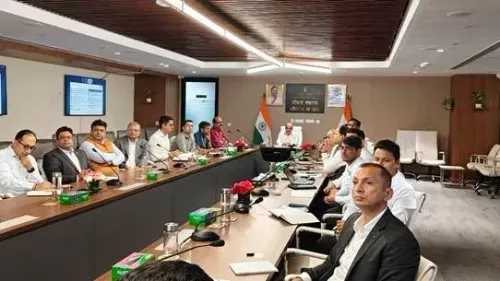
The Union Cabinet, chaired by Prime Minister Narendra Modi, on Wednesday, 13 May approved a ₹37,500 crore scheme to promote surface coal and lignite gasification projects across India. The scheme is projected to create approximately 50,000 direct and indirect jobs across 25 projects in coal-bearing regions, according to an official statement.
What the Scheme Covers
The programme targets the gasification of approximately 75 million tonnes (MT) of coal and lignite, producing syngas and its downstream derivatives. Financial incentives are capped at a maximum of 20 per cent of the cost of plant and machinery, disbursed in four equal instalments tied to project milestones.
Per the official statement, the incentive for any single project is capped at ₹5,000 crore; for any single product (except Synthetic Natural Gas and Urea) at ₹9,000 crore; and for any single entity group at ₹12,000 crore across all projects. Selection will be through a transparent and competitive bidding process benchmarking project cost, coal input, and syngas output.
Import Substitution at the Core
A central motivation for the scheme is reducing India's heavy dependence on imported energy commodities. According to the official statement, India's import bill for key substitutable products — including LNG (over 50 per cent imported), urea (20 per cent imported), ammonia (100 per cent imported), and methanol (80–90 per cent imported) — stood at approximately ₹2.77 lakh crore in FY25. That vulnerability, officials noted, has been further exposed by the ongoing geopolitical situation in West Asia.
Coal utilisation under the scheme is expected to generate ₹6,300 crore annually from the 75 MT of gasification envisaged, with additional downstream revenue from GST and other levies.
Long-Term Policy Certainty
In a significant accompanying reform, the government has extended coal linkage tenure to up to 30 years under the "Production of Syngas leading to Coal Gasification" sub-sector within the Non-Regulated Sector (NRS) linkage auction framework. This is designed to provide long-term policy certainty and de-risk private investment in coal gasification infrastructure.
Building on Earlier Initiatives
The new scheme builds on the National Coal Gasification Mission launched in 2021 and a ₹8,500 crore scheme approved in January 2024, under which eight projects worth ₹6,233 crore are already under implementation. The current outlay represents a substantially enlarged commitment, advancing the national target of gasifying 100 MT of coal by 2030.
India holds one of the world's largest coal reserves at 401 billion tonnes and lignite reserves of 47 billion tonnes, with coal accounting for over 55 per cent of the country's energy mix. With project guidelines now approved, industry attention will turn to the competitive bidding timeline and the pace of project rollout across coal-bearing states.
Point of View
500 crore outlay is a significant escalation, but the more consequential move may be the 30-year coal linkage extension — a structural signal to private investors that the government is serious about long-term commitment, not just headline numbers. India's 100 MT gasification target by 2030 is ambitious given that eight projects from the January 2024 scheme are still under implementation. The import substitution logic is sound — a ₹2.77 lakh crore annual import bill is a genuine vulnerability — but execution speed, not policy design, has historically been the bottleneck. The real test will come when the competitive bidding timelines are announced and whether coal-bearing states can absorb 25 projects without the land and logistics friction that has stalled past energy infrastructure.
NationPress
1 Oct 2026
Frequently Asked Questions
What is the ₹37,500 crore coal gasification scheme approved by the Cabinet?
It is a government scheme to promote surface coal and lignite gasification projects in India, approved by the Union Cabinet on 13 May 2025. With a ₹37,500 crore outlay, it targets gasification of 75 million tonnes of coal and lignite across 25 projects, creating around 50,000 jobs.
How will the financial incentives under the scheme work?
Incentives are capped at 20 per cent of plant and machinery costs and disbursed in four equal instalments linked to project milestones. A single project is capped at ₹5,000 crore, a single product (except Synthetic Natural Gas and Urea) at ₹9,000 crore, and a single entity group at ₹12,000 crore across all projects.
Why is coal gasification important for India's energy security?
India imports over 50 per cent of its LNG, 100 per cent of its ammonia, and 80–90 per cent of its methanol, with the combined import bill reaching ₹2.77 lakh crore in FY25. Coal gasification can produce syngas to substitute these imports domestically, reducing both costs and geopolitical exposure.
What is the national coal gasification target and when must it be met?
India's national target is to gasify 100 million tonnes of coal by 2030. The new scheme, targeting 75 MT, is designed to be the primary vehicle for achieving that goal, building on eight projects already under implementation from the January 2024 scheme.
What is the significance of the 30-year coal linkage extension?
The extension of coal linkage tenure to 30 years under the NRS framework provides long-term policy certainty to private investors in gasification projects. It reduces the regulatory risk that had previously made long-gestation energy infrastructure investments unattractive.