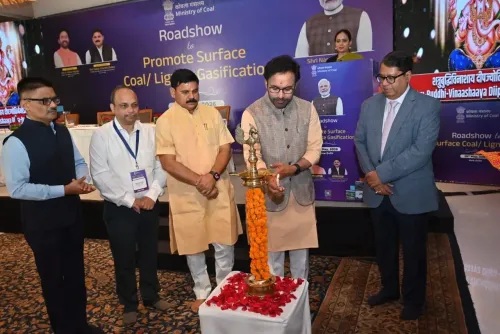
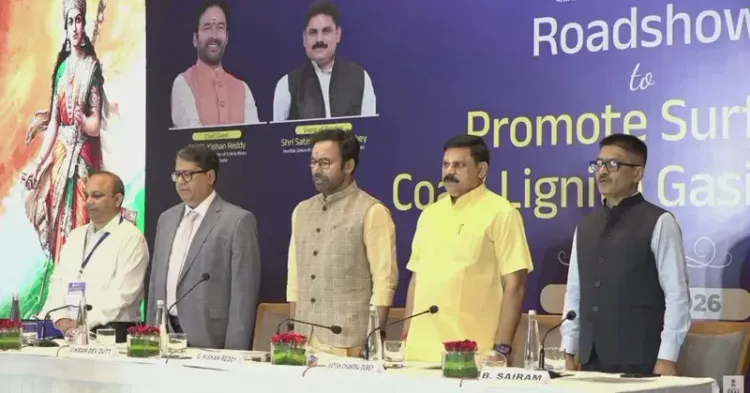
Kishan Reddy hosts Coal Gasification Road Show in Delhi
Synopsis
Union Coal and Mines Minister G. Kishan Reddy hosted a road show in New Delhi on 28 May 2026 to promote surface and coal lignite gasification, advancing India's 100-million-tonne gasification target by 2030 and seeking private investment through existing viability gap funding frameworks.
Key Takeaways
Union Coal and Mines Minister G.
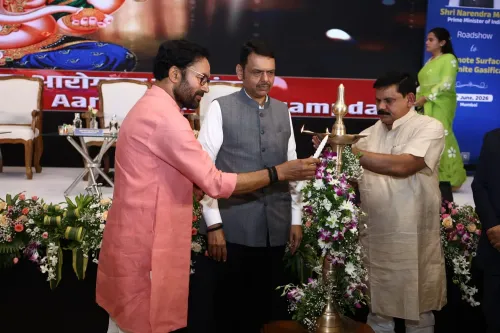
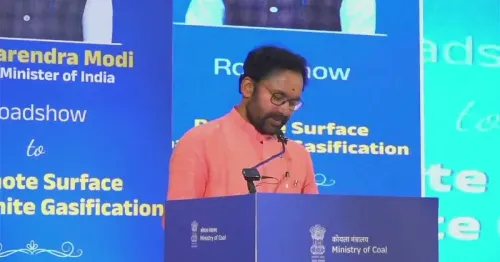
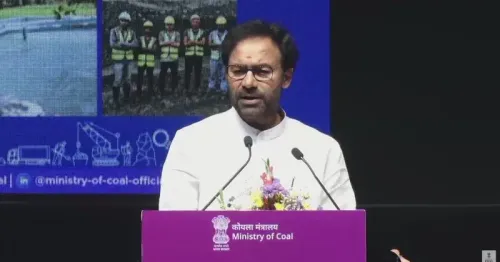
Kishan Reddy hosted a live road show on 28 May 2026 in New Delhi focused on surface and coal lignite gasification.
India has a government target of 100 million tonnes of coal gasification capacity by 2030 .
The road show aims to attract private investment under existing viability gap funding frameworks for gasification projects.
Key beneficiary industries include fertilizer and chemical producers , who can substitute imported natural gas with domestically produced syngas.
Future milestones include new tenders, funding disbursements, and potential integration with the National Green Hydrogen Mission .
Union Coal and Mines Minister G. Kishan Reddy on Thursday, 28 May 2026 hosted a live road show in New Delhi focused on surface and coal lignite gasification, signalling the government's push to accelerate private investment in domestic coal conversion technologies.
Context
The road show is part of a sustained effort by the Ministry of Coal to promote gasification as an alternative, higher-value use of India's vast domestic coal and lignite reserves. Gasification converts coal into syngas, which can feed fertilizer plants, chemical industries and power generation, reducing dependence on imported feedstocks.
Kishan Reddy announced the event live on social media, describing it as a 'Road Show for Surface/Coal Lignite Gasification, New Delhi,' drawing attention from industry stakeholders and policymakers.
Policy Backdrop
The government set a target of 100 million tonnes of coal gasification capacity by 2030, announced around 2020, as a cornerstone of its import-substitution and clean-coal strategy. The Ministry of Coal has backed this ambition through viability gap funding frameworks designed to de-risk private investment in surface and underground gasification projects.
India holds some of the world's largest coal reserves, yet much of it has historically been combusted for power rather than converted into chemicals or fertilizers. Gasification is seen as a route to unlock greater economic value from these reserves while also supporting the country's broader energy transition goals.
Stakeholders and Impact
Coal mining firms and the fertilizer and chemical industries are the primary stakeholders for gasification policy. Fertilizer producers stand to benefit most directly, as syngas derived from coal can substitute for imported natural gas used in urea manufacturing, cutting input costs and improving domestic supply security.
For mining companies, gasification projects offer a pathway to monetise lower-grade coal and lignite that is otherwise difficult to market. The road show format is intended to build investor confidence and match prospective project developers with the policy and funding mechanisms already in place.
What's Next
Observers will watch for the rollout of approved gasification projects following the road show, including the next round of tenders and any disbursements under the viability gap funding scheme. There is also growing interest in whether gasification initiatives will be formally linked to India's National Green Hydrogen Mission, given that syngas is a precursor to hydrogen production.
With the 2030 gasification target now under four years away, events like this road show are likely to become more frequent as the government attempts to translate policy ambition into on-ground investment commitments.
Point of View
Who also leads the BJP in Telangana, championing coal-sector modernisation serves both a national economic narrative and a regional one, given Telangana's significant coal and lignite deposits. The timing, with the 2030 gasification target less than four years away, suggests the government is entering an execution-focused phase after years of framework-building. Whether private capital responds at the scale required will be the defining test of this strategy.
NationPress
12 Oct 2026
Frequently Asked Questions
What is coal gasification and why is India promoting it?
Coal gasification converts coal or lignite into syngas, a mixture of hydrogen and carbon monoxide used in fertilizers, chemicals and power generation. India promotes it to reduce import dependence and add value to domestic coal reserves.
What is India's coal gasification target?
India has set a target of 100 million tonnes of coal gasification capacity by 2030, announced around 2020 as part of a clean-coal and import-substitution strategy.
What did G. Kishan Reddy announce at the New Delhi road show?
Kishan Reddy hosted a live road show on 28 May 2026 in New Delhi to promote surface and coal lignite gasification projects and attract private investment under government funding frameworks.
Who benefits from coal gasification in India?
Fertilizer and chemical industries benefit most, as syngas can replace imported natural gas. Coal mining firms also gain by monetising lower-grade coal and lignite that is hard to sell for combustion.
What funding support does India offer for coal gasification projects?
The government offers viability gap funding to de-risk private investment in surface and underground coal gasification projects, making them financially viable for developers.