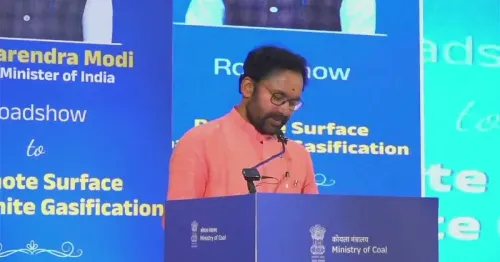
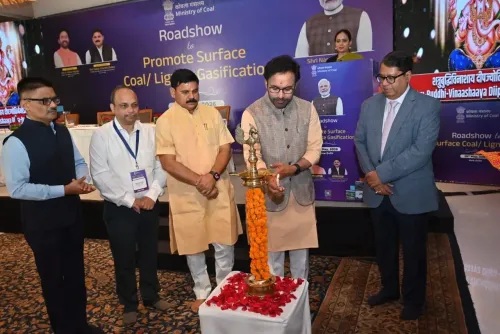
Kishan Reddy pitches coal gasification at Mumbai roadshow
Synopsis
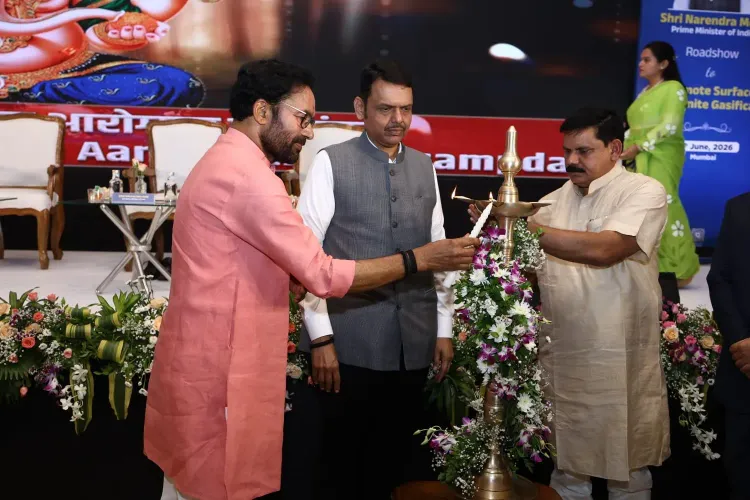
Union Coal Minister G. Kishan Reddy addressed the 3rd Surface Coal and Lignite Gasification Roadshow in Mumbai on 18 June 2026, alongside Maharashtra CM Devendra Fadnavis and MoS Satish Dubey, pitching coal gasification as a path to energy security, import reduction, and job creation.
Key Takeaways
Union Coal and Mines Minister G.
Kishan Reddy addressed the 3rd Roadshow on Surface Coal and Lignite Gasification in Mumbai on 18 June 2026 .
Maharashtra Chief Minister Devendra Fadnavis and Minister of State Satish Dubey were present at the event.
Reddy highlighted coal gasification's potential to produce methanol, ammonia, fertilisers, and clean fuels from domestic coal reserves, cutting import dependence.
The government set a national gasification capacity target of 100 million tonnes by 2030 , backed by a viability gap funding scheme notified in 2020 .
The roadshow series aims to attract private investment into gasification plants across coal-bearing states under the Atmanirbhar Bharat framework.
Follow-up MoUs and pilot project commissioning will determine whether the 2030 target stays on course.
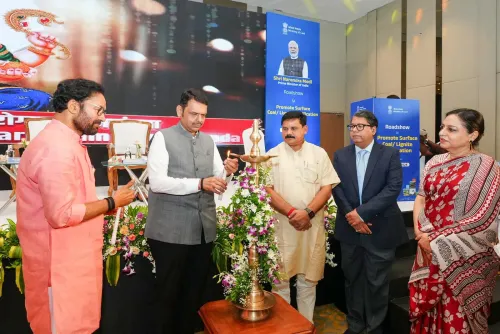
Union Coal and Mines Minister G. Kishan Reddy on Thursday, 18 June 2026, addressed the 3rd Roadshow on Surface Coal and Lignite Gasification in Mumbai, calling coal gasification a strategic lever for India's energy security, industrial self-reliance, and economic growth. He was joined by Maharashtra Chief Minister Devendra Fadnavis and Minister of State for Coal and Mines Satish Dubey at the event.
Context
Addressing the roadshow, Reddy underscored that coal gasification can 'significantly reduce import dependence by converting our vast domestic coal resources into value-added products such as methanol, ammonia, fertilisers and clean fuels.' He also highlighted the technology's potential for 'creating new opportunities for manufacturing and employment generation.' The presence of Chief Minister Fadnavis signals Maharashtra's active interest in hosting or facilitating gasification investment.
The roadshow series is part of a broader government effort to attract private capital into surface gasification plants across coal-bearing states, positioning India's large coal reserves as feedstock for an emerging chemicals and clean-fuels industry rather than purely for combustion power.
Policy Backdrop
The current push has its roots in a 2020 government notification that introduced a viability gap funding scheme specifically to support surface coal gasification projects. Alongside that, the government set a national target of 100 million tonnes of gasification capacity by 2030. The initiative is framed under the Atmanirbhar Bharat programme, which seeks to reduce India's reliance on imported petroleum products and natural gas.
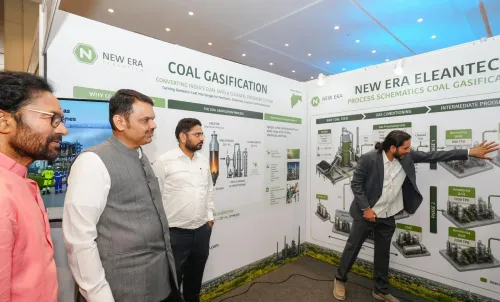
Coal gasification converts coal and lignite into syngas, which can then be processed downstream into methanol, ammonia, fertilisers, and synthetic fuels. Proponents argue this route offers a lower-emission pathway for utilising India's extensive domestic reserves while displacing costly imports of liquefied natural gas and crude-derived chemicals.
Stakeholders and Impact
The fertiliser and chemical industries stand to benefit directly, as domestically produced ammonia and methanol from gasification could reduce their dependence on imported feedstock. Coal mining regions — particularly in states such as Jharkhand, Chhattisgarh, Odisha, and Madhya Pradesh — could see downstream industrial investment and employment if gasification plants are commissioned near pit-heads.
Maharashtra's participation through Chief Minister Fadnavis is notable given the state's industrial base and port infrastructure, which could support both investment facilitation and offtake of gasification products. Private investors and public-sector undertakings in the energy and chemicals space are the primary audience for the roadshow series.
What's Next
Attention will now turn to whether the 3rd Roadshow yields concrete commitments — such as memoranda of understanding between state governments and project developers, or fresh policy incentives announced by the Ministry of Coal. The commissioning of pilot gasification projects will be a key indicator of whether the 2030 capacity target remains on track.
With successive roadshows building momentum, the government's next steps are likely to include state-level follow-through on investment pledges and possible expansion of the viability gap funding envelope to draw in larger private players.
Point of View
Meaning the gap between policy ambition and on-ground commissioning remains the central question. How quickly private capital converts roadshow interest into signed agreements will define whether the 2030 capacity target is achievable or aspirational.
NationPress
18 Sept 2026
Frequently Asked Questions
What is coal gasification and why is India promoting it?
Coal gasification converts coal or lignite into syngas, which can be processed into methanol, ammonia, fertilisers, and clean fuels. India is promoting it to reduce costly imports of natural gas and petroleum-derived chemicals while monetising its large domestic coal reserves.
What is India's coal gasification capacity target?
The government has set a target of 100 million tonnes of gasification capacity by 2030, supported by a viability gap funding scheme introduced in 2020.
What was the 3rd Roadshow on Surface Coal and Lignite Gasification?
It was an industry outreach event held in Mumbai on 18 June 2026, organised to attract private investment into coal gasification projects, attended by Union Coal Minister G. Kishan Reddy, Maharashtra CM Devendra Fadnavis, and MoS Satish Dubey.
How does coal gasification support Atmanirbhar Bharat?
By converting domestic coal into value-added chemicals and fuels, gasification reduces India's dependence on imported liquefied natural gas and crude-derived products, directly supporting the Atmanirbhar Bharat goal of industrial self-reliance.
Which industries benefit from coal gasification in India?
The fertiliser and chemical industries benefit most directly through domestically produced ammonia and methanol, while coal mining regions stand to gain from downstream industrial investment and employment linked to gasification plants.