India's Vision 2047: Eight decades of growth build developed-nation base
Synopsis
A new Economics Observatory report finds India has transformed beyond recognition since 1947 — GDP per capita up sharply, life expectancy doubled, literacy nearly six-fold — but warns that Vision 2047's developed-nation ambition hinges on closing the human development gap, not just posting headline growth numbers.
Key Takeaways
The Economics Observatory report says India's post-Independence transformation has laid a credible base for Vision 2047 developed-nation status.
Over eight decades , adult literacy has risen nearly six-fold and life expectancy has more than doubled.
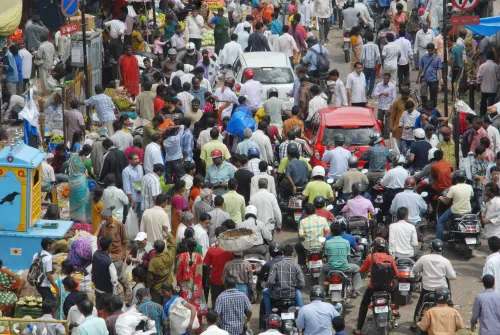
India's population of over 1.4 billion is a demographic dividend — but only with parallel investment in education , healthcare , and jobs .
The report calls for stronger data systems to track development outcomes across states, especially in lagging regions .
Greater rupee internationalisation and export diversification are flagged as buffers against external financial shocks.
India's sweeping economic transformation since Independence in 1947 has built a credible foundation for the country's Vision 2047 goal of attaining developed-nation status, though sustained investments in health, education, employment, and green energy will be decisive in sustaining that trajectory, according to a report by the Economics Observatory.
Eight Decades of Transformation
The Economics Observatory report, published ahead of India's 78th Independence anniversary, traces the country's journey from an economy defined by pervasive poverty, thin industrial capacity, and crumbling infrastructure to one of the world's fastest-growing major economies. Over eight decades, GDP per capita has risen sharply, life expectancy has more than doubled, and adult literacy has climbed nearly six-fold. The country has also advanced from widespread dependence on kerosene lamps to building capabilities that include a nuclear programme.
The Demographic Dividend — Opportunity and Obligation
India's status as the world's most populous nation — home to more than 1.4 billion people — is framed in the report as both an asset and a responsibility. A young, expanding workforce offers substantial growth potential, but only if policymakers deliver adequate investment in education, healthcare, skills development, and job creation. Notably, the report underscores that demographic dividends are time-bound; without commensurate human-capital investment, the window narrows.
Human Development: The Unfinished Agenda
While income levels have improved rapidly over the past two decades, the report cautions that further gains in healthcare and education remain essential to lift overall living standards and strengthen India's Human Development Index (HDI) ranking. Policymakers are urged to prioritise medium-term investments in healthcare, education, and nutrition, while reinforcing data systems to track development outcomes across states — with particular attention to lagging regions. This is consistent with longstanding critiques that India's aggregate growth figures mask sharp sub-national disparities.
Reducing Dollar Dependence and Building Resilience
The report also flags India's efforts to reduce exposure to US dollar dominance in global trade and finance. Greater internationalisation of the rupee, stronger export competitiveness, and continued economic diversification are identified as levers that could insulate the country from external shocks — a concern that has grown more acute given recent global currency volatility and trade fragmentation.
What Vision 2047 Will Require
According to the report, realising Vision 2047 will demand balanced progress across both economic growth and human development — not one at the expense of the other. The framework implicitly challenges a growth-first, redistribute-later model, arguing instead for parallel advances. With 2047 exactly two decades away, the report positions the next ten years as the critical window during which structural reforms, green energy investment, and inclusive development must converge.
Point of View
But the HDI gap — and the report's own insistence on 'balanced progress' — signals that India's aggregate numbers continue to obscure deep sub-national inequality. Vision 2047 is a compelling political frame, but without verifiable state-level benchmarks and a credible green transition plan, it risks becoming another aspirational headline. The rupee internationalisation point is timely but understated: India's dollar exposure is a structural vulnerability that no amount of growth optics can paper over.
NationPress
24 Oct 2026
Frequently Asked Questions
What is India's Vision 2047 goal?
Vision 2047 is India's ambition to become a fully developed nation by the centenary of its Independence in 2047. The Economics Observatory report says the country's post-1947 economic transformation has built a foundation for this goal, but sustained investment in health, education, jobs, and green energy will be essential.
What does the Economics Observatory report say about India's growth since Independence?
The report highlights that India's GDP per capita has risen sharply over eight decades, life expectancy has more than doubled, and adult literacy has increased nearly six-fold. The country has evolved from widespread poverty and limited industry to one of the world's fastest-growing major economies.
Why does India's large population matter for Vision 2047?
With over 1.4 billion people, India holds a significant demographic dividend — a young, expanding workforce that can drive growth. However, the report cautions this potential is realised only if adequate investments are made in education, healthcare, skills development, and employment generation.
What human development gaps does the report flag?
The report notes that while income levels have improved, further gains in healthcare, education, and nutrition are needed to strengthen India's Human Development Index performance. It also calls for better data systems to track outcomes across states and support lagging regions.
How does the report address India's dependence on the US dollar?
The report highlights efforts to reduce India's vulnerability to dollar dominance in global trade and finance. It recommends greater internationalisation of the rupee, stronger export competitiveness, and continued economic diversification to build resilience against external shocks.