India auto retail sales hit 31.72 lakh units in Oct; EVs at all-time high
Synopsis
India's EV story just hit a landmark: October 2026 saw electric vehicle retails surge to an all-time high of 3.55 lakh units, nearly doubling EV penetration to 11.5% in a single year. The headline year-on-year decline in overall auto sales is a base-effect mirage — strip that away, and this was the second-best October ever recorded for the sector.
Key Takeaways
Total auto retail sales stood at 31,72,466 units in October 2026 — up 25.05% over September, down 23.80% year-on-year on a distorted base.
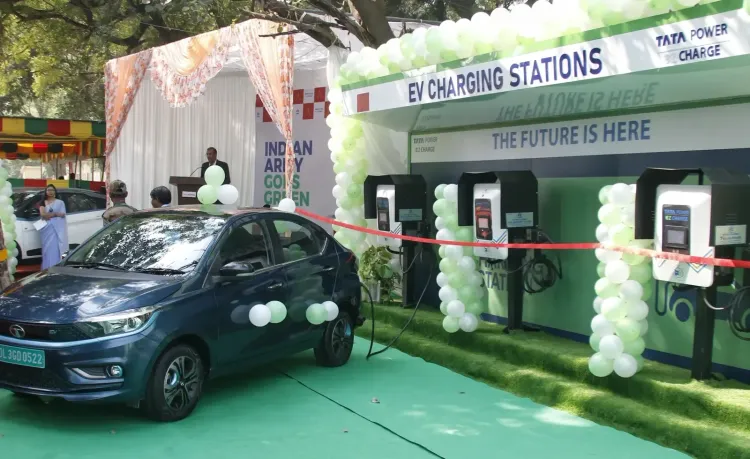
EV retails hit an all-time high of approximately 3.55 lakh units , up 44.88% year-on-year; EV penetration nearly doubled to 11.5% from ~ 6% a year ago.
Commercial Vehicles ( 1,15,140 units ), Three-Wheelers , and Tractors each posted their best-ever October figures.
Passenger Vehicles retailed 5,07,768 units — the third-best October on record , up 18.86% sequentially.
Two-Wheelers rose 29.67% month-on-month to 23,21,419 units , despite rural stress from deficient rains and a weak kharif season.
PV channel inventory remained elevated at 43–45 days ; FADA expects it to normalise to the 30-day range by end of calendar year as Diwali demand flows through.
India's automobile sector recorded total vehicle retail sales of 31,72,466 units in October 2026, marking a 25.05% sequential jump over September, even as the year-on-year figure showed a 23.80% decline against an exceptionally high base a year ago, according to data released by the Federation of Automobile Dealers Associations (FADA) on Friday, 6 November. The standout headline was electrification: EV retails touched an all-time high of approximately 3.55 lakh units, with overall EV penetration nearly doubling to 11.5% from roughly 6% a year earlier.
Why the Year-on-Year Decline Is Misleading
The apparent slump in year-on-year figures is, as FADA emphasised, almost entirely a base-effect illusion. October 2025 was an outlier month that compressed both Navratri and Deepawali into a single calendar window, amplified further by the release of pent-up demand following GST 2.0 rate cuts. This year, while Navratri remained in October, Dhanteras and Diwali shifted into November, pulling a portion of festive demand forward into the next month's data. Measured against that extraordinary base, the numbers look weaker than the underlying reality.
'Seen correctly, this was still the second-highest October on record — with Commercial Vehicles, Three-Wheelers and Tractors each posting their best-ever October — and the 25 per cent sequential jump over September is the truer measure of festive demand,' said FADA president Sai Giridhar.
EV Penetration Doubles to All-Time High
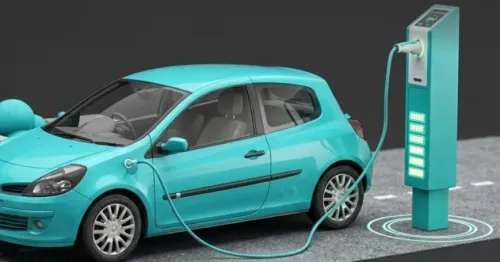
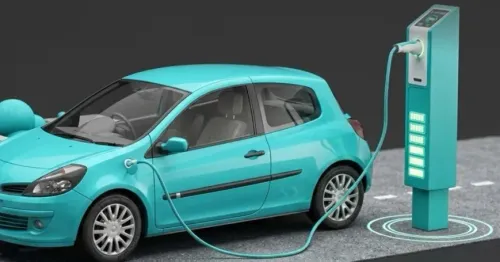
Electric vehicle retails surged 44.88% year-on-year to approximately 3.55 lakh units — a best-ever October across every electrified segment: Two-Wheelers, Three-Wheelers, Passenger Vehicles, and Commercial Vehicles. EV penetration climbed to roughly 11.5% of total retail, up from about 6% in October 2025, underscoring the structural acceleration of India's EV transition beyond seasonal fluctuation. This comes amid a broader global push for electrification and signals that consumer preference in India is shifting with increasing conviction.
Segment-by-Segment Breakdown
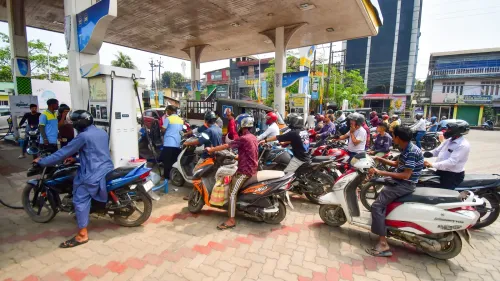
Two-Wheelers retailed 23,21,419 units, declining 28.35% year-on-year — the weakest optics of any category — but rising 29.67% month-on-month. Giridhar noted that independent festive-window tracking shows two-wheeler registrations growing on a like-for-like basis. 'Dealers report healthy festive footfalls, tempered by localised rural stress in areas hit by deficient rains and a weak kharif, and by the fading of last year's GST price advantage after subsequent manufacturer price increases,' he explained.
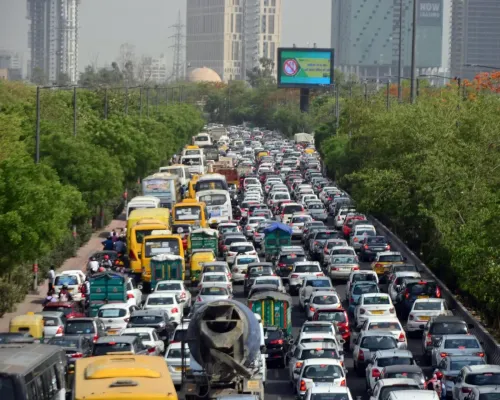
Passenger Vehicles retailed 5,07,768 units — down 14.23% year-on-year but up 18.86% over September, making it the third-best October on record. Utility vehicles and a strong model launch pipeline continued to anchor demand, while entry-level cars remained in a softer patch.
Commercial Vehicles stood out with 1,15,140 units — up 2.29% year-on-year and 11.19% sequentially — marking a best-ever October despite the high base. Heavy Commercial Vehicles (HCVs) surged 28.95% and Medium Commercial Vehicles (MCVs) rose 21.16%, even as Light Commercial Vehicles (LCVs) eased 9.57%. Three-Wheelers grew 3.97% year-on-year, Tractors rose 3.10%, and Construction Equipment jumped 22.07%.
Inventory Watch: PV Channel Stock Still Elevated
Despite the sequential recovery, Passenger Vehicle channel inventory remained at approximately 43–45 days — unchanged from September — against a backdrop of record wholesale dispatches from manufacturers. Giridhar projected relief ahead: 'With the Dhanteras-to-Diwali retail wave now under way, we expect inventory to fall back in [the] 30 days range by end of CY.' The draw-down of this stock overhang will be a key metric to watch as November data comes in.
What to Watch Next
November's retail data will be the decisive test: since Dhanteras and Diwali have shifted entirely into the month, a strong print would confirm that festive demand has merely been deferred, not destroyed. Rural recovery — contingent on a better rabi season and stable kharif procurement prices — will determine how sustainable the two-wheeler rebound is. Meanwhile, the EV trajectory, now approaching double-digit penetration, looks increasingly structural rather than cyclical.
Point of View
It is a structural shift that OEMs, dealers, and policymakers will need to anchor their medium-term planning around. What deserves scrutiny, however, is the stubborn 43–45 day PV inventory overhang even at record wholesale dispatch levels — a signal that manufacturer push may be outpacing genuine consumer pull at the entry-level end. If November's festive print disappoints despite carrying both Dhanteras and Diwali, the inventory problem sharpens considerably.
NationPress
6 Nov 2026
Frequently Asked Questions
What were India's total automobile retail sales in October 2026?
India's automobile sector recorded total retail sales of 31,72,466 units in October 2026, according to FADA data released on 6 November. This was 25.05% higher than September but 23.80% lower than October 2025, a decline that FADA attributed almost entirely to an exceptionally high base from the previous year.
Why did India's auto sales appear to fall year-on-year in October?
October 2025 was an unusually strong month that combined Navratri and Deepawali in a single window, boosted further by pent-up demand from GST 2.0 rate cuts. In 2026, Dhanteras and Diwali shifted into November, reducing October's festive retail window. FADA said the sequential 25% jump over September is the more accurate measure of festive demand.
What was the EV retail record set in October 2026?
EV retails reached an all-time high of approximately 3.55 lakh units in October 2026, up 44.88% year-on-year. Overall EV penetration climbed to roughly 11.5% of total vehicle retail, nearly double the approximately 6% recorded in October 2025, with records set across Two-Wheelers, Three-Wheelers, Passenger Vehicles, and Commercial Vehicles.
How did individual vehicle segments perform in October 2026?
Two-Wheelers retailed 23,21,419 units (up 29.67% month-on-month); Passenger Vehicles 5,07,768 units (the third-best October ever); Commercial Vehicles 1,15,140 units (best-ever October, up 2.29% year-on-year). Three-Wheelers grew 3.97%, Tractors 3.10%, and Construction Equipment 22.07% year-on-year.
What is the Passenger Vehicle inventory situation and what does FADA expect next?
Passenger Vehicle channel inventory stood at approximately 43–45 days in October, unchanged from September, against a backdrop of record wholesale dispatches from manufacturers. FADA president Sai Giridhar said the ongoing Dhanteras-to-Diwali retail wave should bring inventory down to the 30-day range by the end of the calendar year.