India's Gene Editing and Cell Therapy Initiatives Boosted by BioE3: Minister

Synopsis
Discover how India's BioE3 initiative is revolutionizing gene editing and cell therapy, ensuring ethical practices and fostering self-reliance. This article explores the government’s commitment to advancing precision medicine and the significance of new guidelines in shaping the future of healthcare.
Key Takeaways
India is enhancing its capabilities in gene therapy and editing through the BioE3 initiative.
New national guidelines ensure the ethical deployment of CRISPR technologies.
Significant progress has been made with the Phase-I clinical trial for Hemophilia A.
The BioE3 policy aims to make India a leader in biomanufacturing.
Collaboration between CSIR-IGIB and Serum Institute is crucial for commercialization.
New Delhi, March 19 (NationPress) - Regulatory authorities have released national guidelines to facilitate the safe and ethical implementation of CRISPR-based therapies in India. Concurrently, the BioE3 initiative is enhancing domestic capabilities in cell and gene therapeutics, as confirmed by the government during a recent inquiry about self-sufficiency in CRISPR and gene editing.
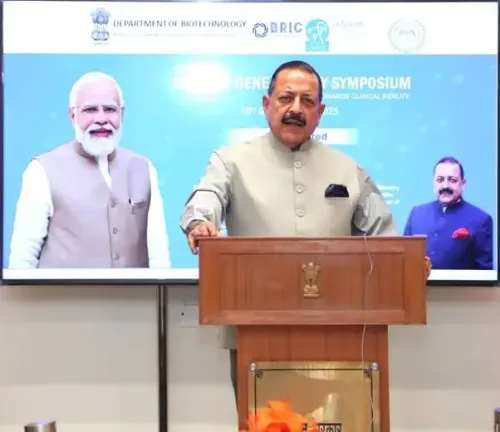
The government is progressively bolstering the precision medicine landscape through various programs, placing a strong focus on next-generation cell and gene therapies. These include methods for altering cells or genetic material via gene augmentation, gene editing, gene silencing, and other cell-centric techniques, stated Dr. Jitendra Singh, Minister of State for Science and Technology & Earth Sciences, in a written response to the Rajya Sabha.
The “National Guidelines for Gene Therapy Product Development and Clinical Trials, 2019,” issued by CDSCO, ICMR, and DBT, serve to help stakeholders understand and adhere to regulatory standards for the research and development of gene therapeutic products (GTPs) in India.
The inaugural Phase-I clinical trial for gene therapy targeting Hemophilia A has yielded clinically significant results, demonstrating stable Factor VIII production. This offers a promising treatment option for reducing bleeding episodes over the long term, as highlighted by the minister regarding government-supported initiatives.
The BioE3 (Biotechnology for Economy, Environment, and Employment) Policy, which received approval from the Union Cabinet in August 2024, aims to position India as a key global biomanufacturing hub while fostering sustainable growth and decreasing reliance on imports.
This initiative emphasizes high-performance biomanufacturing across sectors such as chemicals, enzymes, agriculture, and therapeutics, according to the official statement.
CSIR-Institute of Genomics and Integrative Biology (CSIR-IGIB) is collaborating with the Serum Institute in Pune to commercialize gene therapy, having entered into a technology transfer agreement for the clinical application and scaling of its innovative gene therapy.
Numerous research initiatives backed by ICMR enhance translational research, infrastructure development, and partnerships between industry and academia. These efforts aim to establish a sustainable pipeline of indigenous CGTs, ensuring that advanced gene-editing therapies are both affordable and widely accessible, as noted by the minister.
aar/pk
Point of View
The government's push towards enhancing gene editing and cell therapy capabilities signifies a commitment to self-reliance in biotechnology. The introduction of national guidelines highlights the importance of ethical standards, ensuring that these advancements not only promote innovation but also safeguard public health.
NationPress
10 Oct 2026
Frequently Asked Questions
What is the BioE3 initiative?
The BioE3 initiative stands for Biotechnology for Economy, Environment, and Employment, aimed at making India a global hub for biomanufacturing and promoting sustainable growth.
How does CRISPR technology benefit gene therapy?
CRISPR technology allows for precise editing of genes, which can lead to effective treatments for genetic disorders by correcting mutations at the DNA level.
What is the significance of the 2019 guidelines?
The 2019 guidelines provide a framework for the safe and ethical development of gene therapy products, ensuring compliance with regulatory standards.
What progress has been made in gene therapy for Hemophilia A?
The Phase-I clinical trial for Hemophilia A gene therapy has shown promising results, indicating stable production of Factor VIII, which could significantly reduce bleeding episodes.
How does the government support biotechnology research?
The government supports various research projects that enhance infrastructure and foster collaboration between industry and academia to promote sustainable biotechnology advancements.