Diesel-isobutanol blending mandate likely in 2025, says Roads Secretary
Synopsis
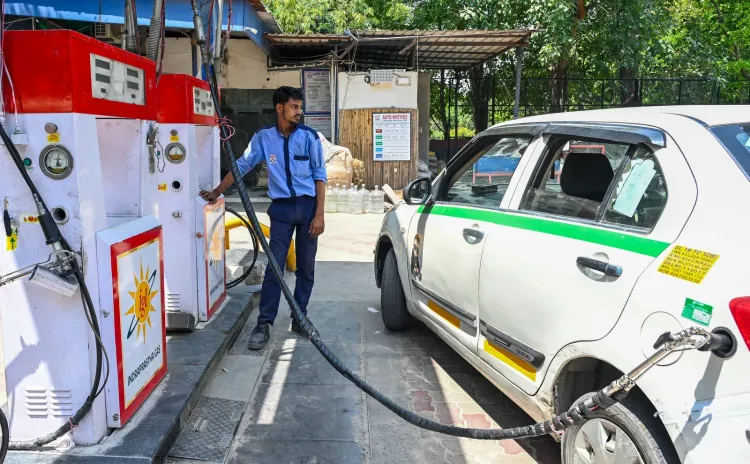
India's Roads Secretary has signalled that a diesel-isobutanol blending mandate — long discussed but never formalised — could arrive before year-end. With diesel consumption double that of petrol, the policy impact on energy security would dwarf existing ethanol-petrol blending gains. The announcement came bundled with updates on electric truck frameworks, hydrogen bus pilots, and nationwide barrier-less tolling — a rare sweep of road sector reforms in a single address.
Key Takeaways
Umashankar , Roads Transport and Highways Secretary, said a diesel-isobutanol blending mandate is likely 'somewhere later this year.' Bharat Petroleum is conducting strategic research on iso-butanol blending with diesel, with results described as 'very encouraging.' Diesel consumption in India is nearly double that of petrol, making a blending mandate more impactful for energy security than petrol blending.
The Ministry is drafting a truck-trailer interchangeability notification to support electric heavy-duty commercial vehicles without prolonged charging downtime.
Hydrogen buses operating between Delhi–Faridabad and Delhi–Noida can cover 450 km per refuel; government is supporting refuelling infrastructure costs.
Multi-Lane Free Flow (MLFF) barrier-less tolling is set to expand to all four-lane-plus toll plazas nationwide within the forthcoming year.
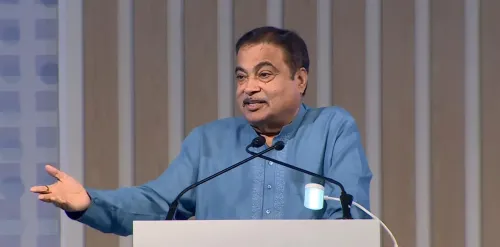
India is on track to introduce a formal mandate for blending isobutanol with diesel before the end of 2025, Roads Transport and Highways Secretary V. Umashankar said on Friday, 29 May. Speaking at the CII Multimodal Transportation and Logistics Summit in New Delhi, Umashankar said research by Bharat Petroleum on iso-butanol blending has yielded 'very encouraging' results, and a blending mandate could arrive 'somewhere later this year.'
Why Diesel Blending Matters More Than Petrol
Umashankar underscored the outsized significance of diesel in India's fuel mix. 'Diesel consumption is almost two times that of petrol consumption. So, the impact on blending in terms of diesel is concerned will have a far greater impact on our energy security than even petrol blending,' he said. India has already rolled out ethanol blending mandates for petrol in recent years, but diesel — which powers the bulk of commercial freight — has remained largely outside the biofuel blending framework. A successful isobutanol mandate would mark a structural shift in the country's decarbonisation strategy for road transport.
Electric Heavy-Duty Trucks: The Tractor-Trailer Model
Beyond biofuels, the Ministry of Road Transport and Highways is preparing a draft notification on a truck-trailer framework designed to support electric heavy-duty commercial vehicles. Rather than relying solely on battery swapping or lengthy charging stops — both of which risk keeping trucks idle — the Ministry is exploring what Umashankar called 'tractor-trailer interchangeability.' Under this model, the entire front section of the truck is swapped rather than just the battery, allowing trailers to remain in service while the traction unit is recharged or exchanged. 'We have detachable containers, so the trailer is detachable,' he explained.
Hydrogen Logistics Pilots Show Promise
On hydrogen as a logistics fuel, Umashankar reported that pilot results have been 'very good,' with key costs described as 'comparable with respect to other forms of logistics travel.' The primary cost bottleneck, he noted, is hydrogen refuelling infrastructure. Government support is currently underwriting pilot refuelling stations. Hydrogen buses have already been introduced on public transport corridors between Delhi and Faridabad, and between Delhi and Noida. Each bus can travel 450 km before requiring a refuel — a range Umashankar suggested could make the Delhi-Mumbai expressway corridor viable with as few as three refuelling stations.
Barrier-Less Tolling to Roll Out Nationwide
The Secretary also confirmed that Multi-Lane Free Flow (MLFF) — a barrier-less tolling system that allows vehicles to pass toll plazas without stopping — is set for nationwide expansion within the 'forthcoming year.' MLFF is currently live at two toll plazas, with a third expected to go live within the next 8–10 days. The Ministry plans to extend the system to all four-lane-plus toll plazas across the country. Alongside MLFF, an advanced traffic management system is being rolled out, with the first proposal for the Delhi NCR region already approved and bids set to be issued shortly.
Segregating Traffic to Boost Average Speeds
To improve vehicle throughput on national highways, the Ministry intends to prioritise expressways and access-controlled highways where slow-moving and fast-moving traffic can be physically separated. The initiative is part of a broader push to raise average vehicle speeds, which remain well below the designed capacity of many high-speed corridors. Together, these announcements signal that India's road transport ministry is simultaneously pursuing near-term fuel diversification and longer-term infrastructure modernisation to meet its decarbonisation and logistics efficiency targets.
Point of View
But diesel has always been the harder problem — it powers freight, not just passenger cars, and the supply chain implications are far larger. Umashankar's signal on isobutanol is significant precisely because it targets that harder problem. Yet the gap between 'very encouraging research' and a workable supply chain for isobutanol at national scale is enormous; the country has no established isobutanol production infrastructure comparable to its sugarcane-ethanol base. The hydrogen and MLFF announcements, while technically sound, have been 'forthcoming' for several years. The real test is whether these signals translate into gazette notifications with timelines — or remain perennial summit talking points.
NationPress
22 Sept 2026
Frequently Asked Questions
What is the diesel-isobutanol blending mandate India is planning?
India is considering a formal policy requiring isobutanol — a bio-based alcohol — to be blended with diesel fuel, similar to existing ethanol-petrol blending norms. Roads Secretary V. Umashankar said the mandate could be introduced later in 2025, based on encouraging research by Bharat Petroleum.
Why is diesel blending considered more impactful than petrol blending?
Diesel consumption in India is nearly double that of petrol, meaning any blending mandate applied to diesel would displace a far larger volume of fossil fuel. This translates into greater energy security gains and a bigger reduction in import dependence and carbon emissions from road transport.
What is the tractor-trailer interchangeability model for electric trucks?
Instead of waiting for a truck's battery to charge — which can take considerable time — the Ministry is exploring a system where the entire front traction unit of a truck is swapped out while the detachable trailer continues in service. A draft notification on this framework is expected soon.
How are India's hydrogen bus pilots performing?
Hydrogen buses running between Delhi and Faridabad, and Delhi and Noida, are operational with government-supported refuelling stations. Each bus travels 450 km per refuel, and officials say key operational costs are comparable to conventional logistics, with refuelling infrastructure being the primary cost item.
What is Multi-Lane Free Flow tolling and when will it expand?
Multi-Lane Free Flow (MLFF) is a barrier-less tolling technology that lets vehicles pass toll plazas at speed without stopping, using electronic detection. It is live at two toll plazas, with a third going live within 8–10 days, and the Ministry plans to roll it out to all four-lane-plus toll plazas nationwide within the coming year.