No plan to raise ethanol blending above 20% in petrol, says Hardeep Puri

Synopsis
India's Petroleum Minister Hardeep Singh Puri has drawn a clear line: ethanol blending in petrol stays at 20 per cent — no higher, not yet. Speaking at a national energy meet in Goa, he also took direct aim at viral social media claims of vehicle breakdowns caused by E20 fuel, calling them a deliberate 'contrived narrative', while revealing that the programme has already saved the country ₹1,60,000 crore.
Key Takeaways
Petroleum Minister Hardeep Singh Puri confirmed on 27 October that the Centre has no immediate plan to raise ethanol blending in petrol beyond 20 per cent .
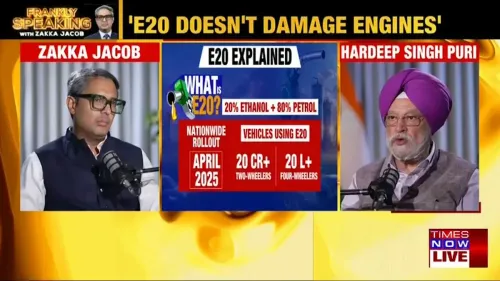
India has already rolled out E20 fuel — a blend of 20% ethanol and 80% petrol — nationally.
The E20 programme has reportedly saved the country ₹1,60,000 crore , with ₹1,40,000 crore passed back to farmers.
Puri dismissed social media claims of widespread vehicle engine damage as a 'contrived narrative' ; acknowledged compatibility issues only for vehicles made before 2003 .
The Road Transport Ministry on Monday amended the Central Motor Vehicles Rules, 1989 to allow flex-fuel vehicles running on up to E100 .
Toyota , Tata Motors , and Hyundai are developing flex-fuel vehicles for the Indian market.
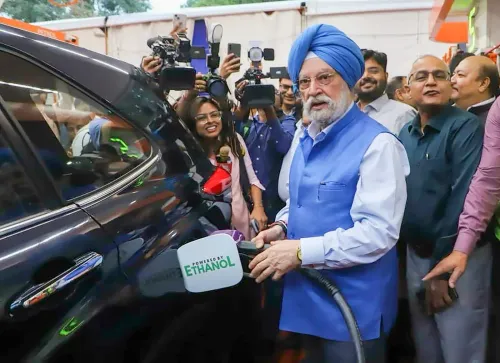
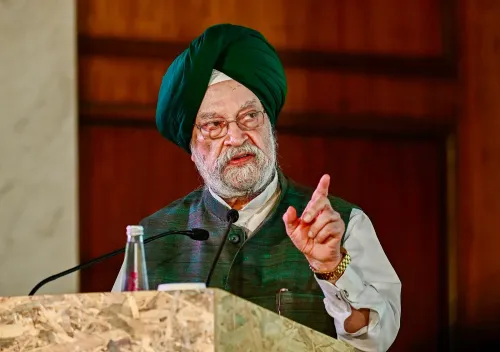
Petroleum and Natural Gas Minister Hardeep Singh Puri on Tuesday, 27 October stated that the Centre has no immediate intention of raising the ethanol blending level in petrol beyond the current ceiling of 20 per cent. Puri made the remarks during the inauguration of the 29th Energy Technology and Innovation Meet held at Betul village in South Goa, pushing back against what he described as deliberate misinformation surrounding E20 fuel.
Government's Position on Ethanol Blending
“In so far as biofuels are concerned, yes, the 20 per cent ethanol blending was the target, and there is no desire, just now, to increase it by more than 20 per cent,” Puri said in response to a question at the event. The minister was clear that the existing E20 framework — which blends 20 per cent ethanol with 80 per cent petrol — remains the government's stated end-point for now.
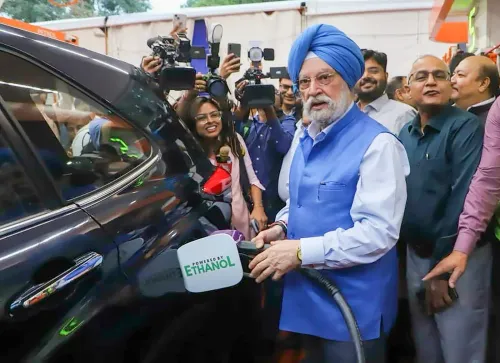
The Centre has promoted ethanol-blended petrol as a core strategy to reduce India's dependence on imported crude oil, which remains a leading contributor to the country's current account deficit. India has already rolled out E20 fuel nationally.
Savings and Farmer Benefits Cited
Puri said the introduction of E20 petrol had resulted in savings of ₹1,60,000 crore for the country, of which ₹1,40,000 crore was channelled back to farmers. “The farmers have become Urjadata (giver of energy) from Annadata (giver of food),” he remarked, underscoring the scheme's rural economic dimension.
Misinformation Claims Addressed
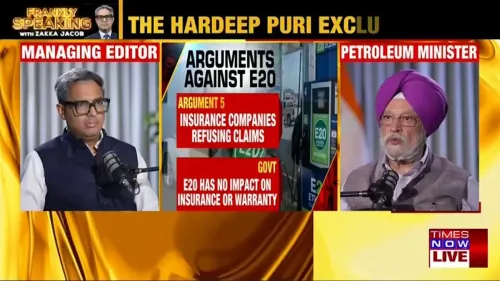
The minister directly countered social media posts alleging that vehicles were breaking down due to E20 fuel, saying such claims amounted to a “contrived narrative.” He noted that he personally came across a post claiming vehicles had stalled, implying the government had pulled blended fuel from sale — an assertion he dismissed. “Six crore vehicles go to the dispensing stations every day. If engine damage was caused, you could have seen the vehicles all over the place,” he said.
On transportation issues that had been flagged, Puri acknowledged a logistical concern: “I think there was a problem with the transportation of the blended fuel. The tankers which were used for transportation were also used for other things.” He added that compatibility issues were confined largely to vehicles manufactured before 2003, and that a specific claim about engine damage had been legally challenged — “the particular automobile manufacturer has filed a case against him,” he noted.
Flex-Fuel Vehicles and the Road Ahead
Separately, the Road Transport Ministry on Monday notified amendments to the Central Motor Vehicles Rules, 1989, permitting flex-fuel vehicles capable of running on blends up to E100 — near-pure ethanol. This move signals a longer-term policy arc even as the current blending target stays at 20 per cent.
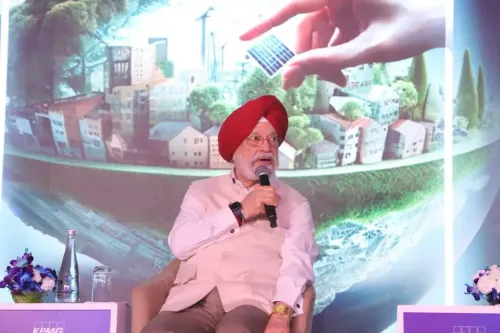
Automakers including Toyota, Tata Motors, and Hyundai Motor Company are reportedly developing flex-fuel vehicles for the Indian market, positioning themselves ahead of any future regulatory shift. The Energy Meet was held under the theme Accelerating Energy Innovation From Research to Commercialisation, organised by the Ministry of Petroleum and Natural Gas.
How quickly India transitions beyond E20 will depend on feedstock availability, engine compatibility at scale, and political will — all of which remain subjects of active policy debate.
Point of View
Fuel retailers, and farmers how far the government is willing to go in the near term, even as the flex-fuel rule change points toward a more ambitious long-run horizon. The ₹1,40,000 crore farmer-benefit figure is politically potent but has not been independently verified, and the minister's framing of all criticism as 'misinformation' risks shutting down legitimate scrutiny of a programme affecting six crore vehicles daily. The real test for E20 is not social media noise but consistent fuel quality and cold-chain integrity in distribution — exactly the logistical gap Puri himself admitted when he acknowledged tanker contamination issues.
NationPress
27 Oct 2026
Frequently Asked Questions
What did Hardeep Puri say about ethanol blending in petrol?
Minister Hardeep Singh Puri said the Centre has no immediate plan to raise ethanol blending in petrol above the current level of 20 per cent . He made the statement on 27 October at an energy meet in South Goa , confirming that E20 remains the government's target for now.
What is E20 fuel and is it safe for vehicles?
E20 fuel is a blend of 20 per cent ethanol and 80 per cent petrol that India has rolled out nationally. Puri stated that E20 is compatible with most vehicles, with compatibility concerns limited to those manufactured before 2003 .
How much has India saved from the ethanol blending programme?
According to Puri, the introduction of E20 petrol has resulted in national savings of ₹1,60,000 crore , of which ₹1,40,000 crore has been directed back to farmers as payments for ethanol feedstock.
What are flex-fuel vehicles and what rule change was announced?
Flex-fuel vehicles can run on higher ethanol blends such as E85 or E100 — near-pure ethanol. The Road Transport Ministry notified changes to the Central Motor Vehicles Rules, 1989 on Monday to permit such vehicles in India, with Toyota , Tata Motors , and Hyundai already developing flex-fuel models for the market.
Why is there a controversy around E20 fuel?
Social media posts have alleged vehicle breakdowns and engine damage linked to E20 fuel, which Puri dismissed as a ‘contrived narrative.’ He acknowledged a logistics issue where tankers used to transport blended fuel were also used for other purposes, but said claims of widespread engine damage had been legally challenged by at least one automobile manufacturer.