India's $360 bn infra push cuts logistics cost to 10% of GDP: CII-Knight Frank

Synopsis
A decade of $360 billion in infrastructure spending has cut India's logistics costs from 14% to under 11% of GDP — saving over $125 billion a year. But the CII-Knight Frank report warns the easy gains are over: the next leap requires 216 Multimodal Logistics Parks and a decisive shift away from road freight, or India's 2047 targets will slip.
Key Takeaways
India's $360 billion infrastructure investments over the past decade have generated annual savings of $123–133 billion for the economy.
Logistics costs fell from 13–14% of GDP a decade ago to 10–10.7% of GDP in FY 2026 .
India's rank on the Global Logistics Performance Index improved from 54th (2014) to 38th (2023) .
India needs 216 Multimodal Logistics Parks (MMLPs) , each handling 16–17 MMT per annum , to meet its 2047 freight modal shift targets .
MMLPs on DFC corridors can deliver a 43% total cost advantage over road freight, according to CII .
The National Rail Plan targets a 45% freight modal share by 2047 , requiring aggressive intermodal network expansion.
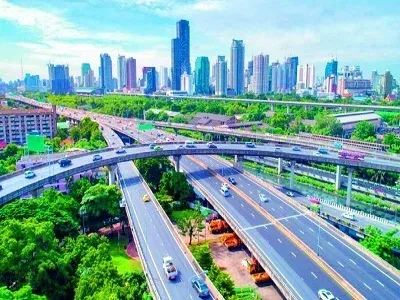
Cumulative infrastructure investments of nearly $360 billion over the past decade have slashed India's logistics costs to 10–10.7 per cent of GDP in FY 2026, down from 13–14 per cent a decade ago, generating estimated annual savings of $123–133 billion for the Indian economy, according to a joint report by the Confederation of Indian Industry (CII) and Knight Frank India released on Friday, 29 May.
Key Findings of the Report
The report highlights a marked improvement in India's standing on the Global Logistics Performance Index, which rose from 54th position in 2014 to 38th in 2023. This reflects stronger connectivity, better trade facilitation, and enhanced supply chain performance across the country.
Despite this progress, the report cautions that India's logistics supply chain has yet to reach optimal efficiency. Overdependence on road transport, delays in developing integrated infrastructure, and weak first- and last-mile connectivity continue to limit the shift of cargo to rail and other cost-efficient modes.
The MMLP Imperative
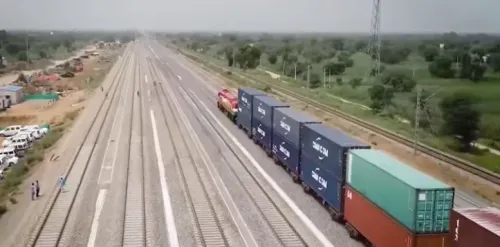
Multimodal Logistics Parks (MMLPs) are identified as central to bridging the remaining gap. According to the report, India will require 216 MMLPs, each with an average capacity of 16–17 million metric tonnes (MMT) per annum, to meet its 2047 freight modal shift targets.
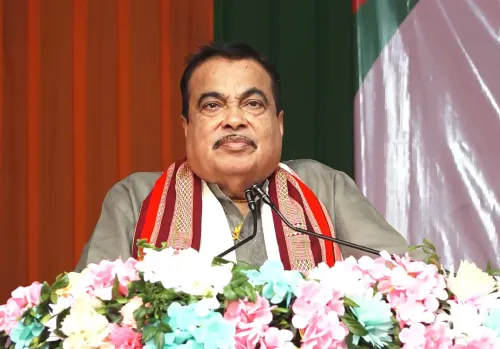
Ashwani Gupta, Chairman of the CII National Committee on Ports and Shipping and Whole Time Director and CEO of Adani Ports and SEZ, said the core bottleneck has shifted. 'The core challenge is no longer an infrastructure deficit, but a lack of connective nodes… By aggregating fragmented, sub-threshold cargo, MMLP-grade interchange unlocks a monumental 43 per cent total cost advantage over road freight on DFC corridors,' he said. Gupta added that India must aggressively scale its intermodal network to achieve the National Rail Plan's target of a 45 per cent freight modal share by 2047.
Global Benchmarks and What India Can Learn
The report points to Germany, the Netherlands, and Singapore as examples where integrated logistics parks have demonstrably improved supply chain integration, operational efficiency, and modal balance. These nations offer a replicable template for India's next phase of logistics reform.
Recommendations and the Road Ahead
The CII-Knight Frank report urges the government and private sector to fast-track MMLP project implementation, create anchor demand through industrial clustering and freight aggregation, and urgently address first- and last-mile connectivity gaps. Accelerating private sector participation is flagged as critical to meeting the 2047 targets on schedule.
With the infrastructure foundation largely in place, the report signals that India's logistics transformation now hinges on execution — building the connective tissue that turns individual assets into an integrated national network.
Point of View
And the 216-MMLP target is aspirational without a funded, time-bound rollout plan. The 43% cost advantage on DFC corridors is real, yet DFC utilisation remains well below capacity because the first- and last-mile links that feed those corridors are missing. India has built the arteries; it has yet to build the capillaries. The 2047 modal-shift target will be decided not in Delhi policy rooms but in whether state governments and private operators can execute MMLP projects at a pace that matches the ambition.
NationPress
13 Oct 2026
Frequently Asked Questions
How much has India invested in infrastructure over the last decade?
India has cumulatively invested nearly $360 billion in infrastructure development over the past decade, according to the CII-Knight Frank India joint report released on 29 May 2025. These investments have generated estimated annual savings of $123–133 billion for the Indian economy.
What is India's current logistics cost as a percentage of GDP?
India's logistics cost stood at approximately 10–10.7 per cent of GDP in FY 2026, down from 13–14 per cent a decade ago. The reduction is attributed to sustained infrastructure investment over the past ten years.
How many Multimodal Logistics Parks does India need by 2047?
According to the CII-Knight Frank report, India requires 216 Multimodal Logistics Parks (MMLPs) , each with an average capacity of 16–17 MMT per annum, to achieve its 2047 freight modal shift targets. MMLPs are identified as the critical connective nodes for shifting cargo from road to rail.
What is India's target freight modal share under the National Rail Plan?
The National Rail Plan targets a 45 per cent freight modal share by 2047 . Achieving this requires aggressively scaling India's intermodal network and accelerating MMLP development, according to CII.
How does India compare globally on logistics performance?
India's rank on the Global Logistics Performance Index improved from 54th in 2014 to 38th in 2023 , reflecting gains in connectivity, trade facilitation, and supply chain performance. However, the report notes that optimal efficiency has not yet been achieved.