India's first barrier-less MLFF tolling logs 41,500 vehicles on Day 1
Synopsis
India's first barrier-less MLFF tolling system clocked 41,500 vehicles on Day 1 at Gujarat's Chorayasi plaza — no stops, no queues, just ANPR and FASTag doing the work. With FASTag penetration at 98%, this Surat–Bharuch pilot could be the blueprint for transforming tolling on every major national highway corridor.
Key Takeaways
India's first MLFF barrier-less tolling system recorded ~41,500 vehicles on its opening day at Chorayasi Toll Plaza , NH-48 , Gujarat.
The system uses ANPR and FASTag to process toll payments without vehicles stopping, eliminating boom barriers entirely.
Union Minister Nitin Gadkari called the launch a major milestone in India's highway digitisation on Friday, 2 May 2025 .
FASTag penetration has crossed 98% nationally, enabling the transition to fully digital toll collection since April 2026 .
Vehicles with insufficient FASTag balance face an electronic notice and must pay within 72 hours or risk double toll charges .
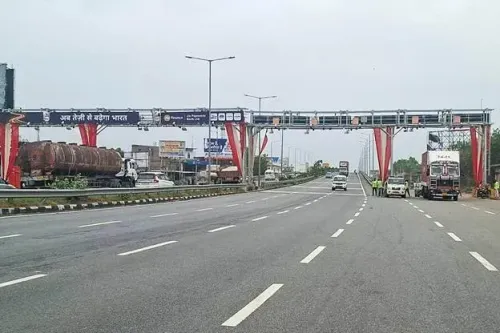
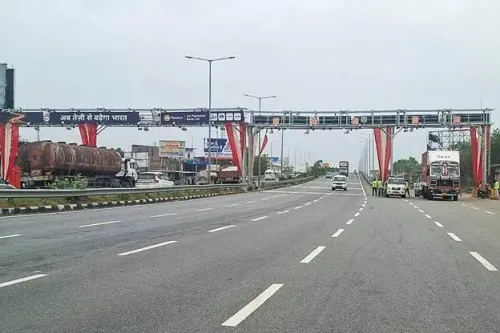
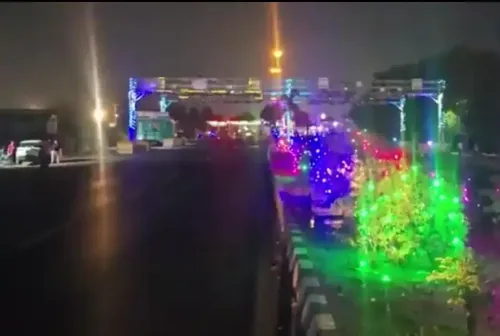
India's first multi-lane free flow (MLFF) barrier-less tolling system recorded approximately 41,500 vehicles on its opening day at the Chorayasi Toll Plaza on the Surat–Bharuch stretch of NH-48 in Gujarat, according to official data released by the Ministry of Road Transport and Highways on Saturday, 3 May 2025. The system, deployed by the National Highways Authority of India (NHAI), allows vehicles to pass through toll points without stopping, marking a significant leap in India's highway infrastructure modernisation.
How the System Works
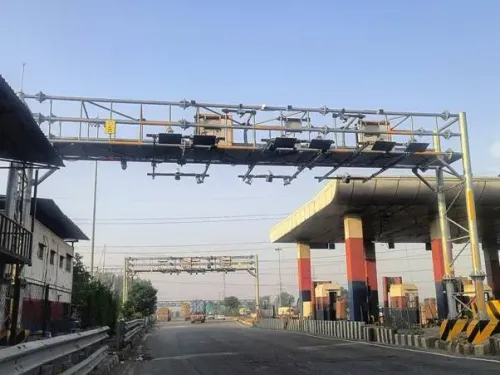
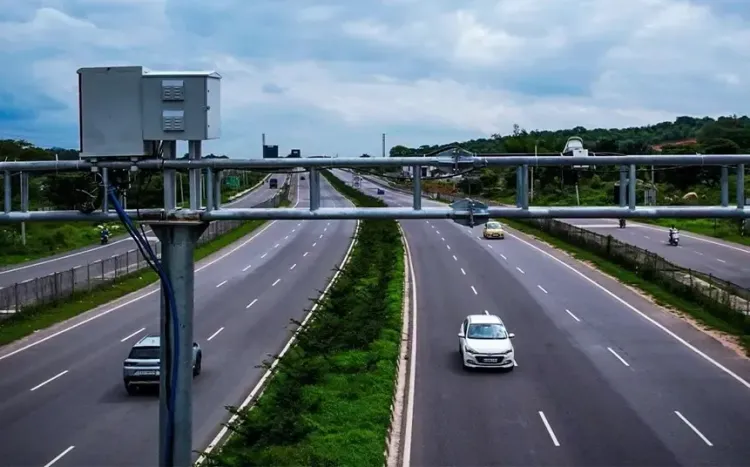
The MLFF framework relies on Automatic Number Plate Recognition (ANPR) technology combined with FASTag-based electronic toll collection to process vehicles seamlessly at highway speed. There are no physical barriers, no manual intervention, and no queues — tolls are deducted automatically as vehicles pass through designated gantries. The system is designed to reduce congestion, cut travel time, improve fuel efficiency, and lower vehicular emissions on national highways.
What the Government Said
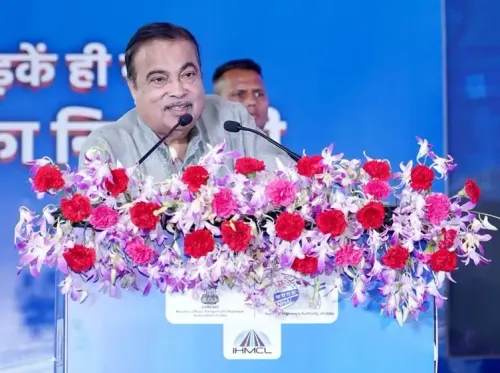
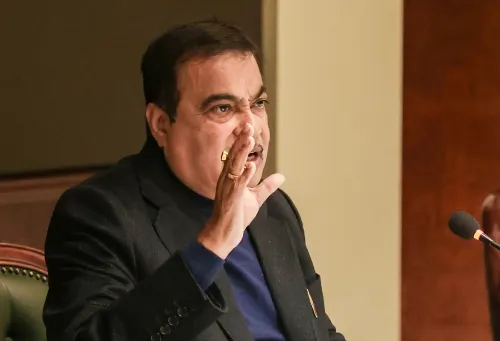
Union Road Transport and Highways Minister Nitin Gadkari announced the launch on Friday, describing it as a major milestone in the digitisation of India's tolling ecosystem. He said the rollout aligns with global standards for highway infrastructure and would enhance ease of living for citizens while promoting ease of doing business by enabling faster and more efficient movement of goods and logistics across the country.
The Broader Digital Toll Push
The MLFF rollout builds on the Union government's transition to fully digital toll collection across all National Highway fee plazas, completed in April 2026, with payments processed through FASTag and the Unified Payments Interface (UPI). FASTag penetration has reportedly crossed 98 per cent, significantly transforming toll collection practices across the country. This is the next logical step — eliminating even the brief stop that FASTag-equipped vehicles previously had to make at boom barriers.
Rules for Non-Compliant Vehicles
NHAI has advised highway users to maintain adequate balances in their FASTag accounts at all times. In cases of insufficient balance or an invalid FASTag, an electronic notice will be issued to the vehicle owner, requiring payment within 72 hours. Failure to comply may result in double toll charges being levied, according to the authority.
What's Next
The Chorayasi pilot is expected to serve as a template for scaling the MLFF system to other high-traffic national highway corridors. As part of the Union government's broader push for a more efficient, transparent, and commuter-friendly highway network, further rollouts are anticipated across key freight and passenger routes in the coming months.
Point of View
500-vehicle Day 1 count at a single plaza is a proof-of-concept number, not a transformation headline — the real test is what happens at high-density corridors like Delhi–Mumbai or Bengaluru–Chennai during peak freight hours. India has been promising seamless tolling since the FASTag mandate of 2021; MLFF is the logical completion of that arc, but the enforcement mechanism — electronic notices and double charges — assumes a level of digital literacy and account hygiene that rural and small-fleet operators may not yet have. The 72-hour payment window is a policy detail that will determine whether this becomes a genuine efficiency gain or a new source of penalty-driven revenue. Scale and equity of rollout, not the pilot number, will define this system's legacy.
NationPress
20 Sept 2026
Frequently Asked Questions
What is India's MLFF barrier-less tolling system?
The Multi-Lane Free Flow (MLFF) system is a barrier-less electronic tolling framework deployed by NHAI that uses Automatic Number Plate Recognition (ANPR) and FASTag to deduct tolls automatically as vehicles pass through highway gantries without stopping. It was first launched at Chorayasi Toll Plaza on NH-48 in Gujarat.
How many vehicles used the MLFF system on Day 1?
Approximately 41,500 vehicles were recorded at the Chorayasi Toll Plaza on the Surat–Bharuch stretch of NH-48 in Gujarat on the first day of operations, according to official data from the Ministry of Road Transport and Highways.
What happens if my FASTag balance is insufficient at an MLFF toll plaza?
If a vehicle passes through with an insufficient balance or an invalid FASTag, NHAI will issue an electronic notice requiring payment within 72 hours. Failure to pay within this window may result in double toll charges being levied on the vehicle owner.
Who launched the MLFF tolling system and why does it matter?
Union Road Transport and Highways Minister Nitin Gadkari announced the launch on 2 May 2025, describing it as a major milestone in highway digitisation. The system is designed to eliminate congestion at toll plazas, reduce travel time, improve fuel efficiency, and lower vehicular emissions on national highways.
How does the MLFF system relate to India's existing FASTag infrastructure?
The MLFF system is a direct evolution of India's FASTag mandate. With FASTag penetration reportedly crossing 98% and fully digital toll collection in place since April 2026, MLFF removes the last physical barrier — the boom gate — allowing vehicles to pass at highway speed without any stop.