Is India Preparing for a Future-Ready Economy with Robust Digital Foundations?
Synopsis
India is on the cusp of transforming its economy with robust digital infrastructure. Shaurya Doval from India Foundation highlights the significant milestones and future projections that position India as a formidable global player in the coming decades.
Key Takeaways
India's digital infrastructure is key for future growth.
Projected economic size is between $30-$40 trillion.
Significant growth has been observed from 2014 to 2025.
India's GDP reached $2 trillion in 2004.
Strong fundamentals position India among the largest economies.
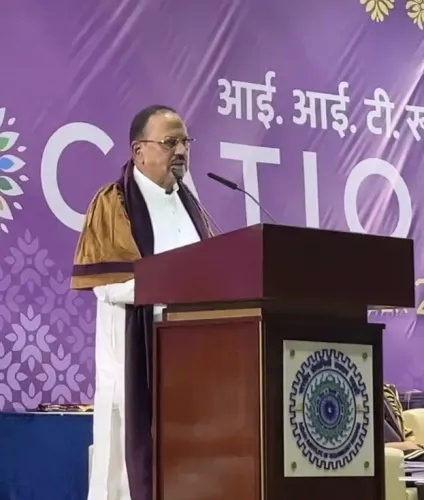
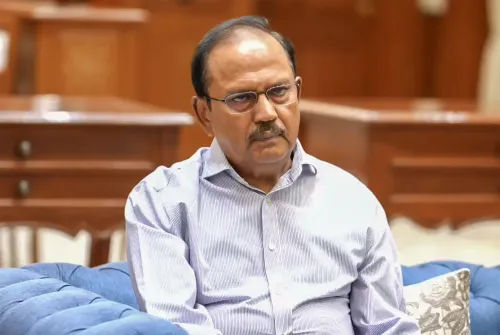
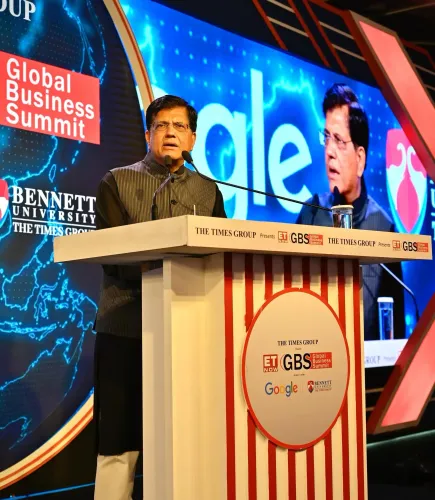
Pune, Feb 14 (NationPress) The Founding Director of the Delhi-based think tank India Foundation, Shaurya Doval, stated on Saturday that India has established a solid groundwork for a future economy by developing the necessary digital infrastructure to foster long-term growth.
Discussing India's economic trajectory, Doval emphasized that the nation is set for the future by investing in systems capable of supporting an economy projected to reach $30 to $40 trillion in the upcoming decades.
He elaborated that digital platforms, governance reforms, and technology-driven processes are forming the basis for sustained growth and global competitiveness.
"The first significant step we have taken is laying the groundwork for what I believe will be a future economy; we are ready for the future by establishing the digital infrastructure essential for an economy projected to fall within the $30 to $40 trillion range," he articulated.
Doval also underscored India's economic achievements over the last decade, particularly from 2014 to 2025.
He indicated that the figures themselves reflect the advancements made during this timeframe. According to him, India's GDP was approximately $2 trillion in 2004, a result of nearly 65 years of growth post-Independence.
He reminisced that at the time of India's independence in 1947, the economy was valued at merely $30 billion. Achieving the $2 trillion milestone took decades; however, the rate of growth has dramatically accelerated in recent years, attributed to policy stability, infrastructure enhancement, and digital transformation.
"When examining the performance of the Indian economy over the past 10 years, specifically from 2014 to 2025, the initial statistics themselves convey a significant message regarding our progress," Doval remarked.
"In 2004, India’s GDP was $2 trillion. After approximately 65 years of independence, we transitioned from a base of about $30 billion in 1947 to an economic size of $2 trillion," he added.
These statements were made in Pune, where Doval asserted that India is now in a stronger position than ever to ascend into the ranks of the world’s largest economies, fortified by robust fundamentals and a clear long-term vision.
Point of View
The insights provided by Shaurya Doval paint a promising picture of India's economic trajectory. The emphasis on digital infrastructure and governance reforms signifies a strategic approach to economic development, aligning with national interests and global competitiveness. As we move forward, it is crucial to monitor these developments closely, as they impact not only India's economy but also its position on the global stage.
NationPress
1 Oct 2026
Frequently Asked Questions
What is the projected growth of India’s economy?
India's economy is projected to reach between $30 to $40 trillion in the coming decades.
Who is Shaurya Doval?
Shaurya Doval is the Founding Director of the India Foundation, a Delhi-based think tank.
What role does digital infrastructure play in India’s economy?
Digital infrastructure is crucial as it supports long-term growth and enhances global competitiveness.
What was India's GDP in 2004?
India's GDP was approximately $2 trillion in 2004.
How has India’s economy changed since independence?
India's economy has grown from about $30 billion in 1947 to approximately $2 trillion in 2004, reflecting significant progress over decades.