How can India prepare for a trillion-dollar tech future by 2035?
Synopsis
Union Commerce and Industry Minister Piyush Goyal has called for India’s tech sector to aim for a trillion-dollar opportunity by 2035. Highlighting the importance of reimagining strategies in AI, data, and clean energy, Goyal emphasized the need for robust infrastructure and targeted investments to position India as a global technology leader.
Key Takeaways
Target a trillion-dollar tech industry by 2035.
Focus on reimagination in technology.
Boost data center capacity to 10 GW by 2030.
Invest in clean energy and AI.
Strengthen infrastructure for tech growth.
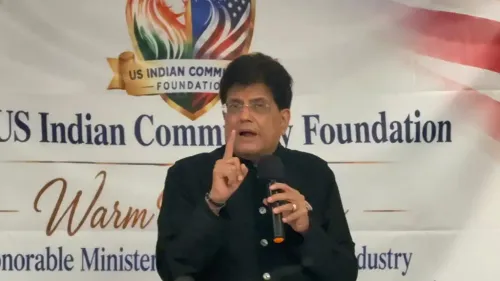
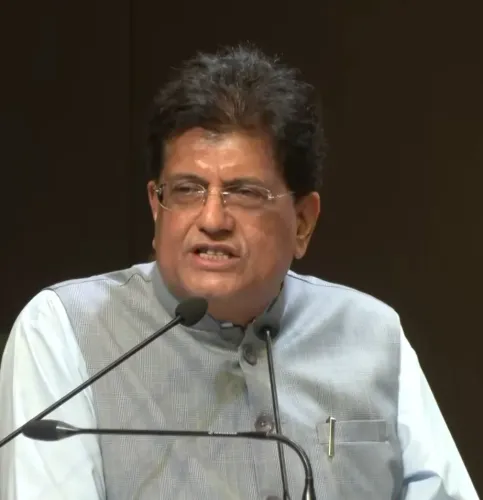
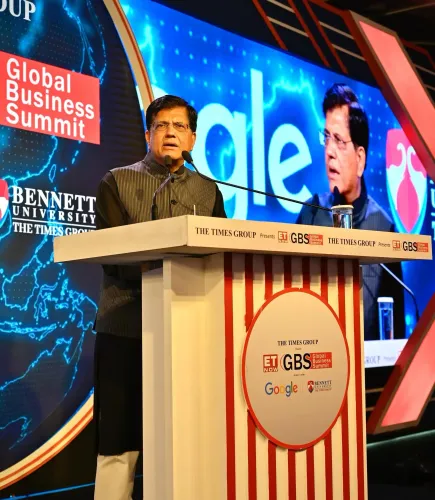
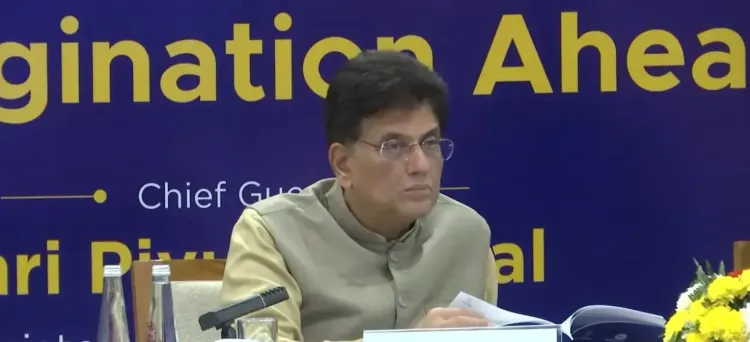
New Delhi, Feb 12 (NationPress) Urging the technology sector in India to recalibrate its aspirations toward a trillion-dollar market by 2035, Union Commerce and Industry Minister Piyush Goyal stated on Thursday that the industry must adopt reimagination to thrive in an era characterized by artificial intelligence, data centres, and clean energy.
During the launch of the NITI Frontier Tech Hub's roadmap report entitled "Reimagination Ahead" in the national capital, the Union Minister asserted that India should aim for a minimum of 10 GW of data centre capacity by 2030 and establish itself as a global center for AI-driven technology services.
He emphasized that the future hinges on applied AI, widespread reskilling, creating domestic value, and ensuring talent retention.
According to Union Minister Goyal, India's nearly one billion internet users, coupled with some of the highest data consumption per capita globally and rapid AI adoption, present a solid foundation for growth.
"The availability of affordable data, the deployment of 5G, and forthcoming 6G capabilities have fortified India's digital ecosystem, paving the way for a $250–$300 billion technology services sector," he remarked.
He underscored that strong infrastructure reforms have fueled this advancement.
Reflecting on the New Telecom Policy of 1999 spearheaded by then Prime Minister Atal Bihari Vajpayee, the Union Minister noted that affordable connectivity established the foundation for digital transformation.
He also mentioned the strengthening of India's unified national power grid post-2014, which now boasts a capacity of 500 GW, including 250 GW sourced from clean energy.
"The swift expansion of renewable energy capacity, supported by transparent reverse bidding, has driven solar tariffs down to around Rs 2.31 to 2.41 per unit and wind tariffs to about Rs 2.5 per unit. India now offers 24-hour clean energy at under Rs 6 per kilowatt hour and aims for 500 GW of renewable capacity by 2030," he affirmed.
He pointed out that announcements in the Union Budget providing income tax incentives up to 2047 for specific investments will further entice foreign direct investment, enhance foreign exchange inflows, and create jobs, particularly in the broader data centre ecosystem.
"The integration of clean energy, expansion of nuclear power, pumped storage, battery storage, and initiatives in green hydrogen and green ammonia will bolster India's competitiveness," he noted.
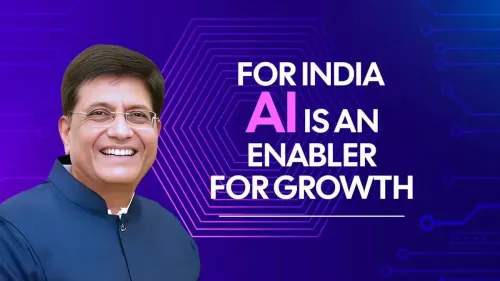
Regarding artificial intelligence, Union Minister Goyal stressed that while AI will enhance human abilities, cybersecurity, human validation, and data integrity will remain paramount.
He urged for extensive AI education among business leaders, policymakers, and decision-makers to facilitate effective adoption.
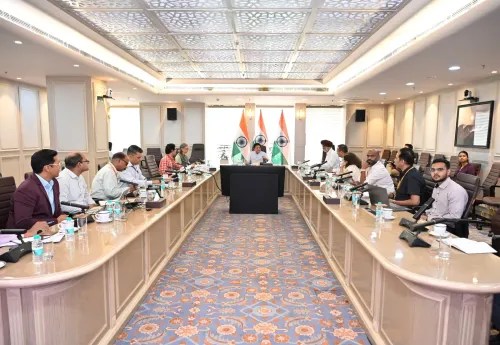
Highlighting an industry-led approach with the government as a facilitator, he proposed structured, ongoing discussions involving the Ministry of Electronics and Information Technology, Ministry of Commerce and Industry, Department for Promotion of Industry and Internal Trade, Invest India, NITI Aayog, the Ministry of Education, the Ministry of Skill Development, and industry bodies like NASSCOM.
Union Minister Goyal suggested dedicating one Saturday each month for structured dialogues to tackle emerging challenges.
He also underscored the necessity of coordinated efforts with states to streamline single-window clearances, land approvals, and electricity access and distribution upgrades essential for high-intensity AI and data centre operations.
The Union Minister assured that the Central government is prepared to collaborate with the industry in a mission-oriented approach to ensure India becomes a global leader in technology services and frontier technologies.
Point of View
The emphasis on reimagining India's tech sector is crucial. The call for a trillion-dollar goal by 2035 is ambitious yet achievable with the right policies and partnerships. As India navigates this transition, the focus on AI and clean energy will be pivotal in positioning the nation as a global leader in technology.
NationPress
10 Oct 2026
Frequently Asked Questions
What is Piyush Goyal's vision for India's technology sector?
Piyush Goyal envisions a trillion-dollar technology sector by 2035, focusing on AI, data centers, and clean energy.
How does India plan to support its technology ambitions?
India aims to strengthen its infrastructure and increase data center capacity while promoting foreign investments and reskilling initiatives.
What role does clean energy play in India's tech future?
Clean energy is vital for sustainable growth, with goals for 500 GW of renewable capacity by 2030 to support the tech industry.
How can AI contribute to India's technology landscape?
AI can enhance capabilities across sectors, driving innovation and efficiency while also necessitating strong cybersecurity measures.
What initiatives are being proposed for industry collaboration?
Goyal proposes structured engagements involving various ministries and industry bodies to address challenges and foster growth.