India's GDP Growth Projected to Exceed 7% in FY27 Driven by Domestic Demand and Investment
Synopsis
India's GDP is set to maintain a growth rate above 7% in FY27, buoyed by strong domestic consumption and rising investments, despite global economic uncertainties. Key economic indicators demonstrate India's resilience and potential for continued growth.
Key Takeaways
India's GDP is expected to exceed 7% in FY27.
Strong domestic consumption and investments are key growth drivers.
India's economy has shown resilience post-COVID-19.
Exports reached $791 billion from April to February FY26.
Potential risks from geopolitical tensions in West Asia .
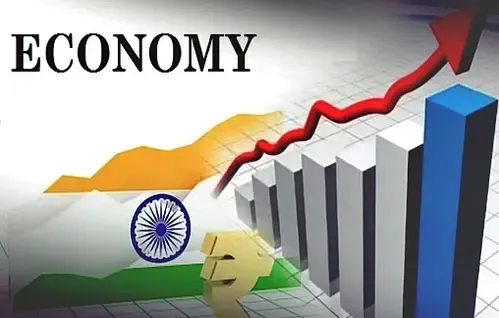
New Delhi, March 26 (NationPress) Robust domestic demand and increasing investments are anticipated to enable India to sustain a GDP growth rate exceeding 7 percent in the forthcoming financial year 2026–27, according to a report released on Thursday.
Data compiled by Assocham indicates that India's GDP is projected to expand by 7.6 percent in 2025-26, with expectations of continued growth above 7 percent into FY27.
This consistent performance is noteworthy amid the global economic uncertainty stemming from geopolitical tensions, particularly in West Asia.
Assocham President Nirmal K Minda remarked that ongoing governmental reforms have significantly bolstered business confidence over the years.
He pointed out that India's consumption has reached a multi-year peak, fueled by reforms in taxation and the facilitation of business operations, while investments are gaining momentum alongside rising demand.
The industry body noted that India's economy has demonstrated increased resilience in recent years, especially following the COVID-19 pandemic.
Despite encountering global challenges such as geopolitical conflicts and trade disputes, the country has successfully maintained a growth rate exceeding 7 percent for the past three years.
Key economic metrics also underscore this robustness. India's Purchasing Managers' Index (PMI) for manufacturing stood at 56.9 and for services at 58.1 in February 2026, surpassing major economies like the United States, China, and Germany.
Exports have exhibited consistent growth, climbing approximately 6 percent from April to February in FY26 to reach $791 billion, compared to $748 billion during the same timeframe last year.
This growth has been bolstered by sectors such as engineering goods, electronics, chemicals, gems and jewellery, and agricultural products.
Assocham expressed optimism that exports could surpass $870 billion this year, a rise from $824 billion in the previous year.
Nevertheless, the report cautioned about potential risks arising from ongoing tensions in West Asia. Industries such as gems and jewellery, pharmaceuticals, and agriculture may face disruptions due to increased logistics costs and shipment delays.
The Middle East remains a crucial market for these sectors, and any extended conflict could adversely impact trade flows.
Point of View
The report reflects a positive outlook for India's economy, emphasizing the role of domestic consumption and investments in sustaining growth. The resilience shown in the face of global challenges is commendable, but caution is warranted regarding geopolitical tensions that may impact certain sectors.
NationPress
24 Sept 2026
Frequently Asked Questions
What is India's projected GDP growth for FY27?
India's GDP is projected to grow above 7% in FY27, driven by strong domestic consumption and increasing investments.
Which sectors are contributing to India's growth?
Key sectors contributing to growth include engineering goods, electronics, chemicals, gems and jewellery, and agricultural products.
What role do government reforms play in India's economic growth?
Ongoing government reforms have significantly boosted business confidence, which is crucial for maintaining economic growth.
How have exports performed recently?
Exports have shown steady growth, increasing by around 6% to reach $791 billion between April and February of FY26.
What risks could impact India's economic growth?
Ongoing geopolitical tensions, particularly in West Asia, pose risks that could disrupt sectors like gems and jewellery, pharmaceuticals, and agriculture.