Supreme Court issues notice on PIL for speedy NDPS trials, FSL deadlines
Synopsis
India's drug crisis — 1,48,063 cases and 1,240 tonnes seized in 2025 alone — has reached the Supreme Court. A PIL is now demanding mandatory FSL deadlines, videographed seizures, graded sentencing, and special courts under the NDPS Act. The bench of CJI Surya Kant has issued notice to the Centre and every state government, with the next hearing on 28 September.
Key Takeaways
The Supreme Court issued notice to the Centre and state governments on 10 August on a PIL seeking time-bound NDPS investigation and trial.
The bench comprises CJI Surya Kant , Justice Joymalya Bagchi , and Justice V.
Mohana ; next hearing is on 28 September .
The PIL, filed by advocate Ashwini Kumar Upadhyay , demands mandatory FSL report timelines , a uniform SOP , and Special Courts under the NDPS Act.
It calls for mandatory digital recording of seizure proceedings to curb acquittals from procedural lapses.
Drug cases surged 53% in 2025 , with 1,48,063 cases registered and 1,240 tonnes of drugs seized, according to NCB data cited in the petition.
The plea invokes Articles 14, 21, and 47 of the Constitution and also seeks a Law Commission report on the issue.
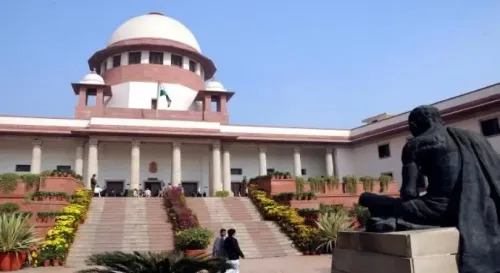
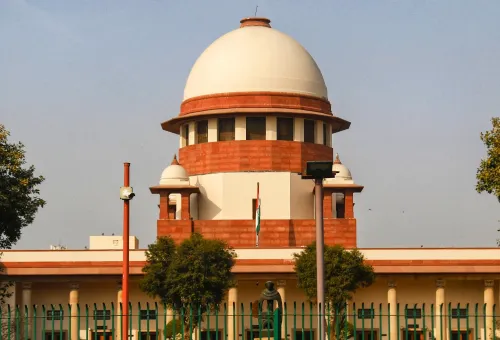
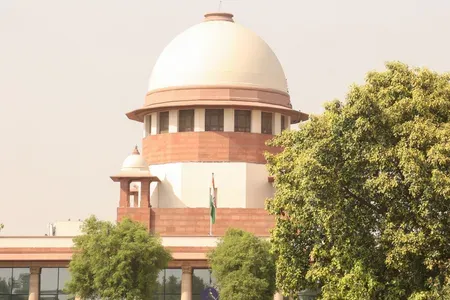
The Supreme Court of India on Monday, 10 August issued notice to the Centre and all state governments on a Public Interest Litigation seeking court-mandated timelines for investigation and trial of cases under the Narcotic Drugs and Psychotropic Substances (NDPS) Act, 1985. The bench, comprising Chief Justice of India Surya Kant, Justice Joymalya Bagchi, and Justice V. Mohana, admitted the plea and listed the matter for further hearing on 28 September.
What the PIL Demands
The petition, filed by advocate Ashwini Kumar Upadhyay, seeks a mandatory timeline for submission of Forensic Science Laboratory (FSL) reports in all NDPS cases and a Standard Operating Procedure (SOP) for search, seizure, and sampling in small and intermediate quantity cases. It also calls for the constitution of Special Courts under Sections 36 and 36A of the NDPS Act and a uniform SOP for time-bound investigation and prosecution of narcotics offences across states.
The PIL additionally seeks the formation of an expert committee for the timely identification and scheduling of New Psychoactive Substances (NPS), including synthetic opioids, citing the absence of any permanent mechanism to address their proliferation.
Transparency and Digital Safeguards
Among its more specific demands, the petition calls for mandatory digital recording and videography of all search, seizure, sampling, and inventory proceedings in NDPS cases. The petitioner argues that such measures would reduce procedural lapses that have historically led to acquittals — a concern that has surfaced repeatedly in high-profile narcotics trials across the country.
Rehabilitation, Sentencing, and Asset Seizure
The PIL seeks effective implementation of Sections 39 and 64A of the NDPS Act, which provide for treatment and conditional immunity from prosecution for addicts who voluntarily seek de-addiction. It also proposes a graded sentencing policy that distinguishes traffickers and financiers from addicts and personal-use offenders, and calls for consideration of consecutive sentences in appropriate cases.
On the financial side, the petition seeks time-bound assessment and confiscation of assets belonging to drug traffickers and financiers, invoking the NDPS Act alongside the Prevention of Money Laundering Act, the Benami Property Act, and the Black Money Act.
Scale of the Crisis
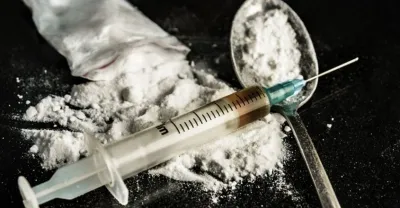
The petition cites a 53% surge in drug cases in 2025, with 1,48,063 cases registered and 1,240 tonnes of drugs seized, according to data attributed to the Narcotics Control Bureau (NCB). It flags drug-related deaths, addiction-driven violence, and alleged drone-based trafficking along border areas as evidence that the crisis has moved beyond individual offenders to threaten public health, family structures, public order, and national security.
The petitioner contends that the situation engages Articles 14 and 21 of the Constitution — the right to equality and the right to life — as well as the state's obligation under Article 47 to improve public health. The PIL also seeks a direction to the Law Commission of India to prepare a comprehensive report on the subject. The next hearing on 28 September will determine what further directions the court issues to the Centre and states.
Point of View
But because FSL reports arrive late, seizure procedures are inconsistently followed, and special courts remain under-resourced. A 53% single-year spike in registered cases makes the status quo untenable. The demand for videographed seizures is particularly significant — it directly targets the procedural loopholes that have allowed high-profile acquittals. Whether the Supreme Court moves beyond notice to binding directions will be the real test; India has had NDPS reform committees before, and their reports have gathered dust.
NationPress
10 Aug 2026
Frequently Asked Questions
What is the Supreme Court PIL on NDPS cases about?
The PIL, filed by advocate Ashwini Kumar Upadhyay, asks the Supreme Court to direct the Centre and state governments to set mandatory timelines for FSL reports, establish Special Courts, and create uniform SOPs for investigation and trial of cases under the NDPS Act, 1985. The Supreme Court issued notice to the Centre and states on 10 August, with the next hearing on 28 September.
Why is there a push for mandatory FSL timelines in NDPS cases?
Delayed forensic reports are a leading cause of prolonged trials and acquittals in narcotics cases across India. The petition argues that the absence of a fixed deadline for FSL submissions results in procedural lapses and inconsistent enforcement, undermining both prosecution and justice for victims of drug-related offences.
How serious is India's drug problem according to the PIL?
The petition cites Narcotics Control Bureau data showing a 53% surge in drug cases in 2025, with 1,48,063 cases registered and 1,240 tonnes of drugs seized. It also flags drone-based trafficking along border areas and the growing proliferation of New Psychoactive Substances, including synthetic opioids.
What does the PIL say about drug addicts versus traffickers?
The petition proposes a graded sentencing policy that distinguishes traffickers and financiers — who would face stringent punishment — from addicts and personal-use offenders. It also seeks effective implementation of Sections 39 and 64A of the NDPS Act, which allow voluntary de-addiction treatment in exchange for immunity from prosecution.
When is the next Supreme Court hearing on this PIL?
The Supreme Court has listed the matter for further hearing on 28 September. The bench of CJI Surya Kant, Justice Joymalya Bagchi, and Justice V. Mohana will consider the responses from the Centre and state governments at that stage.