India fastest-growing major economy at 7% GDP despite global headwinds: Assocham
Synopsis
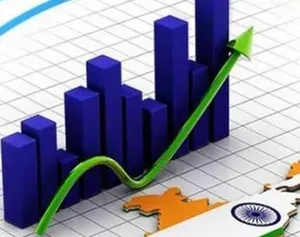
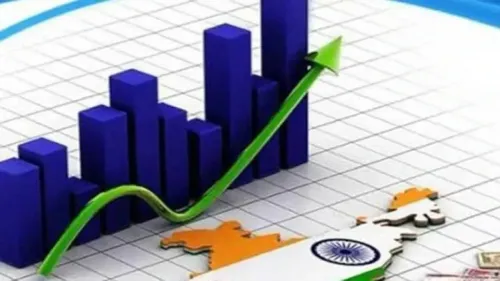
Despite a turbulent global backdrop marked by US-Iran tensions and commodity market volatility, India is holding its ground as the world's fastest-growing major economy. Assocham's latest outlook projects 7% GDP growth in 2026-27, backed by record GST collections, robust credit growth, and accelerating infrastructure investment — a rare bright spot in an otherwise uncertain global landscape.
Key Takeaways
Assocham 's 'Global Economic Outlook' report, released on 12 May , identifies India as the fastest-growing major economy in the world.
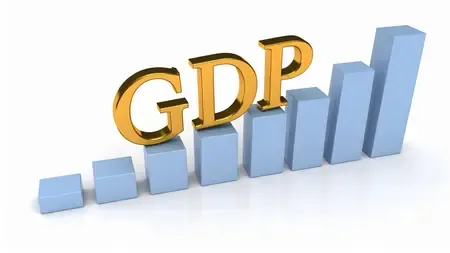
India's GDP growth is projected at around 7 per cent in 2026-27 , supported by strong domestic demand and controlled inflation.
The RBI projects real GDP growth at 6.9 per cent for FY27, with quarterly growth ranging from 6.7 per cent (Q2) to 7.2 per cent (Q4) .
GST collections hit a record high, while bank credit growth , exports , and IIP all showed positive trends recently.
Ongoing US-Iran tensions remain the key global risk, with financial and commodity markets likely to stay volatile until a resolution emerges.
India remains the fastest-growing major economy in the world despite rising global uncertainty and the impact of the ongoing West Asia conflict, according to an Assocham 'Global Economic Outlook' report released on Tuesday, 12 May. The report projects India's GDP growth to hold steady at around 7 per cent in 2026-27, underpinned by strong macroeconomic fundamentals and robust domestic demand.
Strong Economic Fundamentals
India entered the current period of global turbulence with a distinct advantage, according to the Assocham report. Controlled inflation, healthy financial conditions, and steady growth momentum have collectively shielded the economy from the worst of external shocks. The report noted that India's position is considerably stronger compared to previous crisis periods, a reflection of structural improvements made over the past several years.
Several key economic indicators have reinforced this positive picture in recent months. GST collections reached a record high, bank credit growth remained robust, exports continued to expand, and the Index of Industrial Production (IIP) stayed in a steady zone. Government spending on infrastructure and development projects further supported economic activity, with major investments flowing into roads, renewable energy, digital infrastructure, semiconductors, and the broader technology sector.
RBI's Quarter-by-Quarter GDP Projections
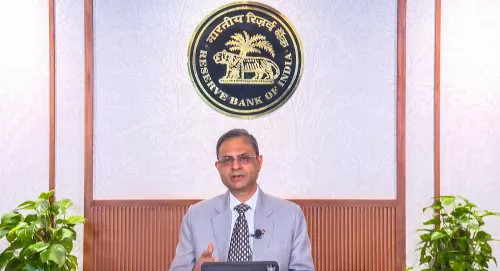
The Reserve Bank of India (RBI) has projected India's real GDP growth at 6.9 per cent for FY27, with a detailed quarterly breakdown: Q1 at 6.8 per cent, Q2 at 6.7 per cent, Q3 at 7.0 per cent, and Q4 at 7.2 per cent. The sequential acceleration through the year reflects expectations of improving global conditions and sustained domestic momentum. Risks, however, remain on account of the global situation and possible weather-related disturbances, the report cautioned.
Global Uncertainty and Market Volatility
The Assocham report flagged the US-Iran tensions as the primary source of global economic uncertainty, with no clear resolution emerging despite ongoing discussions.
Point of View
But the Assocham report's optimism rests heavily on the assumption that global shocks remain contained. The US-Iran situation introduces an oil price wildcard that India — a major energy importer — cannot hedge away through domestic policy alone. Record GST collections and robust credit growth are genuine positives, yet the RBI's own quarterly projections show a dip in Q2, suggesting the external environment will bite before it gets better. The real test of India's structural strength will come if oil spikes materially — and whether the macroeconomic buffers built over the past decade are deep enough to absorb it without fiscal slippage.
NationPress
24 Sept 2026
Frequently Asked Questions
Is India still the fastest-growing major economy in the world?
Yes, according to the Assocham 'Global Economic Outlook' report released on 12 May, India remains the fastest-growing major economy globally, with GDP growth projected at around 7 per cent in 2026-27. This is despite rising global uncertainty stemming from the West Asia conflict and US-Iran tensions.
What is India's GDP growth forecast for 2026-27?
India's GDP growth is projected at approximately 7 per cent for 2026-27, according to the Assocham report. The RBI has separately projected real GDP growth at 6.9 per cent for FY27, with quarterly estimates ranging from 6.7 per cent in Q2 to 7.2 per cent in Q4.
What economic indicators are supporting India's growth?
Several indicators are pointing positively: GST collections have reached a record high, bank credit growth remains robust, exports are expanding, and the IIP is in a steady zone. Government infrastructure spending and investments in roads, renewable energy, semiconductors, and digital infrastructure are also supporting activity.
What are the key risks to India's economic outlook?
The primary global risk is the ongoing US-Iran tension, which has kept financial and commodity markets volatile and investor sentiment cautious. Domestically, possible weather-related disturbances could also pose risks to growth, according to the report.
What would improve global investor sentiment according to Assocham?
The Assocham report states that any positive progress towards peace talks between the US and Iran would bolster investor confidence and business sentiment, potentially triggering a strong rebound in financial markets.