India GDP grows 7.8% in Q1 FY27, beats 6.5% forecast: WTC Chairman
Synopsis
India's economy grew 7.8% in Q1 FY27, comfortably beating the 6.5% consensus forecast — and it did so while absorbing elevated freight costs from the Middle East conflict. WTC Chairman Vijay Kalantri framed the number alongside an ambitious push to double India-Oman trade from $11 billion to $25 billion, signalling that the Gulf is central to India's next growth chapter.
Key Takeaways
India's GDP expanded 7.8 per cent in Q1 FY27 (April–June 2025) , beating the earlier projection of 6.5 per cent .
Automobiles , auto components , and textiles were among the top-performing sectors in the quarter.
Growth was achieved despite rising freight costs caused by the ongoing Middle East conflict .
India–Oman bilateral trade stands at approximately $11 billion ; the stated target is $25 billion .
A bilateral trade agreement signed in 2025 provides a strategic framework for expanding India–Oman commercial ties.
Under Oman Vision 2040 , foreign investors can hold 100 per cent ownership in eligible sectors including renewables, food processing, and IT.
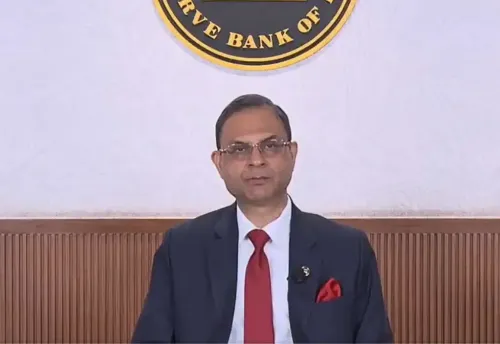
India's economy expanded at a robust 7.8 per cent in the first quarter of FY27 (April–June 2025), surpassing earlier projections of around 6.5 per cent, according to Vijay Kalantri, Chairman of the World Trade Center (WTC) and President of the All India Association of Industries (AIAI). Kalantri made the remarks on Friday, 4 September, following a meeting with an Omani delegation at the MVIRDC World Trade Center, Mumbai.
Broad-Based Sectoral Momentum
Kalantri attributed the outperformance to strength across multiple industries. 'Strong performance was supported by robust growth across all sectors,' he said. Notably, automobiles, auto components, and textiles were singled out as standout contributors during the quarter.
The growth was achieved despite headwinds from rising freight costs linked to the ongoing Middle East conflict, which has disrupted global shipping lanes and elevated logistics expenses for exporters. That India absorbed these pressures and still beat consensus estimates adds weight to the underlying momentum.
India-Oman Trade: Target of $25 Billion
The backdrop to Kalantri's remarks was a high-level meeting with an Omani trade and investment delegation. He noted that bilateral trade between India and Oman currently stands at approximately $11 billion, and flagged significant headroom for expansion.
'Our goal is to double bilateral trade to $25 billion,' Kalantri said, identifying pharmaceuticals, chemicals, engineering, infrastructure, shipping, maritime services, and green energy as priority sectors. He also highlighted a bilateral trade agreement signed between India and Oman in 2025 as a strategic enabler, urging both sides to move 'beyond dialogue' toward concrete outcomes through trade, investment, and joint ventures.
Oman's Investment Pitch Under Vision 2040
Khalid Sulaiman Al-Saleh, official spokesperson of Madayn and Director General for Marketing and Commercial Affairs, outlined Oman's value proposition for Indian investors. He cited the country's strategic geographical location and a diversified industrial ecosystem spanning aluminium, food processing, minerals and mining, renewable energy, and green hydrogen.
Under Oman Vision 2040, Al-Saleh said foreign investors can access 100 per cent ownership in eligible activities, long-term industrial leases, and additional investment incentives — terms designed to attract manufacturing and technology partners from markets like India.
Why This Matters for India's Economic Narrative
A 7.8 per cent GDP print, if confirmed by official data, would position India firmly as the world's fastest-growing major economy for the quarter. This comes amid global uncertainty driven by the Middle East conflict and softening demand in key export markets. The India–Oman engagement also fits into a broader strategic pivot toward Gulf partnerships, with the 2025 bilateral trade agreement providing a fresh institutional framework.
The next critical marker will be whether this momentum sustains through Q2 FY27 (July–September), particularly as the festive season ramps up domestic consumption and as freight costs remain elevated.
Point of View
Not yet from official government data, and that distinction matters. The figure needs to be cross-checked against the Ministry of Statistics release before markets and policymakers treat it as settled. More interesting is the India–Oman trade conversation: the $25 billion target is aspirational, but the 2025 bilateral agreement gives it an institutional spine that earlier Gulf trade talk lacked. The real test is whether Indian industry moves from delegation-level meetings to actual joint ventures — a gap that has historically been wide in Gulf engagement.
NationPress
4 Sept 2026
Frequently Asked Questions
What was India's GDP growth rate in Q1 FY27?
India's economy reportedly grew at 7.8 per cent in the first quarter of FY27 (April–June 2025), according to WTC Chairman Vijay Kalantri. This exceeded earlier projections of around 6.5 per cent.
Which sectors drove India's Q1 FY27 GDP growth?
Automobiles, auto components, and textiles were among the key sectors that delivered strong performance in Q1 FY27, according to Vijay Kalantri. He noted that growth was broad-based across multiple industries.
How did the Middle East conflict affect India's growth?
Rising freight costs linked to the ongoing Middle East conflict posed a headwind during Q1 FY27. Despite this pressure, India's economy still surpassed growth forecasts, according to Kalantri.
What is the India–Oman bilateral trade target?
India and Oman currently trade at approximately $11 billion annually. WTC Chairman Vijay Kalantri has set a goal to double this to $25 billion, with focus areas including pharmaceuticals, green energy, shipping, and infrastructure.
What is Oman Vision 2040 and why does it matter for Indian investors?
Oman Vision 2040 is Oman's long-term economic diversification plan, under which foreign investors can hold 100 per cent ownership in eligible sectors such as renewable energy, food processing, logistics, and IT. For Indian companies, it offers a gateway to regional and global markets through Oman's ports and logistics infrastructure.