Will India’s logistics costs significantly decrease and railway freight share increase?
Synopsis
A recent report predicts a transformative shift in India's logistics sector, projecting a reduction in logistics costs to 7-8% of GDP by 2035. This change aims to align India with global standards and bolster export competitiveness. The analysis highlights significant investments and infrastructure developments that are paving the way for a more efficient logistics ecosystem.
Key Takeaways
India's logistics costs are set to decrease significantly.
Rail freight's share is expected to rise substantially.
GST reforms are optimizing the logistics ecosystem.
Investment in multimodal infrastructure is reshaping freight movement.
Digital integration is enhancing competitiveness.
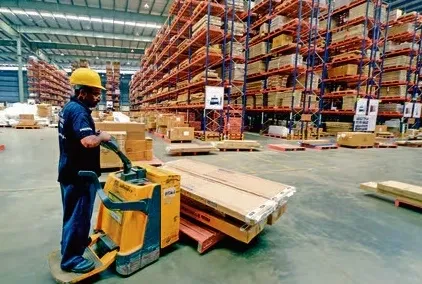
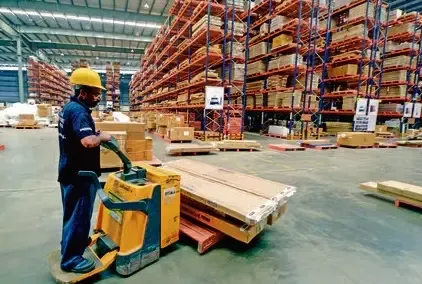
New Delhi, Dec 26 (NationPress) India's logistics expenses are anticipated to decrease to 7–8 percent by 2035, down from the current 13–14 percent of GDP, bringing India closer to global standards and enhancing its export competitiveness, as highlighted in a report released on Friday.
The analysis from Grant Thornton Bharat indicated that the sector experienced 48 deals in 2025, representing a 37 percent increase compared to 2024, with private equity and venture capital investments totaling $659 million, primarily concentrated on tech-driven, asset-light models.
Significant reforms, accelerated infrastructure development, and enhanced digital integration have marked India's transportation and logistics sector, indicating a shift towards more interconnected and competitive systems, as per the report.
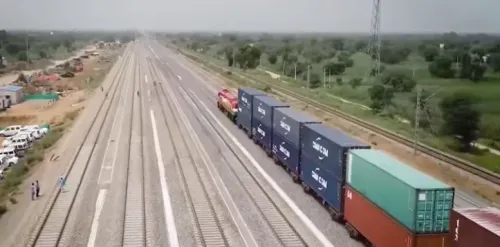
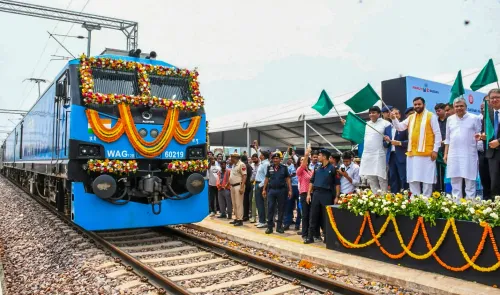
It is projected that the share of road freight will decline from 72 percent in 2014 to nearly 50 percent by 2035, while rail's share could increase to 40 percent, bolstered by the implementation of Dedicated Freight Corridors.
“The transportation and logistics sector in India has undergone a structural transformation in 2025, propelled by policy reforms, rapid infrastructure advancement, and growing digital integration,” stated Bhavik Vora, Partner and Transportation & Logistics Industry Leader at Grant Thornton Bharat.
Investments in multimodal infrastructure and digital platforms are transforming freight transportation, with GST reforms optimizing the logistics landscape and promoting a transition towards more efficient, integrated supply chains, Vora remarked.
The long-term strategy envisions India as a digitally synchronized, multimodal logistics hub equipped with 35 operational MMLPs, AI-enhanced scheduling, and deeper integration into Indo-Pacific trade corridors.
Recent changes in GST have established a dual-rate environment for freight and multimodal transport, affecting cost management, procurement tactics, and compliance priorities across the logistics ecosystem, the report noted.
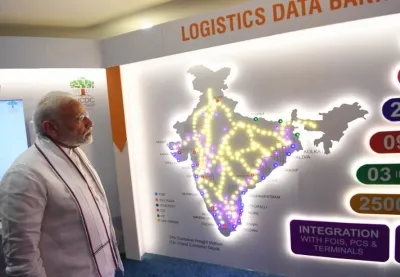
The Unified Logistics Interface Platform currently integrates 125 APIs across 11 ministries, facilitating real-time data sharing and minimizing friction at crucial interchange points, the report elaborated.
Five multimodal logistics parks located in Chennai, Bengaluru, Nagpur, Indore, and Jogighopa are nearing completion, reinforcing India's modal shift agenda.
aar/pk
Point of View
I believe this report underscores a critical evolution in India's logistics framework. The anticipated reduction in logistics costs and the rise in railway freight share signal a positive shift towards a more efficient and competitive economy. It reflects the proactive measures taken by stakeholders to align with global standards, ultimately benefiting the nation’s growth and export capabilities.
NationPress
20 Sept 2026
Frequently Asked Questions
What is the projected reduction in India's logistics costs?
India's logistics costs are projected to decrease to 7-8% of GDP by 2035.
How will the share of rail freight change by 2035?
The share of rail freight is expected to rise to nearly 40% by 2035.
What role do GST reforms play in India's logistics sector?
GST reforms are streamlining the logistics ecosystem and promoting more efficient, integrated supply chains.
How many multimodal logistics parks are operational in India?
There are currently 35 operational multimodal logistics parks (MMLPs) in India.
What advancements are being made in India's transportation sector?
Significant investments in multimodal infrastructure and digital platforms are enhancing freight movement.