India's manufacturing shift: 32% CAGR fund, ₹12.2 lakh crore capex fuel global push

Synopsis
India's manufacturing story is no longer just about cheap labour — it's about structural competitiveness. A 16% REER fall since late 2024, ₹12.2 lakh crore in public capex, and Apple assembling over 20% of global iPhones in India signal a shift that Carnelian's manufacturing fund has already captured at 32% CAGR since 2020. The question now is whether execution keeps pace with the opportunity.
Key Takeaways
Carnelian Asset Management and Advisors released a report on 13 July 2026 identifying India as entering a Manufacturing 2.0 phase.
The firm's manufacturing-focused fund has delivered over 32% CAGR since inception in 2020 .
India's REER fell approximately 16% from December 2024 to April 2026 — the steepest decline since the early 1990s.
Public capital expenditure in Union Budget 2026–27 reached ₹12.2 lakh crore , a four-fold rise from a decade ago.
Mobile phone production has crossed roughly $56 billion ; Apple now assembles over 20% of global iPhone volumes in India.
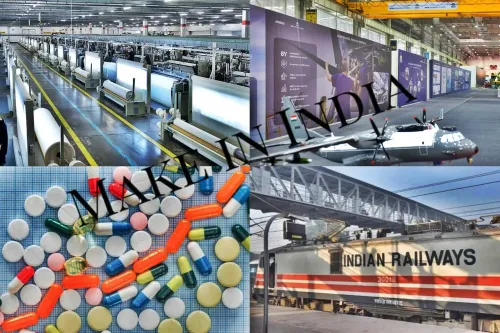
Key opportunity sectors include electronics, defence exports, pharma/CDMO, auto ancillaries, and textiles.
India is moving decisively beyond low-cost manufacturing toward globally competitive industrial capabilities, with a convergence of rupee depreciation, expanded trade access, and record public capital expenditure poised to accelerate a structural transformation, according to a report released on Monday, 13 July 2026 by Carnelian Asset Management and Advisors. The findings underscore what the firm calls Manufacturing 2.0 — a multi-year industrial upcycle already delivering measurable returns.
Fund Performance and the Manufacturing 2.0 Thesis
India's first manufacturing-focused fund, managed by Carnelian Asset Management and Advisors, has delivered over 32 per cent compound annual growth rate (CAGR) since its inception in 2020, the report noted. The firm argues that the next phase of growth will be driven by multiple accelerants acting in concert — not any single policy lever. 'The biggest wealth creation opportunities often emerge when structural shifts are still underappreciated by the market,' the report stated.
Key Accelerants: Rupee, Trade Access, and Public Capex
Three forces are converging to drive India's manufacturing ascent. First, the real effective exchange rate (REER) fell approximately 16 per cent from December 2024 to April 2026 — the steepest sustained decline since the early 1990s. Historically, every major REER depreciation over the past three decades has triggered an export response, the report said. Second, India's trade access has expanded rapidly, granting preferential entry to roughly $9 trillion of global imports. Third, public capital expenditure in the Union Budget 2026–27 was raised to ₹12.2 lakh crore, marking a four-fold increase from a decade ago.
High-Opportunity Sectors
The report identified electronics manufacturing services, defence exports, pharmaceuticals and contract development and manufacturing organisation (CDMO) exports, auto ancillaries, and textiles and apparel as the primary areas of opportunity. India's mobile phone production has crossed roughly $56 billion, while iPhone exports have surpassed nearly $17 billion. Notably, Apple now assembles over 20 per cent of its global iPhone volumes in India — a supply-chain milestone that would have seemed implausible five years ago.
Structural Drivers and Execution Risks
Beyond currency and fiscal tailwinds, the report cited favourable government policies, global supply-chain diversification away from China, rising domestic demand, and infrastructure investments as collectively creating the conditions for a sustained manufacturing upcycle. This comes amid a broader global realignment of production networks, which has placed India among the primary beneficiaries of the 'China-plus-one' strategy adopted by multinational manufacturers. While execution risks remain — including logistics gaps, skilled-labour shortages, and regulatory complexity — the firm said India is entering a multi-year phase of industrial expansion with significant investment opportunities.
What Comes Next
If the confluence of depreciation, trade access, and capex sustains, analysts expect export-oriented sectors such as electronics and pharma to lead the next leg of earnings growth for listed manufacturers. The real test will be whether public capex translates into private investment crowding-in — a transmission that has historically been uneven in India's industrial cycle. Markets and policymakers alike will be watching whether Manufacturing 2.0 closes the long-standing gap between India's industrial ambition and its execution track record.
Point of View
And the data points it marshals are real — but the gap between India's industrial narrative and industrial reality has been wide before. A 16% REER depreciation is a genuine tailwind, yet India's export response to past depreciations has often been muted by logistics and compliance friction that no fund report fully prices in. The Apple-iPhone milestone is compelling, but assembling over 20% of global volumes still means India captures a thin slice of value-added compared with design and component manufacturing. The ₹12.2 lakh crore capex figure is headline-grabbing, but private investment crowding-in — the real multiplier — has lagged public spending in prior cycles. Manufacturing 2.0 is a credible thesis; whether it becomes a durable structural shift or another underdelivered upcycle will depend on execution quality that markets are only beginning to test.
NationPress
12 Oct 2026
Frequently Asked Questions
What is India's Manufacturing 2.0, as described in the Carnelian report?
Manufacturing 2.0 refers to India's transition beyond low-cost production toward globally competitive industrial capabilities, driven by currency depreciation, expanded trade access, and record public capex. Carnelian Asset Management and Advisors used the term in its July 2026 report to describe a structural shift already visible in sectors like electronics, defence, and pharmaceuticals.
How has the rupee's depreciation helped Indian manufacturing?
The rupee's real effective exchange rate (REER) fell approximately 16% from December 2024 to April 2026 — the steepest sustained decline since the early 1990s. According to the Carnelian report, every major REER depreciation over the past three decades has triggered an export response, making Indian goods more price-competitive in global markets.
What is India's current public capital expenditure and why does it matter?
The Union Budget 2026–27 allocated ₹12.2 lakh crore in public capital expenditure, a four-fold increase from a decade ago. Higher public capex builds infrastructure — roads, ports, power — that lowers input costs for manufacturers and can crowd in private investment over time.
How significant is Apple's manufacturing presence in India?
Apple now assembles over 20% of its global iPhone volumes in India, with iPhone exports crossing nearly $17 billion. India's total mobile phone production has surpassed roughly $56 billion, making it one of the most visible proof points of the country's electronics manufacturing ambitions.
What are the risks to India's manufacturing growth story?
The Carnelian report acknowledges that execution risks remain, including logistics gaps, skilled-labour shortages, and regulatory complexity. Analysts also note that private investment has historically lagged public capex in India's industrial cycles, meaning the full multiplier effect of government spending is not guaranteed.