How Can India Enhance Its Clean Energy Adoption and Deployment?
Synopsis
India is at a pivotal moment in its renewable energy journey, with officials stressing the importance of scaling clean energy deployment and fostering citizen adoption. As it aims for self-reliance in manufacturing, the nation faces opportunities and challenges that could reshape its energy landscape.
Key Takeaways
India's solar capacity has surged to over 134 GW.
Significant potential for solar energy exceeds 10,800 GW.
Self-reliance in manufacturing is essential for future growth.
Access to affordable finance will enable large-scale investments.
Women’s participation in manufacturing is critical for workforce development.
New Delhi, Jan 10 (NationPress) India must enhance its renewable energy (RE) framework and amplify clean energy deployment, as emphasized by a senior government official.
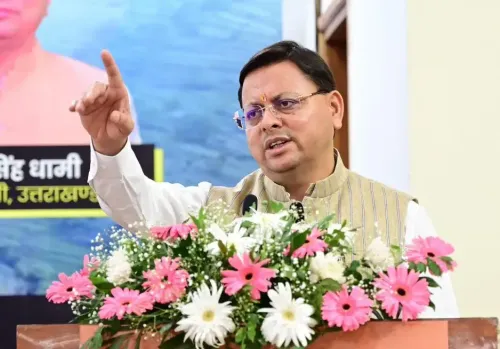
Santosh Sarangi, Secretary at the Ministry of New and Renewable Energy, stated that India's renewable energy journey over the past decade has been remarkable, highlighted by significant improvements in global rankings.
“Our approach has been guided by a clear national goal, pursued through three distinct avenues: expediting RE deployment, achieving Atmanirbharta (self-reliance) in manufacturing, and promoting increased citizen adoption,” he remarked during the report launch by the Energy and Resources Institute (TERI) at the 'Bharat Climate Forum 2026' event.
“By strategically combining policy initiatives and trade mechanisms, we have increased our solar capacity from just 2.63 GW in 2014 to over 134 GW today. This shift goes beyond mere capacity; it is about creating a resilient, self-sustaining ecosystem that serves as a model for global energy transformations,” Sarangi told the audience.
Dr. Vibha Dhawan, Director General of TERI, pointed out that their landmark macro-level analysis, ‘Reassessment of Solar Potential in India’, reveals an expansive solar potential of over 10,800 GW, covering various modalities such as ground-mounted, rooftop, and other innovative deployment methods.
“This vast potential alters the strategic considerations for us. When a nation possesses such extensive clean energy prospects, the question shifts from whether we can deploy sufficient solar energy to whether we can maximize domestic value through manufacturing, technology, skills, and robust supply chains, while ensuring electricity remains affordable for households and businesses,” Dhawan noted.
The report highlights that although India has made strides in module manufacturing, with domestic module capacity surpassing current annual demand, significant vulnerabilities remain upstream.
India still imports almost all its polysilicon and the majority of wafers, creating risks that could hinder future solar growth if upstream capacity isn't timely established.
Without targeted incentives for domestic equipment manufacturing and accelerated R&D, these dependencies could make India's solar sector vulnerable to supply-chain disruptions, foreign exchange fluctuations, and geopolitical challenges, according to the report.
The report emphasizes that access to affordable blended finance will be crucial for enabling large-scale upstream investments.
It underscores the significance of sovereign “Green-PV” bonds, co-equity investment from national financial institutions, concessional loans from development finance entities, and risk-mitigation strategies to lower capital costs and enhance the bankability of upstream fabs.
Moreover, the study suggests creating Solar–Semicon Technology Parks, shared pilot fabs for next-gen technologies, and a dedicated PV–Semicon Skill Council to bolster innovation pipelines and workforce readiness, with a strong focus on linking incentives to skilling outcomes and increasing women's participation in manufacturing.
Point of View
The commitment to enhancing India's renewable energy sector is evident. The focus on self-reliance and strategic planning is crucial for ensuring long-term sustainability and resilience. As the nation navigates these challenges, it remains imperative to keep the public engaged and informed about the benefits and opportunities in transitioning to clean energy.
NationPress
22 Sept 2026
Frequently Asked Questions
What is India's current renewable energy capacity?
India's renewable energy capacity has grown substantially, reaching over 134 GW, primarily driven by solar energy.
What are the key challenges facing India's solar sector?
India faces challenges such as heavy reliance on imported polysilicon and wafers, which poses risks to future solar deployment.
How can India achieve self-reliance in renewable energy?
By investing in domestic manufacturing, enhancing R&D, and implementing focused incentives, India can strive for self-reliance in its renewable energy sector.
What role does citizen adoption play in renewable energy?
Higher citizen adoption is crucial for the success of renewable energy initiatives, as it drives demand and supports sustainable practices.
What financial instruments can support renewable energy investments?
Instruments such as sovereign Green-PV bonds, concessional loans, and risk-mitigation strategies can facilitate large-scale investments in renewable energy.