How has India transformed into the world’s 4th largest renewable energy capacity?
Synopsis
India's remarkable journey from 81 GW to 257 GW in renewable energy capacity showcases its commitment to clean energy. Minister Pralhad Joshi emphasizes the country's significant advancements and efforts under Prime Minister Modi. Discover how India is leading the way in renewable energy and empowering communities through innovative initiatives.
Key Takeaways
India's renewable energy capacity increased from 81 GW to 257 GW.
Solar capacity surged from 2.8 GW to 128 GW.
Solar module manufacturing rose from 2 GW to 110 GW.
India achieved its 50% non-fossil energy target five years early.
Innovative initiatives are boosting energy access and equity.
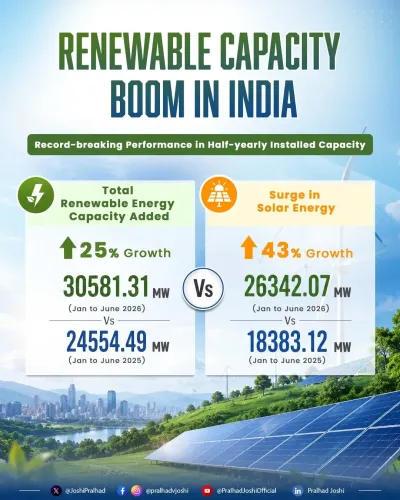
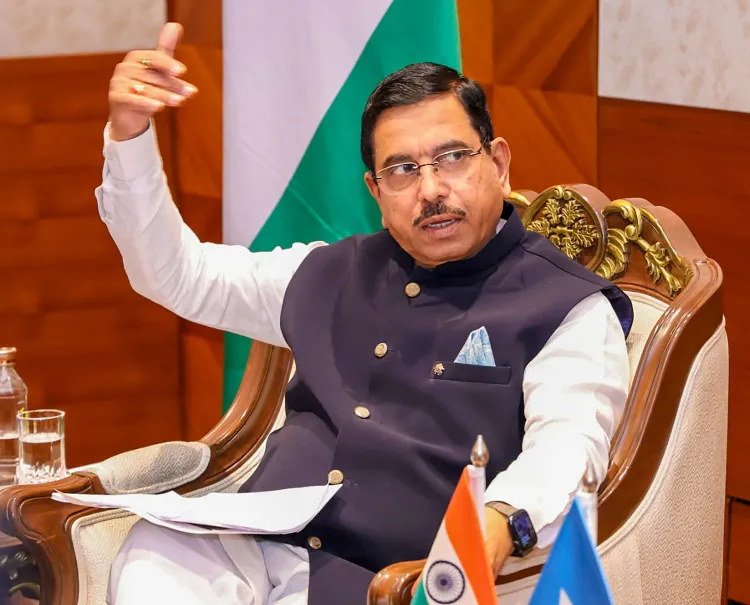
New Delhi, Nov 1 (NationPress) India's transformation into the world's 4th largest renewable energy capacity, soaring from 81 GW in 2014 to 257 GW by 2025, is truly remarkable, stated Minister of Consumer Affairs and New and Renewable Energy Pralhad Joshi.
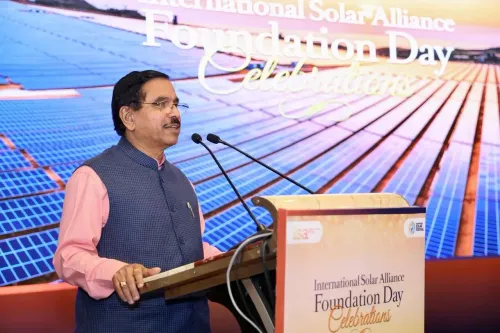
While addressing the eighth session of the assembly of the International Solar Alliance (ISA) at Bharat Mandapam, the Minister highlighted a threefold increase from 81 GW in 2014.
He also emphasized India's significant solar capacity growth, which rose from 2.8 GW in 2014 to 128 GW.
"India is now the world's 4th-largest in RE capacity. Renewables in 2014 V/s Now: 81 GW - 257 GW," Joshi remarked.
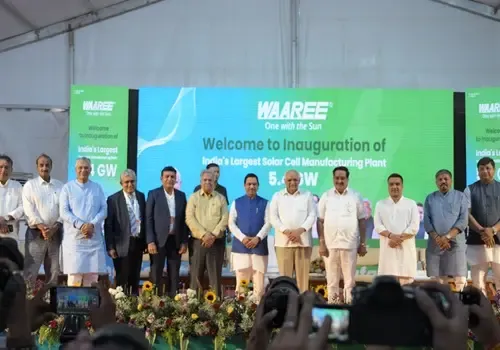
He revealed that solar module manufacturing capacity surged from 2 GW in 2014 to 110 GW today. Likewise, solar cell production jumped from 'zero' to 27 GW.
Under the guidance of Prime Minister Narendra Modi, India met its Nationally Determined Contribution target of 50 percent capacity from non-fossil sources, five years ahead of schedule.
“Thanks to the visionary leadership of Prime Minister Narendra Modi, India achieved its goal of 50 percent energy capacity from non-fossil sources, five years before the 2030 target, making clean energy both accessible and affordable,” the minister shared with attendees.
Through groundbreaking initiatives such as PM-KUSUM, PM Surya Ghar Muft Bijli Yojana, PM-JANMAN, and 'One Sun, One World, One Grid', India is at the forefront of promoting energy equity, empowering marginalized communities, and enhancing South-South cooperation, Joshi added.
India also holds the third position globally in the growth of power generation capacity over the last five years.
The ISA, spearheaded by India, is a treaty-based intergovernmental organization aimed at fostering a solar-powered future, particularly addressing the energy needs of developing countries.
Point of View
India's advancements under the leadership of Prime Minister Modi reflect a robust commitment to sustainability. The nation’s proactive approach in meeting international targets and investing in clean energy technologies underscores its role as a global leader in combating climate change while ensuring energy access for all citizens. As we witness these developments, it's crucial to recognize the potential long-term benefits for the environment and economy.
NationPress
30 Sept 2026
Frequently Asked Questions
What is India's renewable energy capacity growth?
India's renewable energy capacity has grown from 81 GW in 2014 to 257 GW in 2025.
How has India's solar capacity changed?
India's solar capacity has increased from 2.8 GW in 2014 to 128 GW today.
What initiatives support India's renewable energy goals?
Initiatives like PM-KUSUM, PM Surya Ghar Muft Bijli Yojana, and 'One Sun, One World, One Grid' support India's renewable energy goals.
What is the significance of the International Solar Alliance?
The International Solar Alliance, led by India, aims to promote solar energy, particularly in developing countries.
How has India performed in power generation capacity globally?
India ranks third globally in growth in power generation capacity over the past five years.