Instagram unwanted content reports in India halved in a year: Meta
Synopsis
Meta says Instagram users in India are reporting unwanted recommended content half as often as they were a year ago — a significant drop it attributes to upgraded AI models calibrated specifically for the Indian market. With teen protections already live globally and the EU moving on child safety legislation, the pressure on platforms to self-regulate is only growing.
Key Takeaways
Meta reported on 17 November that unwanted Instagram content recommendation reports in India have fallen by roughly half over the past year.
The improvement is attributed to more capable AI models tuned specifically for the Indian market .
User controls including Sensitive Content Control , Political Content Control , Hidden Words , and Block are now available on the platform.
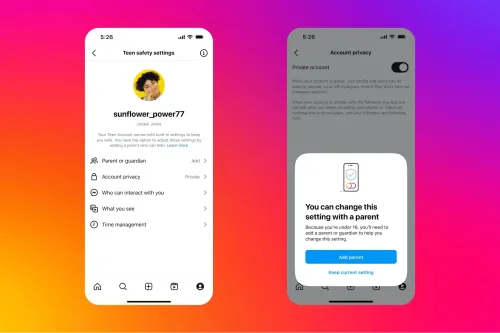
Instagram Teen Accounts , launched globally in June 2025 , automatically restrict content and contacts for minors; users under 16 need parental permission to change settings.
Meta said it will continue publishing enforcement data through its India and global transparency reports .
Meta on Tuesday, 17 November said that user reports of unwanted content recommendations on Instagram in India have dropped by roughly half over the past year, crediting stronger artificial intelligence models and market-specific system tuning for the improvement. The announcement marks a notable milestone in the company's effort to clean up its recommendations ecosystem in one of its largest user markets.
What Changed in Recommendations
Meta said it has upgraded its ability to detect content that potentially violates Instagram's Recommendations Guidelines by deploying more capable AI models tuned specifically for the Indian market. The company said the changes are designed to keep content that is 'sexually suggestive' or 'violent' out of recommendations surfaces such as Explore, Reels, and Feed — areas where content from accounts users do not already follow typically appears.
'The changes are intended to keep more unwanted content, including sexually suggestive and violent content, out of recommendations,' Meta said in a statement. The company added that its Recommendations Guidelines aim to avoid surfacing content that could be 'low quality, objectionable or particularly sensitive.'
User Controls Now Available
Beyond algorithmic improvements, Meta highlighted several controls users can activate on the platform. The Sensitive Content Control feature lets people opt for fewer sensitive recommendations across Search, Reels, Explore, suggested accounts, and in-feed recommendations. The Political Content Control allows users to reduce political content from accounts they do not follow. Additional tools include Hidden Words — which filters specific words, phrases, and emojis from comments and message requests — along with the 'Not Interested' signal and the Block feature.
Protections for Teens in India
Meta also flagged age-appropriate content protections for teen accounts in India. The company rolled out its Instagram Teen Accounts feature globally in June 2025, which carries built-in limits on who can contact minors and what content they can see. Teens are automatically placed into these restricted accounts, and users aged under 16 require a parent's permission to alter any default settings.
This comes as the European Union proposed the 'EU KIDS Act' on 17 September, aimed at restricting children's access to social media and making online platforms, video games, and AI assistants safer for minors — signalling a broader global regulatory push on child safety online.
What Comes Next
Meta said it will continue refining its systems based on user feedback and will publish enforcement data through its global and India-specific transparency reports. With regulatory scrutiny of Big Tech's content practices intensifying both in India and internationally, the company's disclosure appears aimed at demonstrating proactive compliance ahead of potential mandates.
Point of View
But the metric — user complaint rates — is one the company both measures and controls, which limits independent verification. India's sheer user base makes algorithmic calibration here commercially and reputationally critical, so this announcement carries a dual purpose: reassuring regulators and signalling platform responsibility ahead of potential legislative action. The EU KIDS Act reference is telling; Meta is clearly watching the regulatory horizon and positioning itself as ahead of the curve. Whether the AI upgrades genuinely reduce harm or simply reduce reported harm is a distinction India's emerging digital regulation framework will eventually need to test.
NationPress
17 Nov 2026
Frequently Asked Questions
What did Meta announce about Instagram in India?
Meta said on 17 November that user reports of unwanted content recommendations on Instagram in India have dropped by roughly half over the past year. The company credited stronger AI models tuned specifically for the Indian market and an expanded set of user controls.
How has Meta improved Instagram content recommendations for Indian users?
Meta deployed more capable artificial intelligence models and tuned its recommendation systems specifically for the Indian market. The changes target sexually suggestive and violent content across Explore, Reels, and Feed — areas that show content from accounts users do not already follow.
What controls do Instagram users in India have over their recommendations?
Users can activate Sensitive Content Control to reduce sensitive recommendations across Search, Reels, Explore, and Feed. Additional tools include Political Content Control, Hidden Words (which filters specific words and emojis from comments), 'Not Interested' signals, and the Block feature.
What protections exist for teenagers on Instagram in India?
Instagram Teen Accounts, launched globally in June 2025, automatically place teens into restricted profiles that limit who can contact them and what content they see. Users under 16 require a parent's permission to change any of the default settings.
How does the EU KIDS Act relate to Meta's Instagram changes?
The European Union proposed the EU KIDS Act on 17 September to restrict children's access to social media and make online platforms safer for minors — reflecting a broader global regulatory push. Meta's disclosure of its India-specific improvements aligns with this growing international pressure on platforms to demonstrate child safety compliance.