Trump Lands in Manila for 49th ASEAN Summit

Synopsis
President Donald J. Trump has arrived in Manila for the 49th ASEAN Summit, marking his return to the Philippine capital nearly a decade after his first-term 2017 visit. The summit brings together Southeast Asia's ten-nation bloc alongside dialogue partners to discuss trade, maritime security, and regional stability.
Key Takeaways
Trump arrived in Manila, Philippines on 17 November 2026 for the 49th ASEAN Summit .
The White House confirmed the arrival via an official post on X, signalling the visit's diplomatic prominence.
ASEAN is a ten-member Southeast Asian bloc ; the US participates as a dialogue partner, using summits to advance Indo-Pacific trade and security objectives.
Trump previously attended the 31st ASEAN Summit in Manila in November 2017 during his first term.
The Philippines is a long-standing US treaty ally , adding bilateral strategic weight to the host-country choice.
Sideline bilateral meetings and the final summit communiqué on South China Sea and trade norms are the key outcomes to watch.
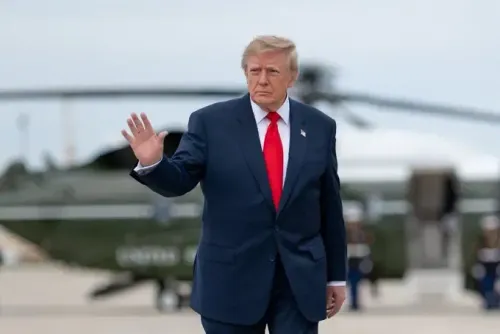
Manila, Philippines — 17 November 2026. Air Force One touched down in the Philippine capital on Tuesday, delivering President Donald J. Trump to the 49th ASEAN Summit — a gathering of Southeast Asia's ten-nation bloc that sits squarely at the intersection of regional trade, maritime security, and great-power rivalry.
America's man in Manila — again
The White House confirmed the arrival in a post on X, complete with American and Philippine flags — a small but deliberate signal of the alliance's visibility. For Trump, the visit carries a note of historical symmetry: his first term also brought him to Manila in November 2017, when he attended what was then the 31st ASEAN Summit. Nine years on, the city plays host once more, and the American president is the same man.
The Philippines is a long-standing US treaty ally under the Mutual Defense Treaty of 1951, making Manila a natural anchor point for Washington's presence in the Indo-Pacific. The bilateral warmth between Washington and Manila lends an extra layer of strategic optics to the summit's host-and-guest dynamic.
What ASEAN's 49th edition puts on the table
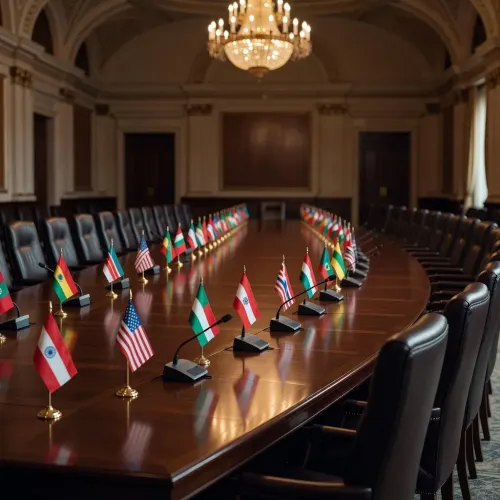
ASEAN — the Association of Southeast Asian Nations, founded in 1967 and now a ten-member bloc — anchors the region's multilateral architecture. Its annual summit draws dialogue partners including the United States, China, Japan, India, and the European Union, making the room one of the most consequential in Asian diplomacy. Trade integration, South China Sea navigation rights, and post-pandemic supply-chain resilience routinely dominate the agenda.
US participation in ASEAN summits has been a consistent thread across successive administrations, used to signal Washington's commitment to a 'free and open Indo-Pacific' and to push back — diplomatically — against Beijing's expanding regional footprint. Trump's physical presence in Manila reinforces that posture at a moment when every seat at the ASEAN table carries strategic weight.
Sideline meetings — where the real deals get made
Summit corridors are where bilateral relationships get stress-tested and deepened. Watch for any pull-aside meetings Trump holds with individual ASEAN leaders — particularly those from Vietnam, Indonesia, and Thailand, economies that have become central to US-linked supply-chain diversification away from China. Joint statements, any new trade or security deliverables, and the tone of the final ASEAN communiqué will be the real scorecard of this visit.
For India, an ASEAN dialogue partner and a country navigating its own calibrated relationships with both Washington and the bloc, the summit's outcomes on maritime security and trade norms carry direct downstream relevance — not least for New Delhi's own Act East Policy.
Point of View
His return frames continuity of American Indo-Pacific engagement as a personal as much as an institutional commitment. For the region's swing states — Vietnam, Indonesia, the Philippines itself — a present American president is a form of assurance. The meeting's real diplomatic test, however, will be whether sideline talks produce concrete trade or security deliverables that outlast the photo opportunity.
NationPress
17 Nov 2026
Frequently Asked Questions
What is the 49th ASEAN Summit?
The 49th ASEAN Summit is the annual leaders' meeting of the Association of Southeast Asian Nations, a ten-member regional bloc, held in Manila, Philippines in November 2026. It brings together heads of state from member nations and dialogue partners, including the United States, to discuss trade, maritime security, and regional cooperation.
Why did Trump travel to Manila for ASEAN 2026?
President Trump attended the 49th ASEAN Summit in Manila to reinforce US engagement with Southeast Asia, a consistent strand of American Indo-Pacific diplomacy. The Philippines is also a long-standing US treaty ally, giving the visit added bilateral significance.
Has Trump attended an ASEAN Summit before?
Yes. During his first term, Trump attended the 31st ASEAN Summit in Manila in November 2017, making his 2026 visit a return to the same city in the same diplomatic setting nearly a decade later.
What issues are discussed at ASEAN Summits?
ASEAN Summits typically address regional trade integration, South China Sea maritime security, supply-chain connectivity, and broader geopolitical stability in the Indo-Pacific. Dialogue partners like the US use these gatherings to advance bilateral and multilateral agreements.
How does the ASEAN Summit affect India?
India is a dialogue partner of ASEAN and its outcomes on maritime norms, trade rules, and Indo-Pacific security directly intersect with New Delhi's Act East Policy and its broader strategic calculus in the region.