Trump Sits Down With ASEAN Leaders at White House Dinner
Synopsis
President Trump participated in a formal U.S.-ASEAN dinner on November 17, 2026, deepening Washington's presidential-level engagement with Southeast Asia's ten-nation bloc amid ongoing trade and security dynamics in the Indo-Pacific.
Key Takeaways
President Donald Trump participated in a U.S.-ASEAN dinner on November 17, 2026 .
The event was confirmed by the White House 's official communications account on X.
ASEAN comprises ten Southeast Asian member states and is a central pillar of Indo-Pacific diplomacy.
Presidential-level U.S.-ASEAN dinners have been a fixture across successive administrations, addressing trade, maritime, and security issues.
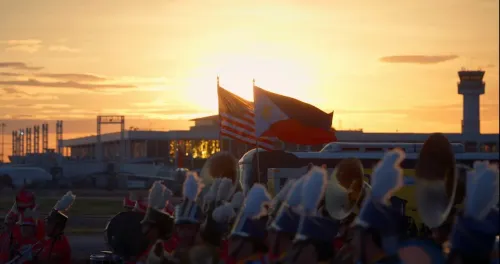
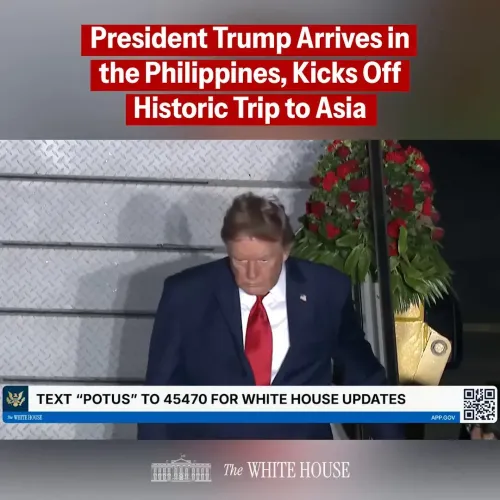
Trump's prior ASEAN engagement includes participation in the 2017 East Asia Summit in Manila during his first term.
Follow-up communiqués or joint statements from the dinner are expected to signal near-term diplomatic priorities.
Presidential diplomacy moved to the dinner table on Tuesday, November 17, 2026, as President Donald Trump hosted leaders from the Association of Southeast Asian Nations (ASEAN) for a formal U.S.-ASEAN dinner — a high-stakes gathering where trade corridors, maritime boundaries, and strategic alignments are as much on the menu as the meal itself.
The White House confirmed the event via its official communications channel, with the dinner representing one of the most significant moments of presidential-level engagement between Washington and Southeast Asia's ten-nation bloc.
Why ASEAN Still Matters to Every U.S. President
ASEAN — the Association of Southeast Asian Nations — brings together ten member states stretching from Myanmar to the Philippines, collectively representing one of the world's fastest-growing economic regions and a critical artery for global maritime trade. The South China Sea, through which trillions of dollars in shipping passes annually, sits at the heart of the bloc's strategic geography. For any U.S. administration, showing up at the ASEAN table is not optional — it is a signal of intent in the Indo-Pacific. Presidential-level dinners and summits with ASEAN leaders have been a fixture of successive U.S. administrations, used to advance discussions on trade liberalisation, freedom of navigation, and institutional security frameworks. Trump's first term included participation in the 2017 East Asia Summit in Manila, anchoring a pattern of direct engagement that this dinner continues.Dinner as Diplomacy: What These Gatherings Actually Decide
Formal U.S.-ASEAN dinners are rarely ceremonial in impact, even when they appear so in format. The table setting is where bilateral grievances are aired, where trade deal frameworks get quietly stress-tested, and where the implicit question of how Southeast Asian nations balance relationships with both Washington and Beijing hangs over every course. With economic competition in the region intensifying and security concerns around the South China Sea remaining unresolved, the stakes at this dinner extend well beyond any single communiqué. Follow-on statements, joint readouts, or specific deliverables from the evening are expected to shape the diplomatic calendar for ASEAN member states in the weeks ahead.Point of View
And direct presidential engagement is one of the few signals that moves that calculus. Trump's return to the ASEAN table in his second term reinforces that the Indo-Pacific remains a theatre where America insists on a seat. The dinner format, often dismissed as ceremonial, is precisely where informal assurances and trade-offs that shape formal policy get their first airing. Watching which ASEAN capitals issue the warmest post-dinner readouts will reveal where U.S. influence in the region is consolidating — and where it still faces headwinds.
NationPress
17 Nov 2026
Frequently Asked Questions
What is the U.S.-ASEAN dinner and why does it matter?
The U.S.-ASEAN dinner is a formal presidential-level gathering between the U.S. head of state and leaders of the Association of Southeast Asian Nations. It matters because it sets the tone for trade, maritime security, and strategic cooperation across one of the world's most economically dynamic regions.
Which countries are part of ASEAN?
ASEAN has ten member states: Brunei, Cambodia, Indonesia, Laos, Malaysia, Myanmar, the Philippines, Singapore, Thailand, and Vietnam — collectively a major economic and strategic bloc in Southeast Asia.
Has Trump engaged with ASEAN before?
Yes. During his first term, Trump participated in the 2017 East Asia Summit in Manila , marking direct presidential engagement with the ASEAN grouping.
What issues are typically discussed at U.S.-ASEAN summits?
Key topics include trade liberalisation, freedom of navigation in the South China Sea, counterterrorism cooperation, and the broader strategic balance between U.S. and Chinese influence in Southeast Asia.
What can we expect after the U.S.-ASEAN dinner on November 17, 2026?
Post-dinner communiqués, bilateral readouts from ASEAN member states, and potential announcements on trade or security frameworks are the main items to watch in the days following the dinner.