South Korean Won Falls Below 1,500 Won Per Dollar Amid Rising Oil Prices
Synopsis
On March 16, the South Korean won sunk below the 1,500-won mark against the dollar for the first time in 17 years, driven by soaring global oil prices and geopolitical tensions in the Middle East. This historic dip highlights the ongoing market volatility.
Key Takeaways
The South Korean won has fallen below 1,500 won per dollar for the first time in 17 years.
Global oil prices are surging due to tensions in the Middle East.
The KOSPI index showed volatility, reflecting market concerns.
Brent crude prices rose significantly, impacting global markets.
The ongoing conflict has disrupted oil supply chains.
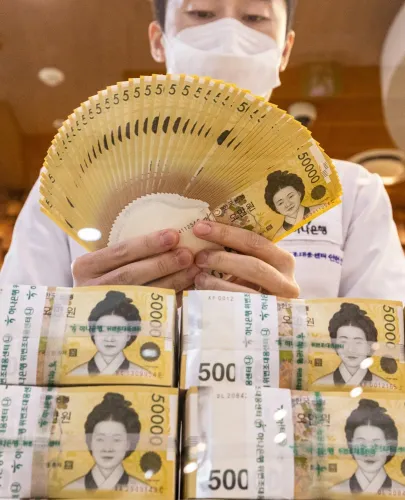
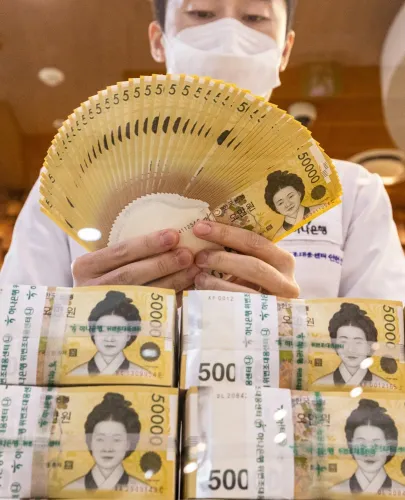
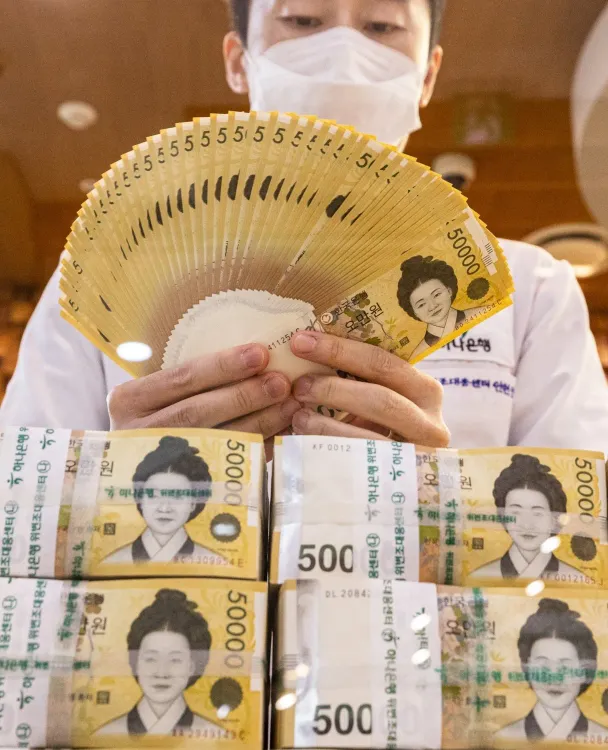
Seoul, March 16 (NationPress) The South Korean won has dipped below the 1,500-won threshold against the US dollar for the first time in 17 years due to rising global oil prices amidst escalating tensions in the Middle East. The currency opened at 1,501 won per dollar, marking a decline of 7.3 won from the previous trading session, and breached the 1,500-won mark during intraday trading for the initial time since March 12, 2009, when South Korea was grappling with the global financial crisis.
Following this drop, the won managed to recover somewhat, trading in the mid-1,490 won range. By 9:30 a.m., it was valued at 1,494.15 won per dollar, as reported by Yonhap news agency.
The depreciation of the currency is attributed to a surge in global oil prices after U.S. President Donald Trump hinted that the conflict with Iran may extend for several more weeks and urged the international community to assist in reopening the Strait of Hormuz for oil tankers.
Brent crude, a major global benchmark, experienced a 2.9 percent increase, reaching approximately $106.12 per barrel. The price of U.S. oil also surpassed $100.
The ongoing conflict has now reached its third week, significantly disrupting global oil supplies.
Control over the Strait of Hormuz, a vital maritime corridor managed by Iran, has effectively ceased since the onset of U.S.-Israeli strikes on Iran earlier this month.
Domestic foreign exchange and stock markets have exhibited considerable volatility since last week due to escalating geopolitical tensions.
At the market's opening, the Korea Composite Stock Price Index (KOSPI) rose by 23.58 points, or 0.43 percent, reaching 5,510.82, following a sharp decline in the previous session.
By late Monday morning, South Korean stocks were trading slightly lower, impacted by the ongoing Middle Eastern conflict and a significant rise in crude oil prices that have dampened investor sentiment.
Major stock indices on Wall Street closed lower on Friday as investors kept a close eye on developments in the Middle East. The S&P 500 fell by 0.61 percent, while the tech-heavy Nasdaq dropped by 0.93 percent.
Brent crude was trading above $100 per barrel, as the conflict in Iran continued to hinder shipping and production in the region.
In Seoul, most large-cap stocks were trading lower, although shares in the semiconductor sector showed some gains.
Point of View
It's crucial to recognize the economic implications of the South Korean won's decline. This event signifies not just local market volatility but also reflects broader geopolitical concerns that could have far-reaching effects on global trade and investments.
NationPress
27 Sept 2026
Frequently Asked Questions
What caused the South Korean won to fall below 1,500 won per dollar?
The decline is attributed to rising global oil prices and escalating tensions in the Middle East, particularly related to the conflict involving Iran.
How long has it been since the won traded below the 1,500-won mark?
It has been 17 years since the won last traded below this threshold, specifically since March 12, 2009.
What are the implications of the rising oil prices?
Rising oil prices can lead to increased costs for consumers and businesses, potentially dampening economic growth and affecting market sentiment.
How are South Korean stocks reacting to the current situation?
South Korean stocks have shown volatility, with a slight decline in major indexes amidst the ongoing geopolitical tensions and rising oil prices.
What is the current value of Brent crude oil?
Brent crude is trading at approximately $106.12 per barrel, reflecting a 2.9% increase.