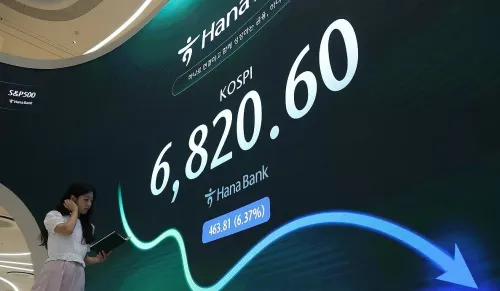
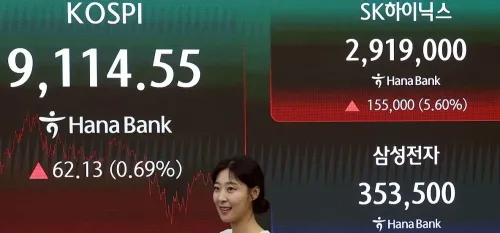
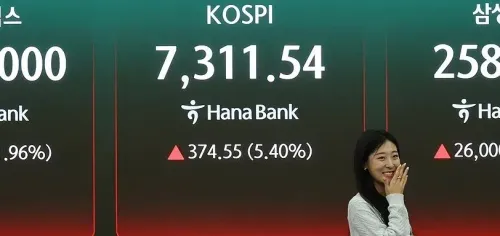
KOSPI falls 1% on Iran strike fears after record high at 8,288
Synopsis
The KOSPI hit a record 8,288 on Wednesday — then gave back over 1% the very next morning after the US launched fresh strikes on Iran, erasing hopes of an imminent peace deal. The split session, with shipbuilders and financials crashing while LG Energy Solution surged 14%, shows a market caught between geopolitical dread and structural opportunity.
Key Takeaways
KOSPI fell 84.32 points (1.02%) to 8,144.38 as of 11:20 am on 28 May , a day after closing at a record 8,288.7 .
Trigger: US military strikes on an Iranian military site dampened hopes of a swift US-Iran peace deal.
Hanwha Ocean plunged 7.78% and HD Hyundai Heavy slid 4.44% among the worst performers.
LG Energy Solution surged 14.34% after clinching an energy storage battery supply deal with a US firm.
The Korean won weakened to 1,506.5 per US dollar , down 5.3 won from the previous session.
South Korea's benchmark Korea Composite Stock Price Index (KOSPI) slid 84.32 points, or 1.02 percent, to 8,144.38 as of 11:20 am local time on Thursday, 28 May, as foreign investors offloaded local shares following news that the United States had launched fresh strikes against an Iranian military site. The pullback came just a day after the index closed at a record high of 8,288.7, capping four straight sessions of gains.
Context: From Record Highs to Sudden Retreat
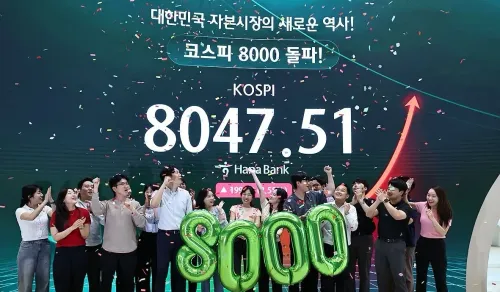
The KOSPI had been on a historic run, crossing the landmark 8,000-point threshold on Tuesday before extending its winning streak to a fourth consecutive session on Wednesday, driven largely by a semiconductor-led rally. Samsung Electronics and SK hynix were among the primary engines of that surge. Thursday's reversal underscores how quickly geopolitical shocks can interrupt momentum-driven markets.
What Triggered the Sell-Off
The immediate catalyst was the US military's reported strikes on an Iranian military site, which dampened hopes for a swift resolution to the ongoing US-Iran conflict. Ironically, overnight trading on Wall Street had ended at record highs after an Iranian media outlet reported a draft interim deal between the two sides — including the reopening of the Strait of Hormuz. The Dow Jones Industrial Average rose 0.36 percent, the Nasdaq edged up 0.07 percent, and the S&P 500 gained 0.02 percent. The subsequent strike news reversed that optimism in Seoul.
Sector-by-Sector Breakdown
Samsung Electronics dipped 2.12 percent, while rival chipmaker SK hynix bucked the trend and added 0.62 percent. SK Square, the AI investment arm, dropped 2.51 percent. Shipbuilders bore some of the heaviest losses: HD Hyundai Heavy slid 4.44 percent and Hanwha Ocean plunged 7.78 percent. Defence conglomerate Hanwha Aerospace retreated 3.38 percent, and power plant manufacturer Doosan Enerbility contracted 2.4 percent. Financial stocks were also in the red, with KB Financial down 2.67 percent and Shinhan Financial losing 2.32 percent.
Bright Spots: Batteries and Autos Defy the Trend
Not all sectors fell. LG Energy Solution surged 14.34 percent after announcing a deal to supply energy storage system batteries to a US firm, making it the standout gainer of the session. Smaller rival Samsung SDI jumped 7.14 percent on the spillover optimism. In the auto space, Hyundai Motor gained 1.17 percent, Kia added 0.55 percent, and Hyundai Mobis rose 0.73 percent. Samsung Electro-Mechanics climbed 4.91 percent.
Currency and What Comes Next
The Korean won weakened to 1,506.5 won per US dollar as of 11:20 am, down 5.3 won from the previous session. Markets will closely track further developments in US-Iran diplomacy — any escalation or confirmed deal could sharply move both the KOSPI and the won in the sessions ahead.
Point of View
Which had been riding a global rearmament trade, sold off sharply, while battery makers surged on a single supply deal. That split suggests the market is not broadly risk-off — it is repricing specific geopolitical bets. The won's softness adds another layer; if US-Iran tensions persist, currency pressure could compound the equity drag for foreign investors already sitting on large gains from the recent rally.
NationPress
21 Oct 2026
Frequently Asked Questions
Why did the KOSPI fall on 28 May 2025?
The KOSPI dropped 1.02% to 8,144.38 after news emerged that the US had launched fresh strikes against an Iranian military site, undermining hopes for an imminent peace deal. The sell-off was led by foreign investors unwinding positions after a strong tech-driven rally.
What record did the KOSPI set before the fall?
The KOSPI closed at an all-time high of 8,288.7 on Wednesday, 27 May, capping four consecutive sessions of gains. The index had crossed the landmark 8,000-point level for the first time on Tuesday.
Which stocks fell the most on the KOSPI on 28 May?
Hanwha Ocean plunged 7.78% and HD Hyundai Heavy slid 4.44% among the biggest losers. Samsung Electronics fell 2.12%, KB Financial dropped 2.67%, and Hanwha Aerospace retreated 3.38%.
Were there any gainers on the KOSPI despite the sell-off?
Yes. LG Energy Solution surged 14.34% after announcing an energy storage battery supply deal with a US firm. Samsung SDI rose 7.14%, and automakers Hyundai Motor, Kia, and Hyundai Mobis also posted gains.
How did the US-Iran situation affect global markets overnight?
Before the strike news broke, Wall Street had closed at record highs on reports of a draft interim US-Iran deal that included reopening the Strait of Hormuz. The Dow rose 0.36%, Nasdaq edged up 0.07%, and the S&P 500 gained 0.02%. The subsequent strike news reversed that optimism in Asian trading.