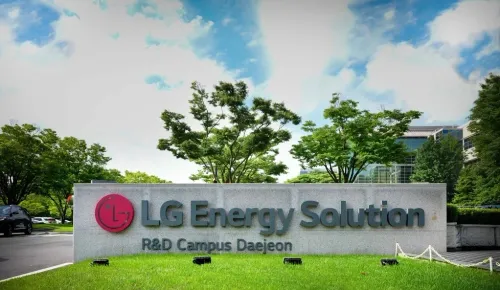
LG Energy Solution swings to Q2 net loss of ₩328.6bn on EV slowdown
Synopsis
LG Energy Solution's Q2 results lay bare the cost of the North American EV slowdown: a ₩328.6 billion net loss, operating profit down 77 percent, and an underlying operating loss of ₩127.7 billion once U.S. policy credits are stripped out. With Ultium Cells plants suspended and half-year losses topping ₩1.27 trillion, the world's second-largest EV battery maker is in a genuine earnings crisis — not just a soft patch.
Key Takeaways
LGES posted a Q2 net loss of 328.6 billion won (US$228.4 million) , reversing a 90.6 billion won profit a year earlier.
Operating profit fell 77 percent year-on-year to 113.3 billion won , missing analyst estimates by 43.8 percent .
AMPC tax credit of 241 billion won , the company recorded an operating loss of 127.7 billion won .
Ultium Cells LLC — the LGES– General Motors joint venture — suspended operations at plants in Ohio and Tennessee in January 2026 .
For the first half of 2026 , LGES swung to a net loss of 1.27 trillion won from a 317.2 billion won profit in the same period last year.
Revenue rose 24.8 percent to 7.56 trillion won in Q2, but margin pressure and plant idling offset volume gains.
LG Energy Solution Ltd (LGES), South Korea's largest battery manufacturer, reported a net loss of 328.6 billion won (approximately US$228.4 million) for the second quarter ending June 2026, reversing a net profit of 90.6 billion won in the same period a year ago. The sharp reversal underscores the deepening pressure on global EV battery makers as electric vehicle demand — particularly in North America — continues to soften.
What Drove the Loss
A company official attributed the quarterly shortfall to 'sluggish EV sales in the North American market and the suspension of operations at U.S. joint venture plants since early this year.' Ultium Cells LLC, the battery joint venture between LGES and General Motors Co., temporarily halted production at its first plant in Ohio and its second facility in Tennessee in January 2026, citing weakening demand.
Operating profit collapsed 77 percent year-on-year to 113.3 billion won, down from 492.1 billion won in the second quarter of 2025. Notably, the operating profit figure came in 43.8 percent below analyst consensus estimates, according to financial data.
The AMPC Lifeline — and What Lies Beneath
LGES received a tax credit of 241 billion won under the Advanced Manufacturing Production Credit (AMPC) programme of the U.S. Inflation Reduction Act. Stripped of this credit, the company's underlying position is starker: an operating loss of 127.7 billion won in the quarter. This gap between reported and ex-AMPC results highlights how dependent the company's profitability has become on U.S. policy support — a structural vulnerability if political winds in Washington shift.
Revenue Holds Up, But Margins Tell a Different Story
Sales rose 24.8 percent to 7.56 trillion won in the second quarter, up from 6.06 trillion won a year earlier — suggesting volume is still moving, even as pricing and utilisation weigh on margins. For the first half of 2026, LGES swung to a net loss of 1.27 trillion won, compared with a net profit of 317.2 billion won in the same period last year. First-half operating loss stood at 94.5 billion won, against an operating profit of 866.8 billion won previously. Half-year sales, however, rose 10.5 percent to 14.1 trillion won from 12.7 trillion won.
Broader Context: A Sector Under Strain
The LGES results are the latest signal that the global EV battery industry is navigating a demand trough. North American automakers have scaled back near-term EV production targets, and joint venture utilisation rates have suffered accordingly. This is not an isolated LGES problem — peers across South Korea, Japan, and China have flagged similar demand-side headwinds in recent quarters. The suspension of Ultium Cells plants is particularly significant given the scale of GM's EV ambitions, which now appear to be recalibrating on a longer timeline.
What to Watch Next
Investors and analysts will monitor whether North American EV order books recover in the second half of 2026, and whether the AMPC programme survives ongoing U.S. budget discussions. Any policy rollback could further erode LGES's reported profitability. The company has not issued revised full-year guidance, and its next quarterly update will be closely watched for signs of demand stabilisation at Ultium Cells facilities.
Point of View
But the more revealing number is the ex-AMPC operating loss of ₩127.7 billion — it shows that without U.S. policy subsidy, the company's core battery business is currently loss-making. That is a structural problem, not a cyclical blip. The Ultium Cells suspensions also raise questions about the durability of GM's EV pivot and whether the LGES–GM partnership, once seen as a cornerstone of North American battery supply, is being quietly downsized. With EV adoption curves flattening in the U.S. and political risk around the IRA intensifying, LGES's recovery timeline is far less certain than its revenue growth line suggests.
NationPress
13 Sept 2026
Frequently Asked Questions
Why did LG Energy Solution report a loss in Q2 2026?
LG Energy Solution posted a Q2 net loss of 328.6 billion won primarily due to sluggish EV sales in North America and the temporary suspension of its Ultium Cells joint venture plants in Ohio and Tennessee. Operating profit also plunged 77 percent year-on-year, missing analyst estimates by nearly 44 percent.
What is Ultium Cells LLC and why did it suspend operations?
Ultium Cells LLC is a battery manufacturing joint venture between LG Energy Solution and General Motors. It suspended operations at its Ohio and Tennessee plants in January 2026 due to slowing EV demand, directly impacting LGES's production volumes and quarterly results.
How much did LG Energy Solution receive under the U.S. AMPC programme?
LGES received a tax credit of 241 billion won under the Advanced Manufacturing Production Credit (AMPC) provision of the U.S. Inflation Reduction Act. Without this credit, the company would have reported an operating loss of 127.7 billion won for the quarter.
How did LG Energy Solution perform in the first half of 2026?
For the first six months of 2026, LGES swung to a net loss of 1.27 trillion won from a net profit of 317.2 billion won in the same period a year earlier. Operating loss stood at 94.5 billion won, while sales rose 10.5 percent to 14.1 trillion won.
Did LG Energy Solution's revenue grow despite the loss?
Yes, LGES reported Q2 sales of 7.56 trillion won, up 24.8 percent from 6.06 trillion won a year earlier. However, revenue growth was offset by margin compression, plant idling costs, and reduced operating leverage from the Ultium Cells suspensions.