Anand Mahindra spotlights Valparai as India's hidden gem
Synopsis
Mahindra Group chairman Anand Mahindra spotlighted Valparai in Tamil Nadu as a pristine alternative to India's overcrowded hill stations, comparing it to a pre-tourism-boom Munnar and inviting followers to share their own hidden travel gems under #SundayWanderer.
Key Takeaways
Mahindra Group chairman Anand Mahindra posted on June 7, 2026 recommending Valparai, Tamil Nadu as an undiscovered hill station worth visiting.
He described Valparai as accessible via a drive up 40 hairpin bends from Pollachi , with rainforests, dams, and wildlife including elephants , lion-tailed macaques , and great hornbills .
Mahindra compared Valparai to ' Munnar as it was 30 years ago,' referencing the Kerala hill station as a cautionary example of over-tourism.
The post is part of a broader pattern of public figures using social media to disperse domestic tourist traffic away from saturated destinations.
Mahindra invited followers to share their own hidden travel gems under the hashtag #SundayWanderer , signalling an ongoing series.
India's Swadesh Darshan scheme (2014-15) and Incredible India campaign (2002) reflect long-standing policy intent to develop tourism beyond marquee sites.
Mahindra Group chairman Anand Mahindra on Sunday, June 7, 2026, used his widely-followed social media presence to spotlight Valparai, a hill station in Tamil Nadu, as an alternative to overcrowded tourist destinations, urging his followers to share their own undiscovered favourites so he could amplify them.
Context
Mahindra's post opens with a pointed observation: India's most popular tourist destinations are 'becoming victims of their own success.' He describes a now-familiar weekend pattern — social media flooded with images of traffic jams and overcrowded hill stations, with holidays 'that were meant to be relaxing' ending up 'testing people's patience.'
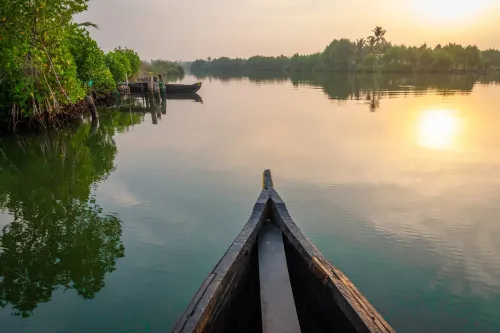
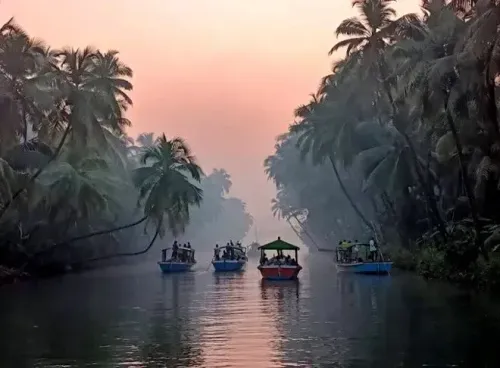
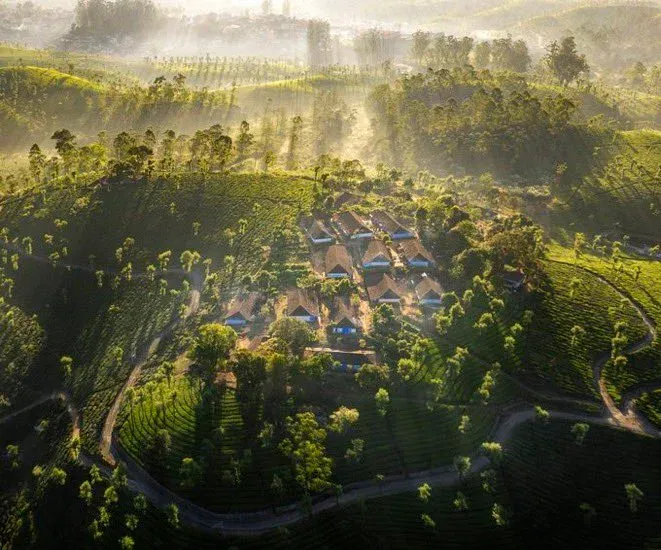
Against that backdrop, he pivots to a solution rooted in India's geographic vastness, writing that 'there is no shortage of beautiful destinations that remain relatively undiscovered.' He then names Valparai as his first recommendation under the hashtag #SundayWanderer, sharing photographs credited to @rakesh_pulapa.
Valparai: The destination in focus
Valparai sits in the Anaimalai Hills of Tamil Nadu and is reached via a winding drive up 40 hairpin bends from Pollachi. Mahindra describes it as offering dams, rainforest views, and wildlife that includes elephants, lion-tailed macaques, and great hornbills — a biodiversity profile that distinguishes it from more commercialised hill resorts.
He draws an evocative comparison: Valparai looks 'like the Munnar many of us wish we had seen 30 years ago' — a reference to the Kerala hill station that has become a byword for scenic beauty overwhelmed by visitor volumes. The analogy positions Valparai as a destination still in the window of unhurried access, before mass tourism alters its character.
Policy backdrop
The overcrowding Mahindra describes is part of a well-documented pattern in Indian domestic tourism. Since the pandemic, travel within the country has grown substantially, placing visible environmental and infrastructural strain on established hill stations in states such as Kerala and Himachal Pradesh. State administrations have at various points imposed vehicle caps and entry restrictions at peak-season destinations.
At the national level, the Ministry of Tourism's Incredible India campaign, launched in 2002, sought to project India's tourism diversity globally. The Swadesh Darshan scheme, introduced in 2014-15, was designed specifically to develop thematic tourist circuits and spread infrastructure investment beyond marquee sites — a policy intent that Mahindra's social media initiative mirrors in spirit, if not in formal structure.
Stakeholders and impact
Mahindra's post carries particular weight given his follower base, which spans business leaders, young professionals, and policy observers. A single endorsement from a figure of his prominence can materially shift search interest and booking patterns toward a named destination — a dynamic sometimes called the 'influencer geography' effect in tourism studies.
For Valparai's local communities — tea-estate workers, small hospitality operators, and wildlife guides — a surge in visitor interest could mean economic opportunity, but also the risk of replicating the very overcrowding Mahindra is critiquing. The post itself is implicitly aware of this tension: his invitation to 'share hidden gems' is framed as a dispersal exercise, spreading footfall across many sites rather than funnelling it to one.
What's next
Mahindra's open call for more 'hidden gems' suggests the #SundayWanderer thread is intended as an ongoing series, potentially giving sustained visibility to a rotating set of lesser-known destinations. Tamil Nadu's tourism department and counterparts in other states may find in such posts an organic amplification channel for sites that formal campaigns have struggled to bring to mainstream attention.
If the series gains traction, it could add informal pressure on central and state planners to fast-track hospitality infrastructure and sustainable-access frameworks for newly popular sites — ensuring that the next Valparai does not become the next Munnar before the guardrails are in place.
Point of View
He frames the overcrowding crisis as a solvable problem of geographic imagination rather than of visitor numbers alone. The #SundayWanderer format — an open, crowdsourced series — is a shrewd use of platform reach to do informally what the Swadesh Darshan scheme attempted formally: redirect footfall toward underleveraged destinations. The implicit risk, which the post does not address, is that viral endorsement from a figure of Mahindra's stature could accelerate the very commodification it laments.
NationPress
24 Oct 2026
Frequently Asked Questions
Where is Valparai located and how do you reach it?
Valparai is a hill station in the Anaimalai Hills of Tamil Nadu . It is reached by driving up 40 hairpin bends from Pollachi , making it a scenic but winding approach through rainforest terrain.
Why did Anand Mahindra compare Valparai to Munnar?
Mahindra compared Valparai to ' Munnar as it was 30 years ago' to suggest that Valparai retains the unspoilt, uncrowded character that Munnar in Kerala has largely lost due to mass tourism over the past few decades.
What wildlife can be seen in Valparai?
Valparai is home to elephants , lion-tailed macaques , and great hornbills , among other species, set within a landscape of tea plantations, dams, and rainforest.
What is the #SundayWanderer hashtag about?
#SundayWanderer is a hashtag used by Anand Mahindra on his social media posts to highlight travel destinations, particularly lesser-known or undiscovered places across India.
What is India doing to reduce overcrowding at popular tourist spots?
India's Swadesh Darshan scheme , launched in 2014-15 , was designed to develop thematic tourist circuits and spread infrastructure investment to lesser-known destinations, aiming to reduce pressure on overcrowded marquee sites.